


Bea Gardner, Enfield and Lea Valley Socialist Party
This week, hundreds of thousands of parents have submitted school applications for their children to start reception in September 2026. They now face a nervous wait until April, when they will find out if their child has been offered a place in their ‘preferred’ school.
Even though the number of children starting primary schools is falling, so far this has not resulted in less competition over places. Last year, fewer children were offered places at their preferred schools.
Where I live in Waltham Cross, our first and second preference schools, both within walking distance from our home, had 112 applications to 60 places and the other 67 applications for 30. When we looked around the schools, we saw classrooms clearly built to accommodate 20, overpacked with 30 children.
Pushed out
That’s because more and more families have been pushed out of London due to sky-high rents and costs of living. Many have been forced to move outside of the city to places like ours. In fact, London councils forecast a 3.6% fall in reception pupil numbers over the next four years. That’s around 3,195 children; roughly a drop of 117 reception classes.
Every child should have access to a high-quality school, in the area they live. And their families should be able to afford to keep living there! Shockingly, 1 in 5 of the children in London that started in reception had left the capital by the time they reached year 6.
The application system gives the illusion of choice. Yet, we have no genuine choice over what really matters, including funding. Schools are funded per pupil, so fewer places means less funding, exacerbating existing pressures. In London, local authorities are proposing to close and merge schools altogether. In fact, there are now 23 fewer schools in London than in 2020.
Instead, falling overall numbers could mean reducing class sizes. We could have higher staff-to-child ratios, meaning more 1:1 time for kids and a lower workload for teachers. Instead, it is the opposite.
The existing system reinforces inequality between schools, as well as for individual children. The best performing schools are always over-subscribed, they can budget for the maximum funding in the per pupil formulas.
Plus, they have fewer ‘disadvantaged’ children, who may need additional support resources. That’s because those on lower incomes can’t afford the house prices or rents closest to the best-performing schools. Even when they are in the catchment area, it often comes down to distance from the school. It’s no wonder that in the ‘worst performing’ school near us, around half the children are classified as ‘disadvantaged’. Education should be a means by which to lessen inequality, not make it worse. Not in this system!
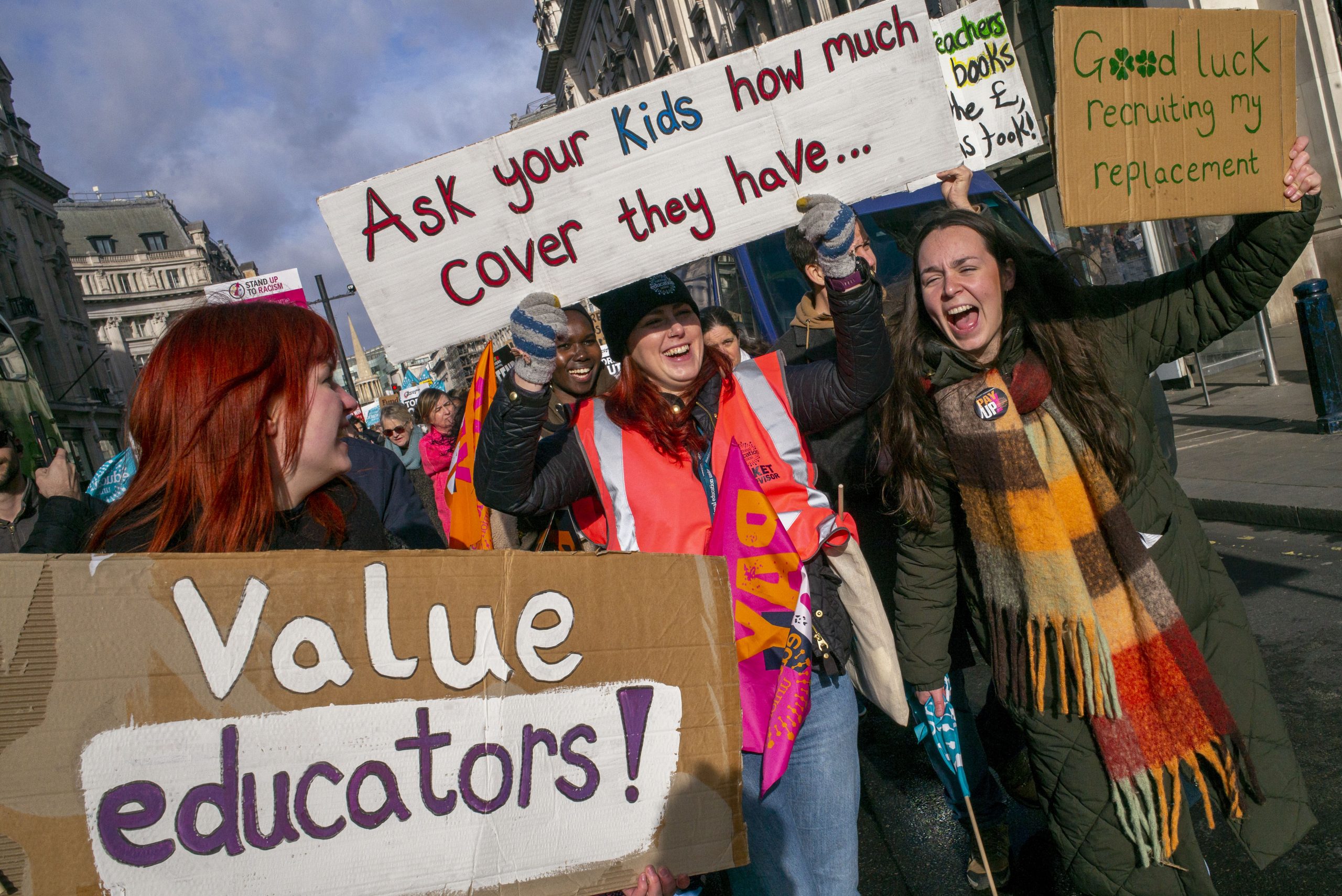
The National Education Union is set to carry out an indicative ballot of its members on the issue of pay and funding. We will be right behind them if they take action to defend education. And we will be doing our part to fight for a socialist political alternative to Starmer’s Labour, helping to build an anti-cuts stand in May’s local elections.