

With Labour governing in the interests of the capitalist bosses against the working class, the trade unions’ relationship with Labour and the need for a new party is on the agenda. Groups of trade unionists have been discussing how to press the issue in the structures of the unions, initiated by a Summer 2025 petition ‘Time for trade unions to take the lead in forming a new working class party’. The following are reports from recent meetings
Communication Workers Union
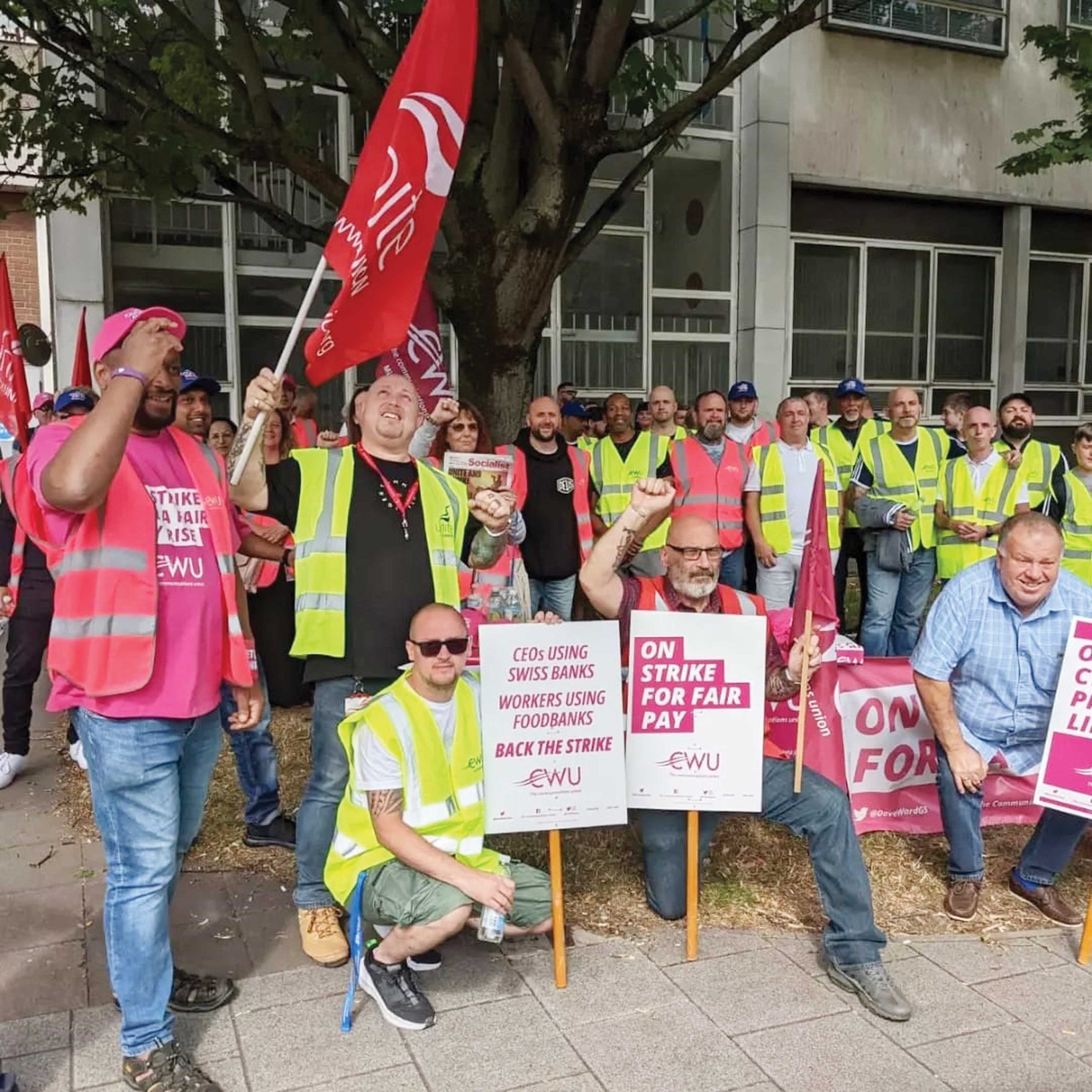
CWU activists
Activists from across the Communication Workers Union (CWU) met to discuss next steps in the campaign for the union to consider how it can achieve a political voice. This campaign developed from the Trade Unionist For A New Workers’ Party campaign and petition launched last year.
Across the CWU, there is a frustration about our union’s continued support for the Labour Party, which has attacked the working class just like the Tories. The CWU spent over £400,000 on affiliation fees to the Labour Party and gave over £170,000 to Labour MPs before the general election, according to its 2024 accounts.
Model motions raised at branches last year called for the union leadership to “Launch a union-wide consultation about the best use of the union’s political fund, including the question of funding candidates outside the Labour Party who support CWU-agreed policy.”
However, many activists faced bureaucratic hurdles when attempting to raise this motion.
To help us overcome this, when raising model motions for conference, we will be campaigning at CWU workplaces to let members know about our aim to disaffiliate from the Labour Party at this year’s conference, and encouraging members to attend the branch meetings where our motions will be put to a vote.
While disaffiliation is clearly seen as an important step among left activists, there’s also more that needs to be done to make sure the CWU puts its money towards political representation that supports the interests of its members and the wider working class.
The meeting agreed to a strategy of putting forward multiple separate model motions including calling for a cross-union political conference, branch control of political funds, and for the union to work with a united front of political representatives of the working class outside of Labour.
The deadlines for submitting motions and confirming delegates is in early March so it’ll need a short and sharp effort in February. But we plan on building for a public meeting closer to the deadlines to bring together those who have shown support for the campaign and to kick off the second phase – getting branches to vote to mandate their conference delegates to support our motions.
GMB
GMB members
On 21 January, activists in general union GMB, the UK’s third largest, met online to continue our discussion on how we build support across our union – one of the largest trade unions affiliated to the Labour Party, with a Starmer-supporting leadership – for a new party of the organised working class, based on a socialist programme.
Our first meeting was last August, where we agreed a ‘model’ motion on political representation and agreed to try to get it carried in our individual branches.
The model motion condemns the Labour government’s attacks on the working class; recognises that New Labour’s austerity is fuelling support for Reform and the far right; argues we need alternative political representation for the organised working class based on an anti-austerity, anti-racism and anti-war programme; and agrees that such a party has the best potential to defeat the rise of the far right. The motion instructs the leadership to consult GMB members on our union’s relationship with the Labour Party, and the possibility of backing candidates from other political parties who support GMB policies.
At our meeting on 21 January, an activist explained that their branch had just passed the motion and will now submit it for debate at the GMB’s annual decision-making Congress in June. The motion was passed unanimously and enthusiastically by members for whom Labour is a dirty word.
Other activists also reported on the deep hostility to Labour in their local areas. One longstanding rep highlighted previous, unsuccessful attempts to argue for alternative political representation which had been defeated by their regional bureaucracy.
The meeting understood that we will experience opposition from the leadership. However, the model motion has now been passed in several branches, across three different GMB regions, with support slowly growing.
The actions of Starmer’s Labour government are also contributing, forcing a layer of previously loyal GMB Labour members to turn from the party in disgust at its austerity policies and racist attacks on migrants and refugees.
A number of activists present are involved in Your Party, and shared their efforts to build Your Party locally, including trying to prepare an electoral challenge for the council elections in May.
One attendee to the meeting was a GMB member who had joined Your Party and, on the basis of the discussion they heard in the meeting, agreed to move the model motion at their branch.
The debate was friendly, comradely and serious. All who spoke were clear of the need for a political alternative, and committed to working to achieve this, within GMB and beyond. It is recognised that these efforts must be part of a broader attempt to build a democratic, organised grassroots left in GMB, to hold our leadership to account.
These meetings will be held regularly from now on.
Unison
Hugo Pierre, Former Unison NEC
The pro-Keir Starmer agenda of defeated Unison general secretary Christina McAnea came to an end on Friday 23 January.
The incoming general secretary, Andrea Egan, has stated that she will fight Labour’s attacks, and wants to review the union’s political link with Labour. She herself was expelled from the Labour Party for the crime of liking a message on social media.
On 19 January, Unison members had met online in a second ‘Unison for a new party’ meeting, to discuss how to take forward the fight for a new political voice that best represents our members’ interests at the next National Delegate Conference (NDC). Andrea was invited to the meeting but unfortunately wasn’t able to attend.
Members discussed two model motions for branches for NDC. One was aimed at changing all the rules relating to the political funds, to put them under the control of the whole membership as one fund, rather than the two Unison has at present. The existing Labour link fund is controlled only by those that contribute to it – which is only 16% of the union membership – and who are also members of the Labour Party.
The second motion called for a review of Unison’s political funds by all sections of the union, to come back with recommendations of how best the union could back only candidates representing Unison policy, including those that stand outside of Labour.
During the meeting it was raised that under the new Employment Rights Act union members will automatically be opted into a union’s political fund. Given that Unison has two political funds, this raises new questions about how these will operate. It was agreed to also draft a model resolution for NDC linking this to a review of the union’s political link.
Many in the meeting expressed their anger at the way the current political representation arrangements are completely undemocratic. There was also a discussion about the difficulty in changing the arrangements, with the possibility that the NDC may not even be able to discuss these motions if branches send them, because the right-wing dominated Standing Orders Committee would rule them ‘out of order’. Therefore a wider campaign for the conference was discussed.
Members also expressed their frustrations with the ‘Your Party’ bans and restrictions, viewing it as a missed opportunity to start a new party based on the working class. However, members concluded that fighting for Unison to change its political fund rules was the best way forward, to open up the potential for this huge union to play a leading role in fighting for a working-class political voice.
