


Iain Dalton, Yorkshire Socialist Party
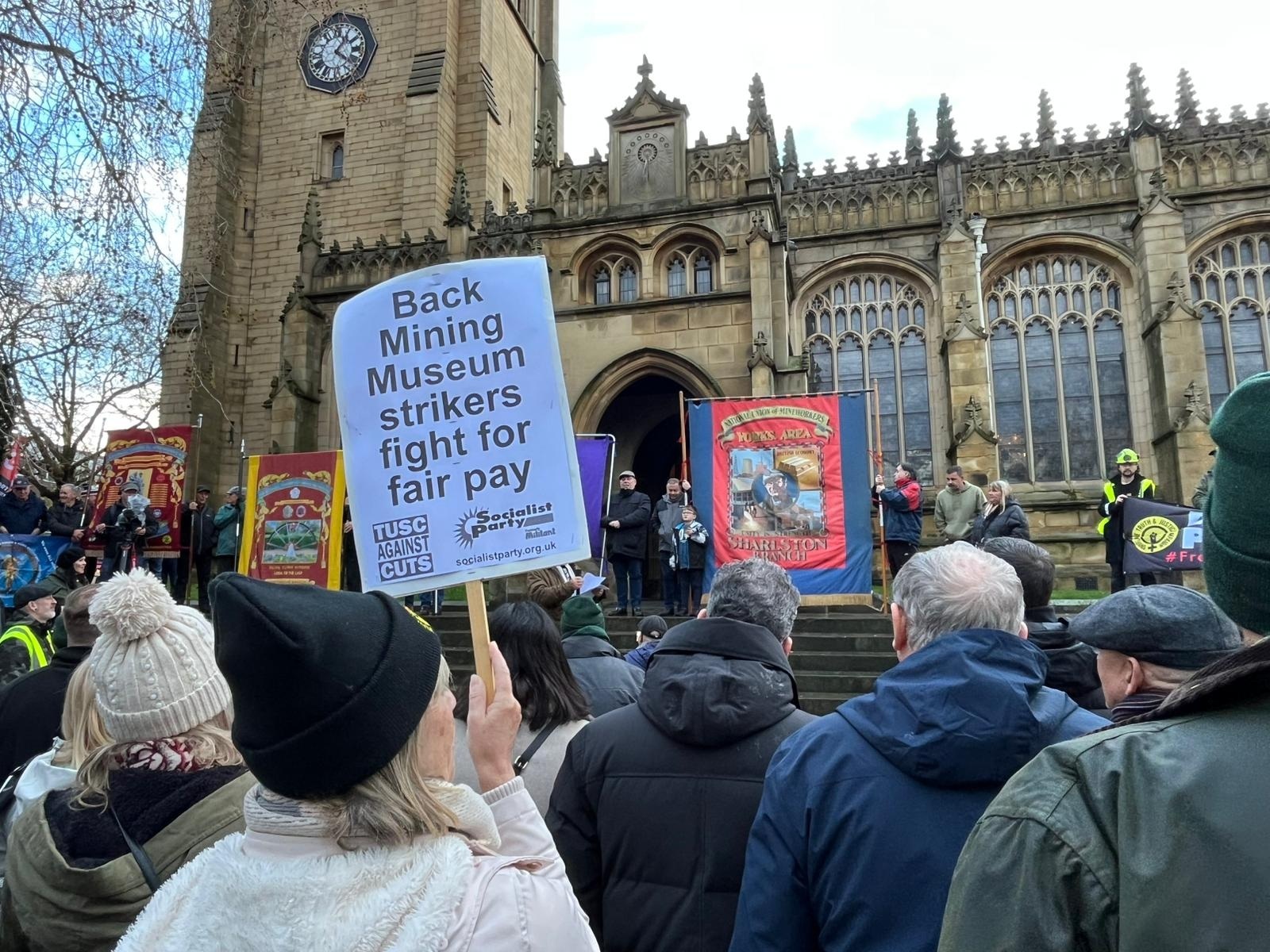
Mine guides, cleaners and other workers at the National Coal Mining Museum for England are now entering their eighth month on strike in their dispute over pay.
With the end of the financial year coming soon, management is facing pressure due to the decline in visitor numbers because of the strike. This is because many members of the public are refusing to cross the picket line in solidarity, but also because the museum’s main attraction, the deep pit experience, is out of action without the mine guides to safely operate it.
There have been additional attempts to encourage school trips from around the region to visit the museum. This included opening the museum up on Mondays and Tuesdays. This has thankfully only had limited success.
But as the dispute drags on, miners are becoming increasingly worried about the maintenance of the pit. This was reinforced after the museum’s health and safety manager was made ‘redundant’ from the statutory role which should be exempt from redundancy. He had raised a number of safety issues, including the potential for build-ups of gas, which were being ignored.
Management rejected the workers’ recent counter-offer, which over a two-year period would move pay towards matching the £15 an hour received by workers at the Big Pit, the Welsh government-run national mining museum for Wales. In doing so, managers committed to answer in writing questions on the museum’s financial position. After a month, no answer has yet been received to the six questions submitted, which would have in effect opened up the books to the workers.
The Department for Culture provides the bulk of the museum’s funds, so it could step in. Unison, the union which organises the workers, has criticised chief executive Lynn Dunning and called for her removal.
Wakefield District Council should be demanding the museum is turned over to their stewardship, run democratically by elected representatives of workers at the museum and the wider working class, to preserve this valuable museum for future generations.
