


Nationalise private vultures
Joe Waters, Devon Socialist Party
During April, waters around the beaches in Teignmouth on Devon’s south coast were exposed to significant pollution from a leaking sewer, operated by private company South West Water.
The issue was first noticed and reported by local campaign group Friends of the River Teign (FORT) on 29 March. Pollution warnings issued by the Environment Agency were in place for the most of the school holidays. But sewage spilled into the water for over two weeks before repairs were completed by the water company.
South West Water reported six-month after-tax profits of £54.7 million. But, in another incident in 2024, 40,000 customers around Brixham were exposed to a parasite outbreak. 100 become seriously ill.
The other private water companies across Britain are no better. In 2025, there were 290,000 recorded sewage discharges nationally.
Despite the consistent failure of the industry since privatisation to make the investments necessary to protect the environment or improve water quality, bills are sky-high and continue to rise.
When water was first privatised in 1989, the average annual bill was £36.60, equal to about £100 today. But after almost four decades of private ownership, the estimated average bill for 2026-27 will be £639.
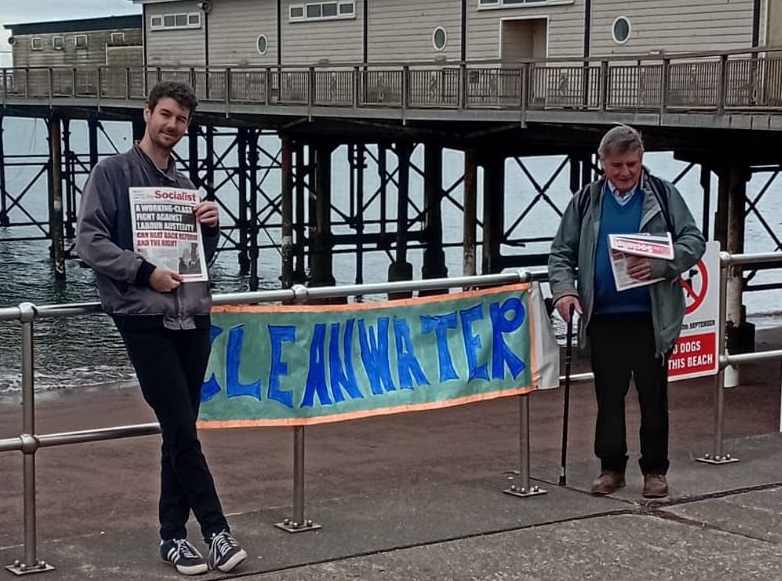
Protests against the pollution issue took place in dozens of coastal locations on 16 May, organised by campaign group Surfers Against Sewage. 150-200 attended in Teignmouth.
Homemade placards carried slogans like ‘Boo to Poo’, and one held by a young girl read ‘Water Pollution Made Me Sick’. Placards held by the FORT campaign demanded, ‘Clean the Teign’. Socialist Party members in conversation with protesters found general agreement with the idea that the water companies drive for profits was the cause of the problems.
We handed out leaflets calling for the nationalisation of water, under democratic workers’ control, with no compensation paid to the bosses who’ve only ever enriched themselves off of an essential resource. And we invited those protesting to come to a meeting and discuss with us about how the demand for publicly owned services can be fought for and won.
