


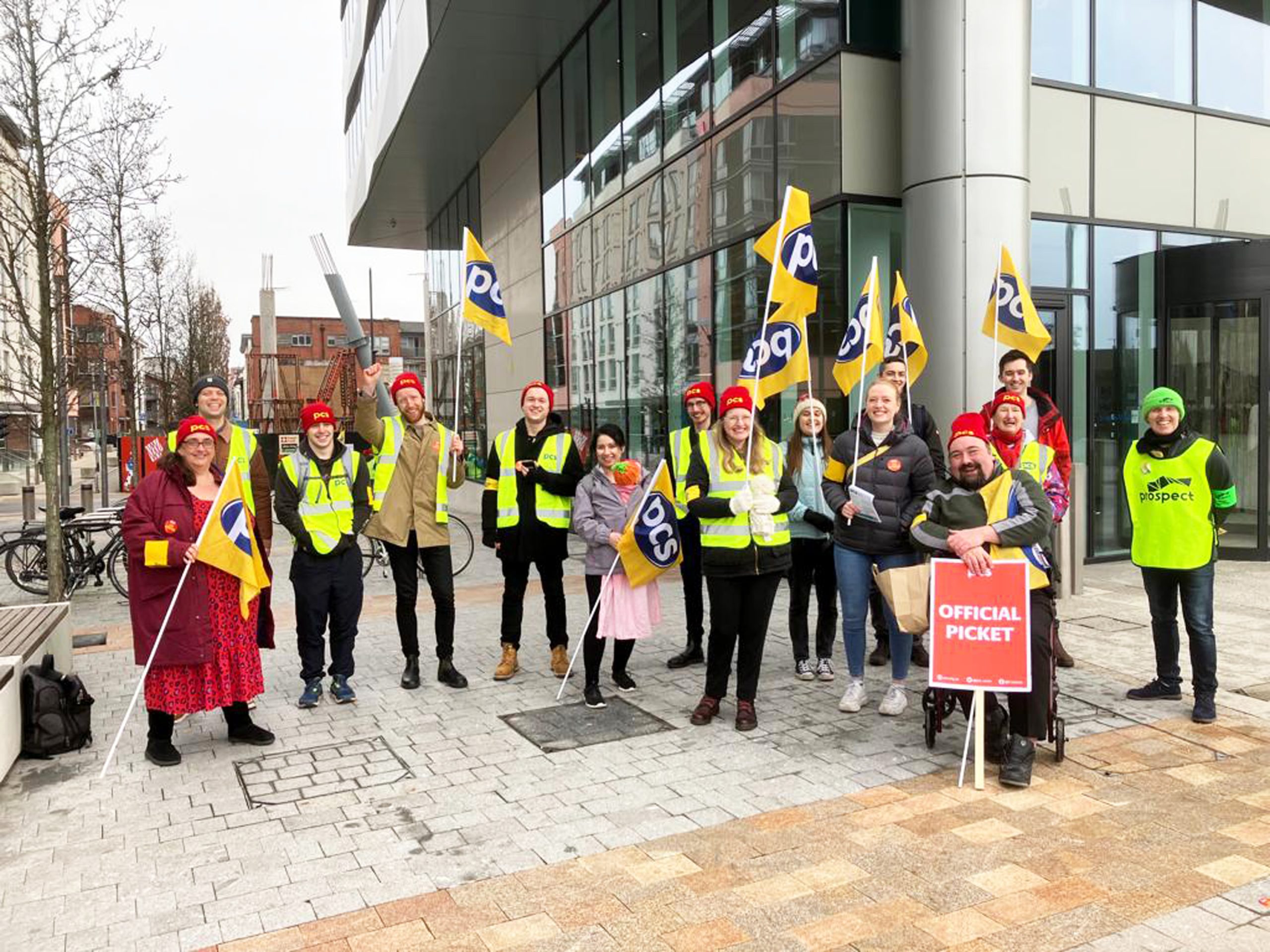
The PCS union, which organises government workers in the civil service and privatised employers, is holding its Annual Delegate Conference (ADC) as we go to press. Before it began, conferences took place of PCS members in different employer groups.
The Socialist reported last week on the big win for the left in the PCS National Executive Committee (NEC) elections. Six Socialist Party members were elected, as part of the Broad Left Network (BLN), in a coalition with others who also want a fighting union.
The previous leadership, the misnamed ‘Left Unity’ grouping, was ousted by the members due to its failure to mount a real fight against the Starmer government’s attacks on pay and tens of thousands of job cuts.
Elections took place in the different groups within PCS as well. Unfortunately, in the DWP (Department for Work and Pensions), the Left Unity group maintained its dominance on the Group Executive Committee (GEC). In HMRC (Revenue and Customs), however, BLN supporters, in alliance with others, maintained leadership.
DWP: Fight for decent pay and more jobs
Socialist Party members in DWP
Even before DWP conference started, efforts had been made by the incumbent, now former, national president Martin Cavanagh to move motions off the DWP agenda and up to the main ADC agenda.
Thus, the BLN motion for a group-wide campaign on pay, jobs and hybrid working did not get heard on the basis of the final instruction allegedly not being appropriate for a group conference – even though it is already current DWP group policy.
The DWP group leadership lauded their work on pay over the past year, congratulating themselves for reaching the anti-trade union turnout threshold of 50% in the consultative ballot towards the end of last year, but cast the blame on reps and the postal service for not reaching the turnout in the statutory ballot at the start of this year.
The GEC pay motion, however, does give the group a reasonably fighting policy on pay, which Cavanagh explicitly said builds on the BLN-supported pay motion that passed last year.
2026’s pay policy states that, among other things, any pay deal in the coming year must ensure that:
- All members receive an above-cost-of-living increase
- An element of pay restoration is included, to account for previous years of real-terms pay cuts
- A significant differential is built in between the grades, to end continuous pay compression across the department created by the yearly minimum wage uplift (In other words, staff in the DWP are so low paid that their pay has to go up when the minimum wage goes up or it would be illegally low – and the staff on the grades above have such small pay rises that their pay doesn’t go up at the same rate.)
A motion was passed to launch a campaign for 30,000 new DWP staff – a longstanding demand which originally passed in 2022.
The BLN in DWP will be at the forefront of fighting for more staff in their areas, and will be fully backing the incoming NEC in the national campaign.
HMRC: Members get ready to fight for pay and against victimisation
Socialist Party members in HMRC
HMRC (Revenue and Customs) group conference had an optimistic air. Whereas last year many motions were simply moved, formally seconded and voted on, this year delegates were keen to contribute to the debates, giving the conference vibrancy.
The topics for discussion were important. 68 motions were debated, including motions put forward by BLN supporters. The two most crucial for members were on pay and victimisation of reps.
Conference agreed to demand a fully consolidated pay rise for 10% or £18 per hour, whichever is greater; London weighting of at least £5,000, a four-day working week, linking subsistence rates to inflation, and more. Socialist Party members support the group campaigning on these priorities, and believe these demands can best be achieved through a strong union-wide national campaign that includes the HMRC group.
A theme throughout the conference was the disgraceful treatment of PCS reps by HMRC bosses. HMRC already restricts PCS’s ability to organise effectively and communicate with our members. But now it is directly attacking reps themselves. These attacks take no account of the individual’s position in PCS – every rep is potentially in the firing line.
Conference heard from a rep in Wales who was dismissed a few days before conference. Many more HMRC branches have stories of reps suffering warnings or dismissal. Even one story like this is one too many. Conference agreed an emergency motion for targeted industrial action where reps are sacked. This policy can be further built on by Annual Delegate Conference carrying motion A33 this week.
