


Ben Golightly, Swansea Socialist Party
Keir Starmer is hardly a left-winger. But the capitalist state has been forced, in recent years, to step in and nationalise key parts of the economy to prevent the whole system collapsing.
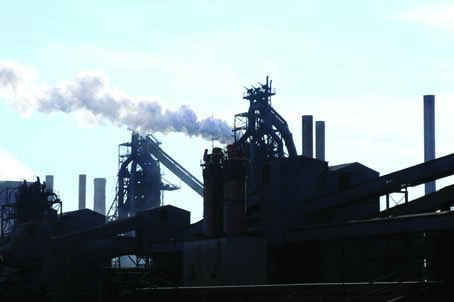
This includes the Northern Rock bank during the crash 18 years ago. Today there is an ongoing return of passenger services. Now Scunthorpe steelworks, if it passes a ‘public interest test’, will become the first publicly owned steelworks since 1988. It was one of the announcements Starmer made after the disastrous May election results, for once announcing something popular!
The pompous ‘UK Steel Strategy’ announcement by government ministers is quite telling: “We have seen a long-running pattern of governments failing to act with a long-term vision, resorting to intervening as individual companies fail,” they said, just as they resort to intervening in Scunthorpe!
Domestic steel production is affected by high energy prices and cheap imports, due to 13% ‘overcapacity’ in global steel production and increasing protectionism in the world market.
British infrastructure is suffering from decades of underinvestment as billions of short-term profits are extracted for shareholders. The shareholders are ready to dump everything in a heartbeat as soon as those profits dry up.
In this way, competitive British steel production is held hostage to the profiteering of the energy companies. Even the government’s former head of strategy at the Department for Energy Security, Adam Bell, has called for nationalisation of gas plants.
The first domino?
But the UK government will be extremely fearful that one nationalisation will lead to another. If they can save Scunthorpe, why couldn’t they save Port Talbot? If they nationalise energy, why not water? Why not take over every other failing firm to protect jobs – from heavy industry to Pizza Hut?
On the basis of capitalism – an unplanned system of competing companies and nations – there is only a cycle of crisis where the 99% are expected to foot the bill.
Socialist nationalisation
But crucially, rather than just stepping in to ‘socialise the losses’ in arms-length publicly owned companies – ready to be sold off when they become attractive to capitalist’s balance sheets again – we need direct democratic working-class control and management.
Ultimately only a joined-up international socialist plan of production can meet the needs of workers, communities, and the environment. Taking the big businesses and banks that dominate the economy into public hands, kicking the bosses and managers out with compensation paid only on the basis of proven need, and running them for the vast majority of us would enable that.
