Editorial of the Socialist issue 1369
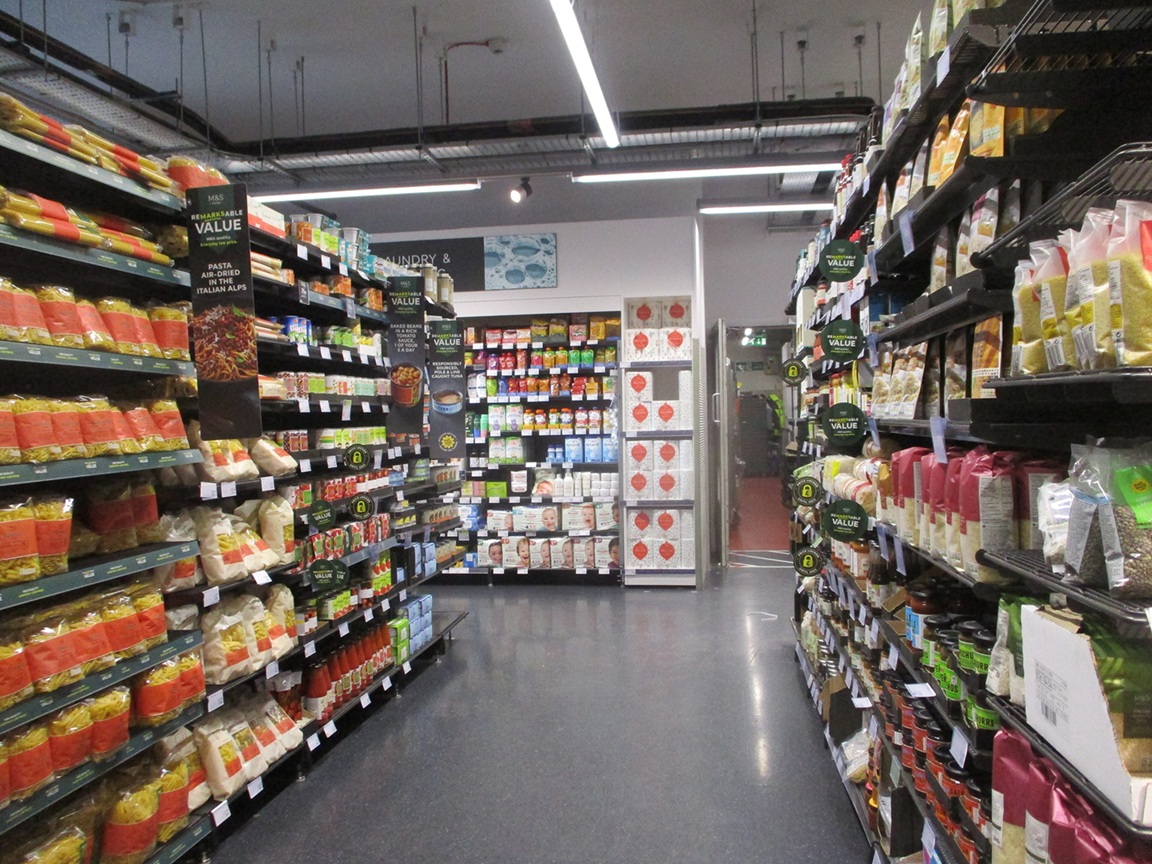
“Completely preposterous.” That was the response from M&S chief executive Stuart Machin to the idea that the government might ‘urge’ supermarket bosses to introduce voluntary price caps on food essentials in England.
What is ‘preposterous’ is that “over five million households have cut back on or skipped meals because they cannot afford food”, according to research last autumn, in the sixth-biggest economy on the planet.
The number of families who have gone without essentials such as heating, dentist appointments, or fixing broken fridges, has been seven million or over for four consecutive years. That is before the double-digit inflation in food prices anticipated later this year kicks in.
Iran war
Trump’s war in Iran is worsening this situation. Even if shipping in the Strait of Hormuz went back to functioning as it did before he launched the war, which is unlikely, the impact of the shortage of fertiliser is expected to last into the autumn and winter. According to the United Nations (UN), around a third of the world’s fertilisers – such as urea, potash, ammonia and phosphates – normally pass through the strait.
The Food and Agriculture Organization has predicted that the war shock will unfold in stages – energy, then fertiliser, then seeds, then lower yields, then commodity prices, and finally food inflation reaching shoppers.
The climate crisis is also a factor in this picture. Forecasters put the odds of a strong El Niño, a natural warming of the Pacific Ocean, above 90%. That will bring more extreme weather. The UN’s World Food Programme has warned that 45 million more people could be pushed into acute food insecurity.
While war and climate crisis are exacerbating factors in the existence of millions of families experiencing hunger, it is not true that governments must remain passive or that leaving everything to the ‘market’ will improve anything.
What is also ‘preposterous’ is that the Labour government has retreated from its timid proposals on price control in the face of inevitable hostility from big business bosses. One supermarket executive called the idea of voluntary food caps on essential items “completely mad”. Another said: “This is an unnecessary, unwanted and unjustified intervention in the market.”
The Scottish National Party (SNP) pledged in its election manifesto to use its devolved public health powers to make large supermarkets adhere to fixed prices on up to 50 items such as bread, milk, cheese, eggs, rice and chicken because their rising cost was “impacting our nation’s nutrition”.
While the SNP pledge was being denounced by big-business supermarket bosses in April, the Labour government said the proposal was “incoherent and undeliverable”. However, after people used their votes to punish Labour at the May polls, motivated by the cost-of-living crisis, they then temporarily floated an about-turn on the question of food price controls.
If you want to be popular, food price controls appear to be a no-brainer. In February 2022, even before the price inflation following the Ukraine war, let alone what has happened since, 70% of voters surveyed said they would support food price controls. Even 65% of those identifying themselves as Conservative voters were in favour.
The New Labour government of Keir Starmer has sought since 2024 to act in the interests of big business, like the Tories, driving down our living standards – with pay restraint, maintaining anti-trade union legislation, continuing Tory funding cuts to local government, attacking benefits, and privatising public services.
The extremely timid proposals on measures designed to help workers and young people with their weekly shop – and then the retreat from them – shows that a party committed to the interests of big business cannot be trusted to act in our interests. In the face of big business hostility, the idea was quickly dropped.
‘Great’ summer savings
A much watered-down version of ‘help’ with the cost of living was presented by chancellor Rachel Reeves. Her ‘Great British summer savings’ scheme included free bus travel for children aged between five and 15 in England during the school summer holidays, VAT cuts on tickets to the zoo and other attractions, an extension of the fuel duty cut, and a suspension of import tariffs on some foods, including chocolate and biscuits. Let them eat cake… ‘Every little helps’, but these measures won’t fundamentally change things, not least the profits big business – including the big supermarkets – make at our expense.
What this episode reveals is that governments are under pressure in both directions – pressure from the anger of voters and pressure from the bosses. The fear of the bosses is that even the milquetoast measures proposed would risk the appetite for measures in the interests of the working class growing with the eating (pardon the pun). The task of the organisations of the working class is to build the biggest united struggle possible to shift the balance in our favour and fight for more far-reaching measures that challenge the rule of the bosses.
A very important part of that is the question of a political voice for the working class, independent of other class interests. The question of action on food prices shows the need for a trade union conference that brings together representatives from across the movement to discuss and debate a way forward. Socialist Party members campaign in the unions for this step and will argue in the debate for the trade unions to take steps to a workers’ political voice, including unions standing candidates that stand for their demands.
Rising inflation will move the issue of pay up workers’ agenda. Trade unions need to prepare, starting with learning all the lessons of the 2022-23 strike wave. Striking works but uniting the strikes could make an even greater impact.
Short-term profit
Despite all their claims, the big business bosses in the food industry prioritise their short-term profits over food provision, nutrition and the environment. Trade union Unite reported in October that Tesco’s operating profits have skyrocketed by 72% over the previous five years. Having intimidated Labour into retreat on price controls, the bosses demanded further measures to maximise their profits at our expense, that mild regulation on health and packaging be removed to ‘help’ them keep prices down.
But in the idea of food controls is recognition that free market capitalism is incapable of feeding us all and therefore must be replaced with rational planning in the interests of people not profit: socialism. While the SNP has made proposals that will be popular, it is its commitment to maintaining ‘free-market’ capitalism that will mean it will be found unable to defend the working class, and its unpopularity will grow.
Governor of the Bank of England Andrew Bailey commented on the idea of food price caps on certain items, saying this is “not a sustainable thing in the long run”. There is an element of truth in that because while the food industry is left in the hands of the profiteers, we don’t determine what gets produced, nor how, nor where, nor the conditions of workers and livestock. Private ownership is incompatible with our health and wellbeing.
Public ownership
The Socialist Party fights for agribusiness to be taken into democratic public ownership. For a food processing and retail industry under workers’ control to ensure that standards are set by consumers, small farmers; and all workers involved in the production, processing, distribution and retail of food.
That is part of the struggle for a socialist plan of production, which includes the question of international cooperation to plan for the environment as well as distribution of food, without waste. The first step towards that plan would be nationalising under democratic working-class control and management the biggest 150 corporations and banks that dominate the economy. That would put the key levers of the economy into the hands of the working class to start planning in the interests of need not profit.
Part of building the movement capable of fighting for those measures will be the struggle at local level. Councils control 20% of public spending and are responsible for services that feed people such as schools, care homes and, where they have survived the austerity decade, meals-on-wheels. They also administer hardship funds like the Crisis and Resilience Fund which includes ‘charitable food aid’ defined in its glossary as “Charitable help with food for free or at very low cost for people experiencing financial or food insecurity. Providers include food banks, food pantries, social supermarkets and food clubs.”
In the last two years, many council administrations were replaced, having implemented austerity measures obediently. For example in 2026, 30 English councils went to no overall control. All councils should be put under unrelenting pressure to use every means they have to support families facing food insecurity, spending the millions they have in reserves, using their prudential borrowing capacity, and mounting campaigns to fight for the funding needed from central government.