


Fight for democratic working-class control of police
For a united working-class fightback, reject racist division
Editorial of the Socialist issue 1371
The footage of Southampton student Henry Nowak’s last minutes in which, with a fatal stab wound, he is dragged by police across the floor from behind a car to be handcuffed, is harrowing. The arresting officer responds to Henry saying he has been stabbed with: “I don’t think you have mate”. Henry, the victim, was initially treated as a suspect. The man who stabbed him – Vickrum Digwa, a Sikh man who has now been sentenced for murder – had lied to police to accuse Henry of racist abuse.
The video, released on 1 June, provoked anger and disgust across society. In response, Reform UK leader Nigel Farage cynically released his own video on the morning of 2 June calling for “cold, hard rage” in response.
Two tiers
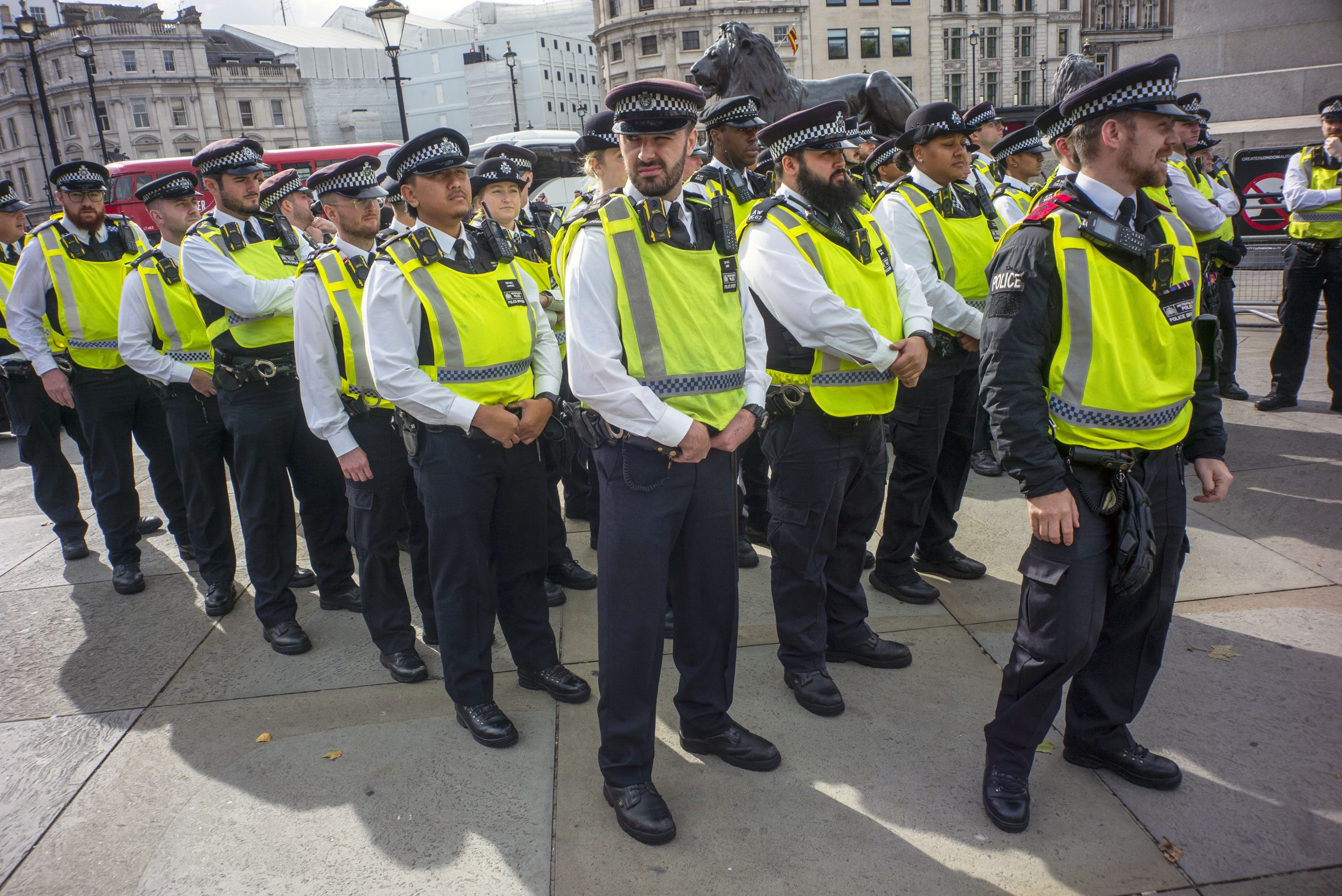
In his video, Farage made claims of ‘two-tier policing’. The reality is that the police, courts and the law – the whole justice system – do treat different people differently. We do not experience crime in the same way. So, while working-class victims of crime have little hope of a quick response from police, the rich are paying for their own private security firms made up of retired police officers to patrol their streets. A couple of hundred pounds a month will buy you access to ‘My Local Bobby’ in London’s most exclusive streets. Completely unaffordable for most of us, but peanuts to billionaire residents. Nor do we have the same experience of the justice system. The cost to taxpayers of security provided for the Royal Family is never made public, but is estimated at £150 million a year. Meanwhile, for decades the crimes of the now former prince Andrew were passed over.
At the same time, the police and the courts are increasingly being used to suppress protests and workers organising. For example, the use of court injunctions used against pickets through the Birmingham bin dispute, and police using huge resources and increased powers to disperse pickets preventing scab lorries from leaving depots.
While for many a phone call to police is the first step when a victim of crime, ultimately the police force and justice system are not ‘neutral’ but exist to serve the interests of the capitalist class. That is reflected in their make up. Over 60% of senior judges went to public school, for example, compared to 6% of the population. Because of the justice system’s role in defending the status quo in society, reactionary attitudes and ideas that the capitalist system uses to divide the working class and justify exploitation – including racism, sexism and homophobia – are baked into its institutions.
Racist division
Of course Nigel Farage, whose party has had a record level of donations from crypto billionaires did not talk about the class character of policing. Instead he whipped up division when he said that different groups are treated differently by police, claiming that the “rights and privileges of white people are treated differently from those of ethnic minorities”.
Later that day, a protest of several hundred assembled at Southampton central police station. It was addressed by several prominent far-right activists, including Tommy Robinson, spreading racist division. The protest proceeded to march through the city to near the site of Henry’s murder where there was a violent confrontation with police.
The far-right protest has further provoked fear, especially among Asian and Black communities in the city and beyond, of an increased threat of racist attacks. Steps towards organised community self-defense, for example of places of worship or other facilities serving the community, should be offered support from the workers’ movement. Like, for example, the role Southampton trades union council played organising stewarding to defend a 2025 march against the Israeli state’s assault on Gaza threatened by the far right.
The events surrounding Henry’s murder will strike another blow to public confidence and trust in the police which, according to a 2024 government report, “has declined in recent years… YouGov reported that 54% of adults in Great Britain thought the police were doing a good job, down from 72% in October 2019”.
The report highlights incidents such Sarah Everard’s rape and murder by a serving police officer, and other findings of police vetting failings, as contributing factors. As well as “ongoing concerns about institutional racism and the police’s relationship with some ethnic minority communities”.
Figures from Hampshire Police, which the Southampton officers serve under, show Black men eight times more likely to be stopped and searched than white men, for example. The 2023 Casey Review into Sarah Everard’s murder found the London Metropolitan Police to be institutionally racist, sexist and homophobic.
Writing in the Daily Mail, Tory leader Kemi Badenoch called for the Southampton case to do the same for institutional change as the 1993 racist murder of Steven Lawrence. What she didn’t say is that it took years of struggle – including mass protests, winning support through the trade unions and determined campaigning from Steven’s family – before the government carried out the Macpherson Inquiry, and 18 years before just two of the gang involved in Steven’s murder were convicted.
Policing for who?
The so-called ‘Independent’ Office for Police Conduct (IOPC) is investigating officers’ conduct in the Henry Nowak case. The IOPC website lists the directors and their backgrounds, all have long histories throughout the policing institutions and as senior civil servants.
Instead, it should be a body democratically elected from the local community and the trade unions which investigates. The Socialist Party fights for working-class democratic control of the police, including determining operational priorities, as well as with responsibility for vetting, and firing and hiring of officers.
The call for policing to be under the democratic control of the local community was a key demand of Socialist Party member Nadia Ditta standing in the inner-city Southampton ward of Bevois in May’s local elections, responding to concerns over crime and community safety. Nadia came a close second to Labour, standing as part of the Trade Unionist and Socialist Coalition, and fighting for a socialist political alternative and a united working-class fightback against austerity.
Working-class organisation, including for a socialist political alternative, is what is required to cut across attempts by the populist and far right to sow racist division.