


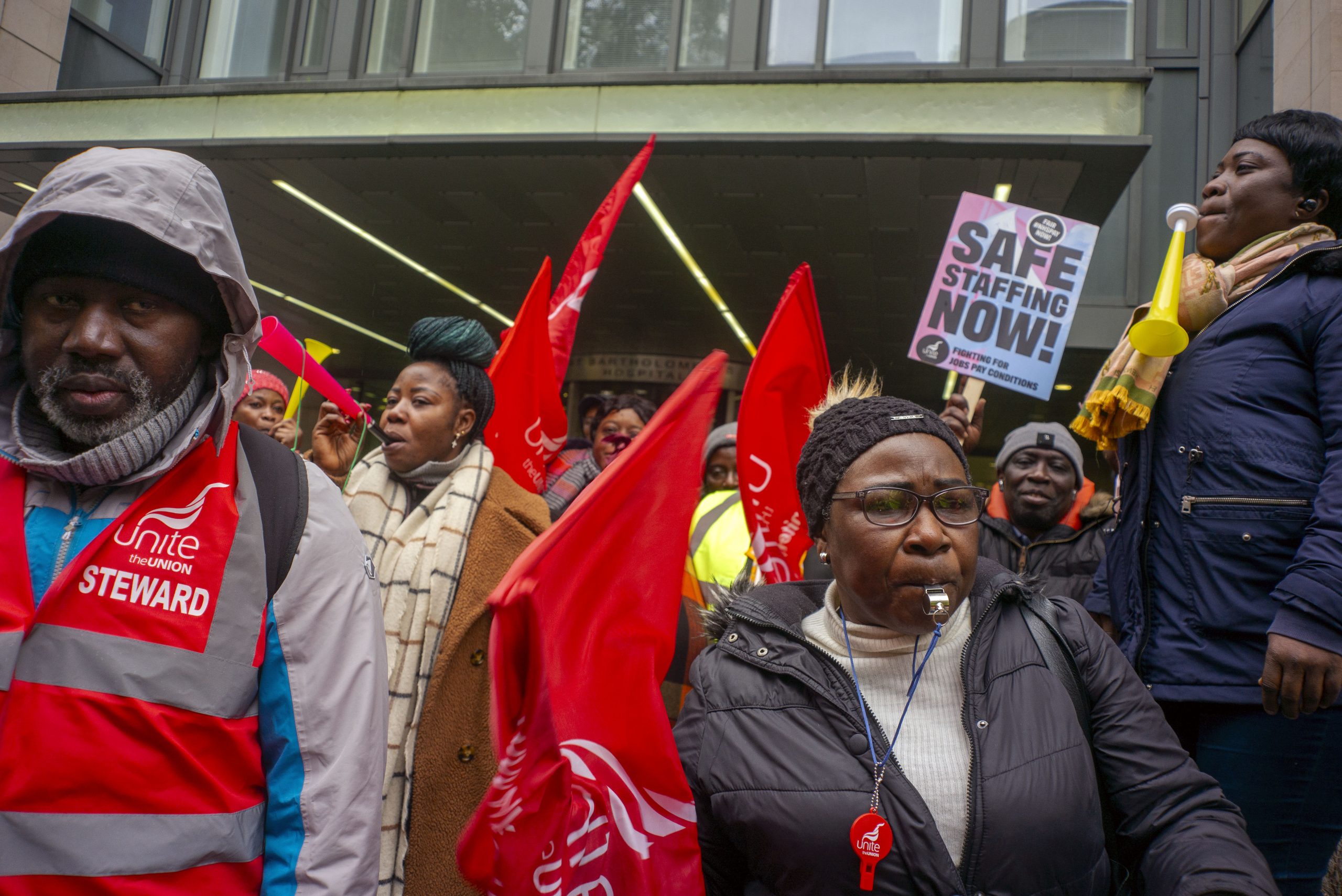
Socialist Party members on the Unite Executive
The first regular Executive Council took place following elections to the union’s leadership body, although shorter than normal, with two days held for training.
One of the major items running through discussions was the focus on combines – a means of bringing together a mass of reps and activists around a particular theme to plan a strategy. This could be on an industrial basis, for example the successful Finance Sector combine, or an equalities strand, for example on Women. Aimed at increasing engagement, they move away from the system of formal delegations and contested elections for a limited number of positions.
On the political side, there were discussions on democratising the political committees within Unite, and further detail on the consultation with members over Unite’s future political direction. This was part of a commitment to review the relationship with the Labour Party, in particular following an emergency motion at last year’s Policy Conference related to the Birmingham bin strikes. However, it is clear that the discussion will extend beyond just our affiliation to Labour, extending to a detailed survey of members’ political views and priorities.
The Socialist Party has continued to argue that there should be a Rules Conference as soon as possible to determine how our union should be represented politically. The rules of affiliation currently prevent Unite from supporting candidates other than those from the Labour Party in any elections. The imperative for such a review is clear. Labour has consistently expelled its most Left-leaning MPs, councillors and activists – those most aligned to Unite’s policies. Labour Party policy has shifted to the right, and the right populists have moved to fill the vacuum by misrepresenting themselves as defenders of working-class interests. Exclusive affiliation no longer makes industrial sense, and the survey of members takes place at a critically important time.
By the time of the next Executive Council meeting in October, the General Secretary elections will have concluded. Sharon Graham is standing for re-election on her strong industrial and political record, but Unite members cannot be complacent. Work is still needed to make sure we get the vote out.
A decisive win is needed against the only other candidate so far declared – Simon Dubbins. Dubbins is backed by the United Left who continue to argue for retaining the Labour link. Crucially, Dubbins lacks the vision and drive needed to transform Unite so that it more effectively represents members’ interests, including being prepared to take on the fight against New Labour austerity.