


Jason Wyatt, Unite rep, Tata Steel, Port Talbot
The British steel industry is forever in crisis. Decades of deindustrialisation have hollowed out once proud steel towns, and every time the industry is hit by another blow, it’s workers, never shareholders, never governments, who are left to pay the price. The fire at Port Talbot on 5 June is just the latest reminder of how fragile Britain’s industrial backbone has become.
The blaze tore through the Pickle Line on Wednesday evening, forcing the shutdown of the Port Talbot Hot and Cold Mills, and triggering a major emergency response. Thankfully no workers were injured, but the damage to a vital production line has deepened anxiety in the workforce and in a community already living through a slow-motion industrial collapse.
Port Talbot has been in limbo since Tata shut down ironmaking in 2024. Steelmaking itself is paused until the new 3.2Mt electric arc furnace is commissioned. In the meantime, the company is importing slab and hot rolled coil just to keep downstream operations alive. For a town built on steel, it feels like watching the foundations being dismantled piece by piece.
Unite
Unite general secretary Sharon Graham has called for urgent guarantees to protect jobs, not just at Tata, but across the supply chain, and for Port Talbot’s Pickle Line project (part of the £1.25 billion investment) to be accelerated. Workers cannot be expected to shoulder yet another period of uncertainty while investment decisions are kicked further down the road.
And she’s right. The fire isn’t an isolated incident, it’s a symptom of a system that has allowed a strategic industry to wither. Successive governments have talked endlessly about ‘green steel’, ‘transition’, and ‘levelling up’, yet the workers – the people who actually make the steel – are left navigating crisis after crisis with little more than words from Westminster.
If the UK is serious about having a steel industry, not just in press releases but in reality, then this moment should be a turning point. The events of this week underline what many in the labour movement have argued for years: private ownership alone cannot deliver the stability, investment, or long-term planning that steel communities need.
A strategic industry requires strategic commitment. That means substantial government support, and a meaningful public stake in steel. Not as an ideological gesture, but as a practical necessity to safeguard jobs, rebuild capacity, and ensure that towns like Port Talbot aren’t left to absorb the cost of every corporate decision and every industrial setback.
The fire may be out. The crisis is not. And unless the government steps up, Britain risks losing not just a steelworks, but the future of an entire community.
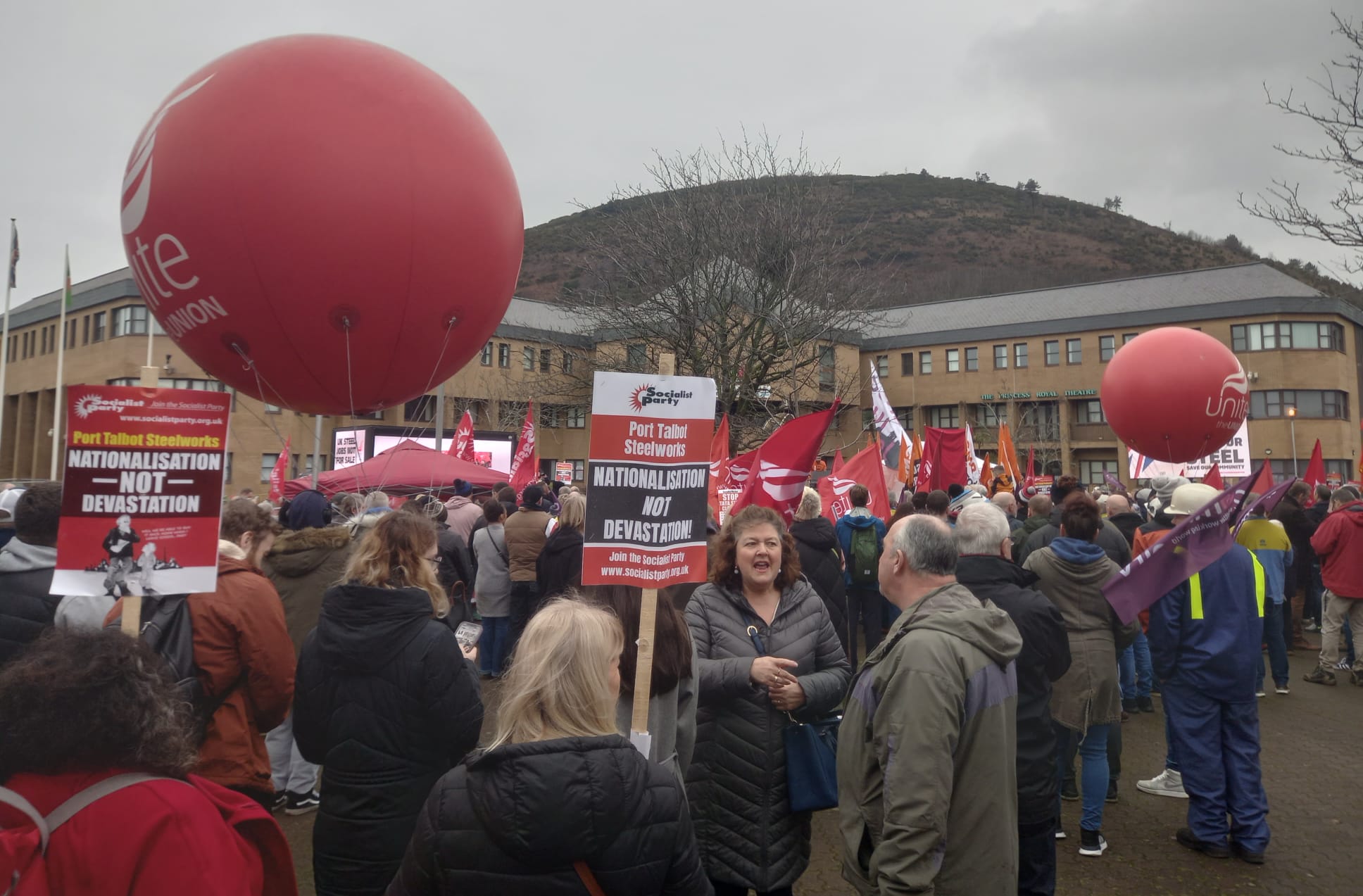
The Socialist Party fights for the steel industry to be nationalised, with no compensation paid to the bosses that have enriched themselves running down the industry, and placed under the democratic control and management of the working class. With workers themselves making the decisions about investment, we could draw up a plan based on what we actually need not what satisfies shareholders. Nationalising steel, alongside the big banks and businesses that dominate the economy, would mean we could restore crumbling infrastructure, build the council houses we need, and transition away from polluting fossil fuels without workers having to pay the price.
