


Bea Gardner, Socialist Party National Committee
The appalling acts of violence by serial sex offender Simon Levy are a stark reminder of the continued violence and harassment women are subjected to in our everyday lives.
His case has also revealed a sickening catalogue of failures by the criminal justice system. The London Metropolitan Police (Met), the British Transport Police (BTP), the Crown Prosecution Service (CPS) and the courts, all acted in ways that contributed to Levy being able to continue to cause harm. He went on to murder Carmenza Valencia-Trujillo and Sheryl Wilkins while under supervision as a known sex offender. Their deaths could have been prevented.
Justice failings
The numerous failings expose the lack of seriousness given by the criminal justice system to tackling violence against women. This is not a new development. Back in 2020, the then victims commissioner Vera Baird said rape had effectively been decriminalised as a result of a collapse in prosecutions that allowed many offenders to escape justice. She pointed to both police and the CPS.
Numerous women made reports of sexual assault, including on the tube, which have been found to be attacks by Levy. Several times he was interviewed but no charges were brought. He breached bail conditions but was not re-arrested. He assaulted a female prison officer which was captured on CCTV, but outrageously it took three years for him to be charged.
Some of his victims have been described as vulnerable women involved with street-based sex work. This no doubt contributed to the mishandling of these cases by the Met. One woman reported a violent rape involving strangulation in a Tottenham carpark, giving a detailed description of Levy and where he lived. Instead of treating her like the victim of a serious crime that she was, she was instead arrested for being in the wrong area. Later her case was closed. Horrifically, Sheryl Wilkins would go on to be murdered in the same car park six months later. When Carmenza Valencia-Trujillo was found dead, with Levy’s DNA at the scene, her death was not even recognised or treated as murder until after Levy murdered again.
The Met’s appalling treatment of these women raises the question of what is necessary to keep women safe, including those involved with sex work. The police appear more concerned with arresting sex workers than tackling sexual and physical violence against them. Decriminalisation is posed as the answer to this.
Criminalisation of sex work makes women more vulnerable to attacks and it creates extra barriers to reporting abuse. Decriminalisation can contribute to reducing harm.
Women’s safety
However, in and of itself, decriminalisation would not guarantee women’s safety. It would not, for example, guarantee that reports of violence against women are taken seriously by police and justice institutions. Levy’s other victims were not involved in sex work. They reported their assaults immediately and yet it took years for him to be interviewed and charged, despite CCTV and phone camera footage capturing incidences. Their reports were also dismissed or subject to delays. The Met has been found to be institutionally misogynist.
The criminal justice system is not in our control, it is not organised in the interests of working-class people, including women. What is given priority reflects broader political priorities in a context where austerity has closed domestic violence refuges and turned off street lights, and low pay forces women workers into unsafe travel and vulnerable situations while the bankers got bailed out. Women can be granted legal rights, but more often than not the material resources are not there to mean we can exercise these in practice. For example, women have died while waiting months for the police to release details of whether their partners have prior convictions for domestic abuse. We need democratic community control of policing, including over priorities and hiring and firing.
Misogynist institutions
Ideas about male dominance and control and women’s sexual availability are constantly promoted and reinforced for profit and ideological advantage. The police and courts perpetuate these ideas through the handling and prosecution of cases. The multi-billion-dollar sex industry is another means by which such ideas are reinforced. Levy avidly consumed pornography, the majority of which has been found to be violent.
Overwhelmingly research shows women become involved in sex work out of financial necessity, to cover basic survival needs including food and housing. Carmenza is reported to have been a hard-working cleaner for over 30 years to support her children and later her grandchildren. A £15-an-hour minimum wage as a step towards a real living wage with affordable council housing would have meant she would never crossed paths with Levy. The blame for that lies with the deeply unequal and exploitative capitalist system that prioritises profit over meeting the basic needs of the majority.
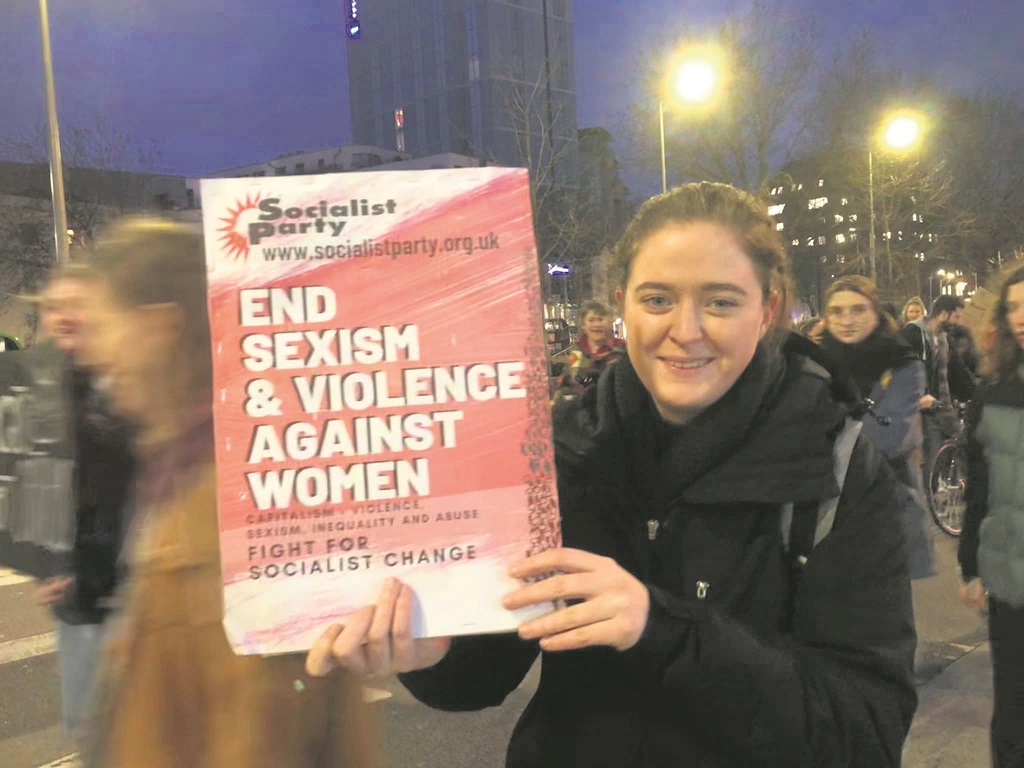
Levy’s horrific case is an indictment of capitalism. The system fails women, working-class women doubly so. The struggle to end violence against women is therefore bound up with the struggle against capitalism and for the democratic control of all society’s institutions for need not profit.
