
Reece Lawton, PCS NEC member, personal capacity
PCS members are heading towards a national industrial action ballot as civil servants face renewed attacks on pay, jobs and conditions.
The PCS National Executive Committee (NEC) has agreed a ballot from 20 October to 1 December, opening the possibility of national industrial action before Christmas.
The ballot covers the union’s national campaign over pay, jobs, pensions, hybrid working and terms and conditions. The immediate task is clear: organise throughout every workplace to smash through the anti-union 50% turnout threshold and deliver a decisive ‘yes’ vote!
Socialist Party and PCS Broad Left Network (BLN) members on the NEC argued that PCS should have launched the ballot by 30 September, in line with the decision of the union’s annual conference. However, the NEC was informed, after questioning the general secretary on the delay, that the union’s balloting provider could not begin it before 20 October. This situation should never have arisen – both conference and subsequent NEC meetings had instructed the union to prepare for a September ballot.
More importantly, the NEC left majority rejected proposals from the general secretary to hold a consultative ballot first, which would have meant further delays. Instead, we argued for what is needed now – an industrial action mandate capable of putting pressure on the government.
Pay and jobs
PCS conference policy calls for a 10% pay rise, an £18-an-hour minimum wage and appropriate London weighting. The government’s 3.5% civil service pay remit falls far short.
Years of inflation have eaten into civil service pay. The fact that inflation fell from its previous peaks does not reverse the enormous increases already imposed. Energy, transport, water and council tax costs have risen, while international instability and conflict threaten further increases in energy and other prices.
Jobs are also under threat. Tens of thousands of civil service posts are threatened by government departmental spending cuts. PCS is demanding a job security agreement and protection against compulsory redundancies.
Job cuts also mean greater workloads for those who remain and deteriorating services for the public. Meanwhile, arbitrary office attendance requirements leave workers paying more each month simply to travel to workplaces where they may spend the day on online meetings.
The national ballot will not take place in a vacuum. PCS members are already showing what organised workers can achieve.
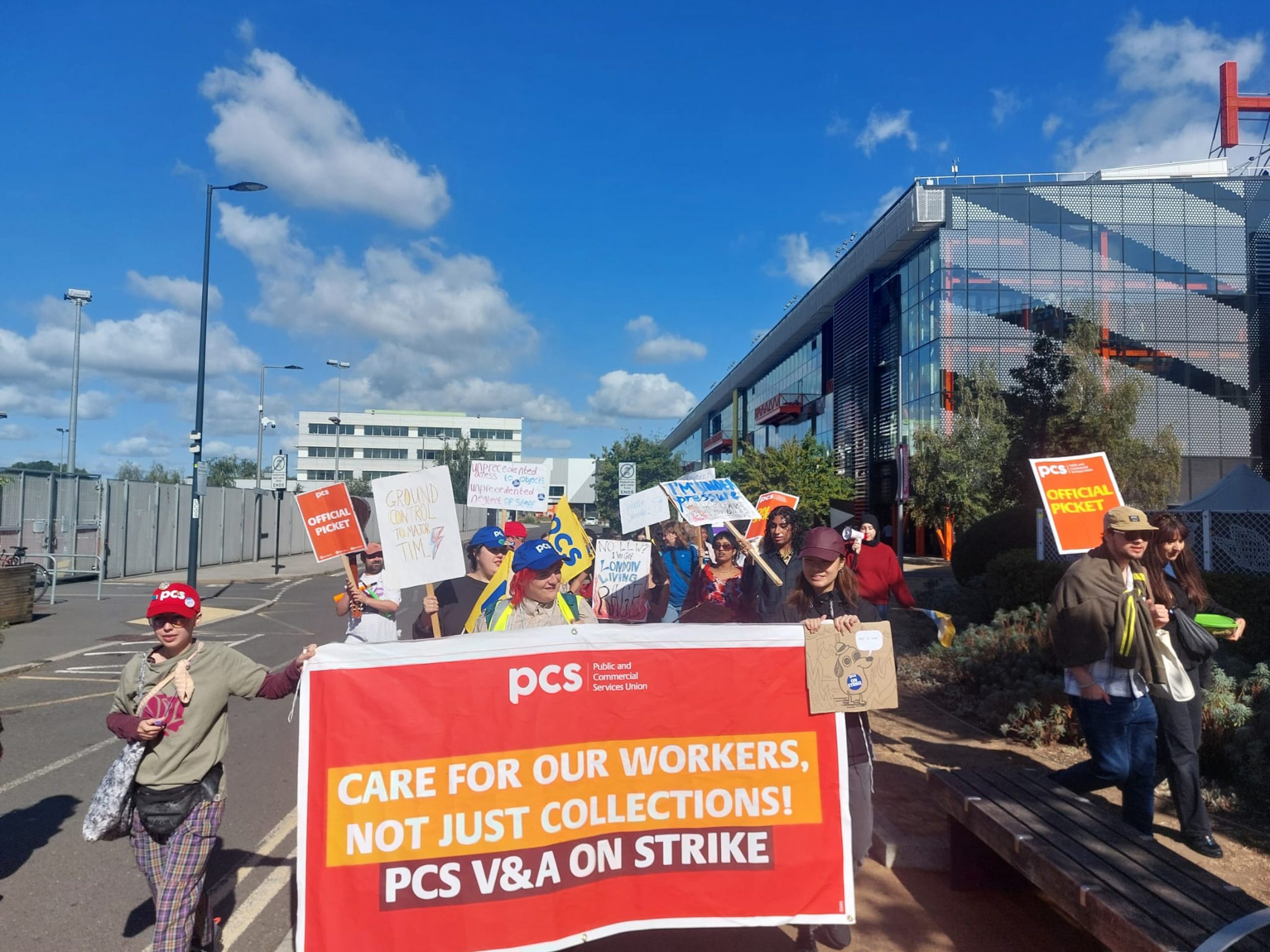
At the V&A museum, PCS members returned a huge mandate for action, with more than 95% voting to strike, and have taken strike action alongside action short of strikes. At Ofgem, industrial action helped secure around 1,000 jobs within the civil service and bring another 200 posts in-house.
These disputes show why the national campaign matters. Instead of isolated groups of workers being forced to fight job cuts, low pay and attacks on conditions one by one, a successful ballot can bring the collective strength of the union into the struggle, coordinating with existing disputes where possible.
Coordinate with other unions
PCS members are not alone. The same question confronts workers throughout the public sector: who pays for the crisis? The millions of workers who run government departments, schools, colleges, hospitals, councils and other services have enormous potential collective power. Trade unions facing the same government and the same attacks should coordinate their campaigns and, wherever possible, their industrial action in order to force the government to the table.
Between now and 20 October, PCS must organise in every workplace: checking membership details, recruiting members and reps, holding workplace meetings and systematically speaking to members about the campaign.
Once voting begins, every level of the union must be focused on beating the 50% turnout threshold and delivering the biggest possible ‘yes’ vote. Socialist Party and BLN members will be campaigning hard and keeping the pressure on.