

Nick Hart, Socialist Party National Committee
Wealth inequality in the UK and other Western countries has been growing for several decades now. 157 billionaires in Britain now hold wealth equivalent to 22% of everything produced in the UK each year. Globally, 56,000 individuals now have three times as much wealth as the lower half of the world’s population put together.
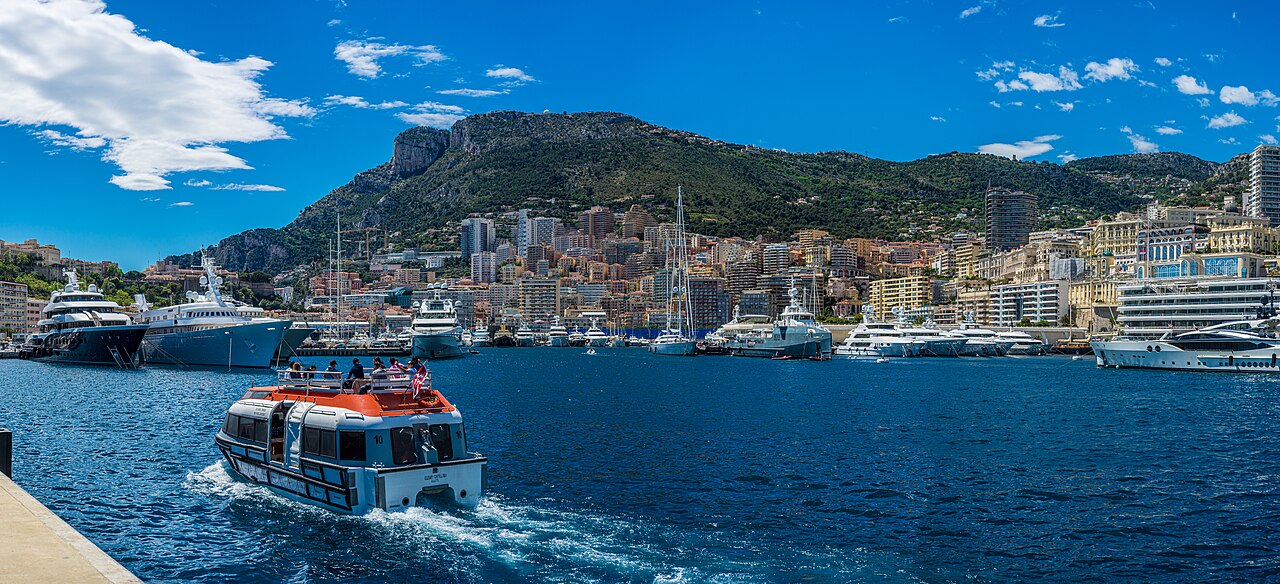
At a time when many working-class people are struggling to get by, stories of Elon Musk attempting to reach Mars or Jeff Bezos renting out Venice for his three-day-long wedding seem purpose-designed to rub our faces in it.
No wonder that many workers and youth are looking for ways to explain this ever-widening gap between the haves and have-nots, and solutions to it. City trader turned YouTuber Gary Stevenson (@garyseconomics) built an online following of millions, railing against wealth inequality before his recent ‘retirement’.
Now Gabriel Zucman, the man Stevenson described as “the most important economist in the world today”, has had his recent pamphlet We Need To Tax Billionaires translated into English. This comes at a time when California residents are preparing to vote on a statewide tax on billionaires – which it has more of than any entire country worldwide bar America, China and India!
In it, he spells out how little the super-rich contribute. By Zucman’s estimates, his native France’s roughly 100 billionaires on average pay 25% of their annual income in tax.
Sounds reasonable? This compares to the average French citizen chipping in 46% when VAT, fuel and alcohol duty and other taxes on consumption are taken into account, and money paid out in benefits deducted. As he points out, this varies by only a couple of percent for different income bands.
Zucman’s proposed answer is to get individuals worth over $100 million to pay a minimum of 2% of the total value of their wealth in tax each year. With an average annual increase in their wealth of 6%, this would work out as a third of their income.
In the UK this would raise an estimated £10.4 billion per year. This would be roughly the cost of building 70,000 council homes, scrapping university tuition fees for UK students or increasing the number of NHS staff by 10%.
Implementing any one of these things would be welcome, as would putting this money directly into any of the services relied upon by working-class people rather than for increased military spending or fat contracts for outsourcing companies. But it would only begin to scratch the surface of what’s been taken from public spending since 2010, and what is needed to address the many different crises facing us today in housing, health and social care, education and more.
If a 2% tax on the ultra-rich would only raise modest sums in wealthy countries such as the UK or France, where would that leave nations without large numbers of wealthy individuals?
As measured by Forbes magazine, Pakistan, Bangladesh, Egypt, Ethiopia, Iran and the Democratic Republic of Congo all lack a single resident dollar billionaire, while together being home to 800 million people – more than one tenth of the world’s population!
In response to the commonly raised objection that countries implementing a wealth tax would end up similarly lacking in billionaires, Zucman counters that if all France’s billionaires were to flee to tax havens tomorrow, the loss of tax revenue to the country would only be 0.03% of the total as they pay so little at present anyway.
His proposed solution is that those who choose to emigrate to escape a wealth tax would still be liable to pay for another five years. As he rightly points out, American citizens have to pay USA income tax for life, regardless of where they base themselves in the world.
However, enforcing this effectively would require tax collection agencies to be properly staffed in the first place! Between 2010-15 in the UK, 20% of HMRC jobs were cut; the department is now facing a further 17% cut under the Labour government’s spending plans.
Zucman also takes up the argument that the majority of billionaires’ total net worth is based on the value of company shares, real estate and other assets they hold rather than bank balances, and that the fluctuating value of these investments mean they might not have even 2% of their total wealth in ready money to pay the tax collectors.
In this case, he proposes that billionaires could pay their taxes in company shares rather than money, to either be held in a sovereign wealth fund by the government or sold back to employees.
But if it’s good enough to take 2% of multimillionaires’ shareholdings in companies each year so the profits can be used to benefit society at large, then why not go further?
After all, if no one was willing or able to build factories, offices and warehouses for these companies, less still go to work in them, then the wealthy investors would just be people sat on large piles of cash like generals without an army! It’s the workforce labouring to turn raw materials, goods and information into saleable products and services which allows the owners of the business they work for to turn their existing fortune into even more money.
The capitalist class benefits from workers lending them their ability to work in return for wages that are less than the value of what they produce. But the capitalists also get another leg up from government funding the electricity networks, roads, railway lines and more which their businesses need to function, as well as keeping the workers to at least a minimum standard of education and health needed to work. And as Zucman points out, the contribution in taxes to pay for these government-funded services and infrastructure that comes from the ultra-wealthy is minimal.
Socialists support measures to claw back some of the unearned profits of the capitalist class, either in better pay and conditions for workers or in taxes. But if, as Zucman says, workers will be better motivated and more productive on the basis of having a part share in the companies they work for, why not hand over the large investment fund-owned corporations lock, stock and barrel to the working class which keeps these companies running?
The Socialist Party calls for the nationalisation of the 150 biggest companies that dominate the economy and with it our lives, under the democratic control of the working class. That would form the basis of developing an economic plan for the benefit of wider society, providing the services, homes and infrastructure to meet needs rather than for profit.
Compared to a small wealth tax, this would be, to borrow a phrase from Zucman, a real “innovation in how we organise society”.
That kind of wholesale restructuring of the economy along socialist lines would need the active involvement of the mass of the population. Not just in keeping these publicly owned firms running but to establish new structures of government built to better plan and manage the economy to serve the working class rather than the investor class, as opposed to the present capitalist state where the opposite happens – in other words, a revolution.
This would be no small task and, by comparison, a more modest trimming of the super-rich’s toenails by 2% a year might seem more achievable. But under the present system of capitalist government, how would a wealth tax come about?
Besides the limited nature of its proposals, possibly the main shortcoming of We Need To Tax Billionaires is the lack of explanation on what would need to happen politically for such a tax to be passed in law. He admits that “fierce opposition by the people forced to pay it is to be expected.”
But in the same breath he states that a 2% wealth tax would have to be accepted because “everyone” would agree that it is “reasonable”, and the super-rich would eventually have to accept their “duty towards humanity” and “enter the realm of national solidarity”.
In reality, the willingness of any capitalist government to pass wealth taxes and other measures that partially redistribute money from the rich to the rest of us will be due to mass pressure by the workers’ movement and the fear of pitchforks at the gate. Not, as Zucman implies, through abstract forces of historical progress or superior arguments based on what it “logical” and “necessary”.
After all, what might seem logical to a worker who has discovered their local library is due to close due to a lack of council funds will seem very different to a billionaire intent on preserving and growing their wealth as much as possible!
In fact, as acknowledged by Zucman, this exact tax proposal was passed by the French National Assembly in 2025, but then voted down by that country’s Senate.
In many capitalist countries, senates and other ‘upper houses’, such as the British House of Lords, exist as appointed or indirectly elected bodies with the ability to block, water down and delay even modest measures that would restrict the ability of the wealthy to continue making money hand over fist. That’s not to mention the likelihood of the ultra-rich using the courts to mount challenges to the strict implementation of any wealth taxes.
Zucman leans on the example of the original introduction of an income tax scheme in France which placed a greater burden on the wealthy than what had come before. He describes how it was first passed by MPs in 1909 but nixed by the Senate before finally being passed in 1914.
What he doesn’t mention is that in the intervening five years, over 100 members of the French section of The Workers’ International were elected to parliament and France was rocked by workers’ struggles including a general strike in 1912!
If it was the case when capitalism was booming that for workers to gain a little from the ruling elite they had to threaten to take the whole lot, in this era of low growth and decreasing profitability for capitalists – outside of a few bubble industries such as tech and property – then it’s doubly true now!
But if a mass working-class movement arose that had the possibility of taking power off the capitalists altogether, it would be a mistake to allow it to be stood down on the promise of the existing elite making a few concessions that could easily be taken back tomorrow.
Commentators and academics such as Gary Stevenson and Gabriel Zucman have spurred on the curiosity of many people who were questioning the status quo of the rich getting richer while the rest of us struggle to get by. Developing a clearer understanding of what is needed to change that is a necessary next step, together with building a mass revolutionary party to make it happen.
Help us take the fight to the billionaires – £6,303 left to raise!
Inequality is at a record high, and increasing. The super-rich keep getting richer while millions of working-class and ordinary people struggle to make ends meet.
The increase in wealth of the 1% is not an accident – capitalism is a system that functions in their interests.
The Socialist Party is fighting for a society run in the interests of the majority. We say, there is more than enough wealth and resources to meet the needs of all of us. Take it off the super-rich, nationalise the banks and big business under democratic workers’ control so a plan can be developed and carried out to provide everyone with a decent job, a home and a future.
We take the fight to the 187 billionaires and their ‘buddies’. But for that we need funds. Every quarter, the Socialist Party has a target of raising £25,000 for our campaigning materials. The deadline for the end of this quarter is 4 October. We have got £6,303 left to raise. Can you donate to us today get us over the line?