


Defend workers’ and trade union rights
Socialist Party Scotland members in Glasgow City Unison
Glasgow City Council (GCC) announced on 24 September its intention to sack its entire workforce – excluding teachers – more than 23,000 workers in all.
Unbelievably, the Scottish National Party (SNP) leadership, aided by the Scottish Greens, used Tory fire-and-rehire anti-union legislation. That law is due to be abolished on 1 January 2027.
The option to use fire and rehire, if there was not agreement by unions to accept a new pay and grading scheme, was voted through by SNP and Scottish Green councillors at council committee in August.
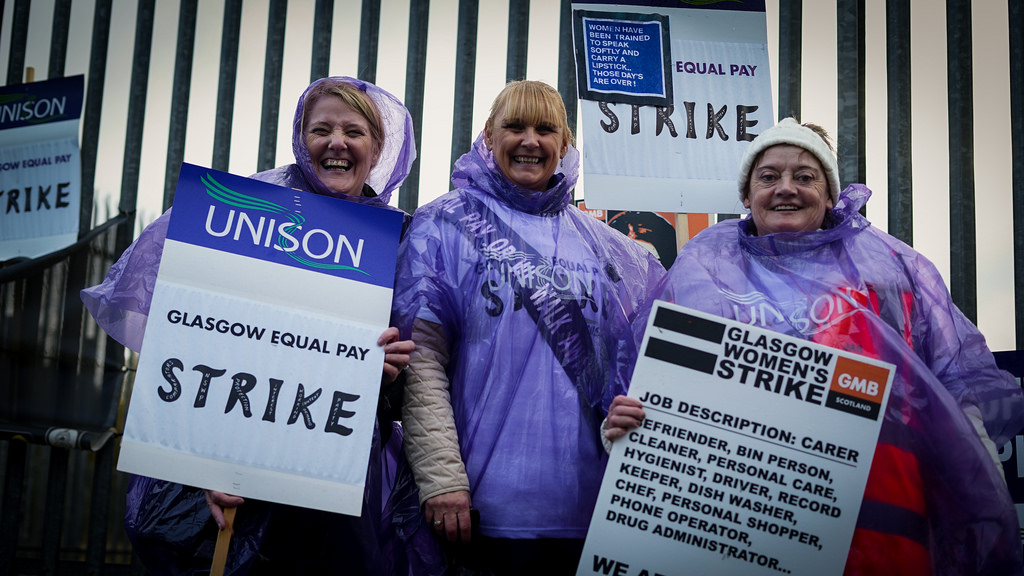
These disgraceful anti-union actions catapulted the Glasgow equal pay struggle back into the national spotlight. Just as it had been in 2018 when 8,000 mainly women workers took part in a history-making 48-hour strike.
That strike resulted in over £800 million to date being paid to workers in compensation, after years of suffering unequal and discriminatory pay. This current dispute is over the pay and grading scheme that is due to replace the old one by 1 April 2027.
Media outlets across Scotland featured it as their main story. With no Glasgow SNP politician prepared to front up, the spotlight turned on their paymasters in the Scottish government.
During an excruciating BBC interview the next morning, SNP cabinet minister Neil Gray was asked whether he agreed with former SNP first minister Nicola Sturgeon who said after the P&O scandal that fire and rehire was “an appalling practice” and “offends the principle of fair work”? On nine occasions he refused to answer the question: “Are GCC’s actions fair?”
By early afternoon, the Scottish government had, under massive pressure, offered the joint trade unions a meeting with the deputy first minister. By 4:30pm, GCC had been instructed to take fire and rehire off the table. Reconvened talks with GCC and the unions are due to start on 29 September.
These events followed an Acas-convened meeting last week during which Unison – the largest of the local authority trade unions in Glasgow – refused to sign up to the new pay and grading scheme. Not least because it left thousands of workers facing pay cuts.
Both GMB and Unite – the other unions involved – had said they were happy to move immediately to consult members. Mistakenly, both unions released a statement in the hours before the council pressed the nuclear option saying they were prepared to accept.
This gave the employer the confidence that they could attack Unison and browbeat the workforce into acceptance by using this corporate terrorism.
In a desperate attempt to deflect responsibility for the crisis, the council’s director of communications and governance blamed Unison who had “betrayed its own members” by not balloting them. “The council wanted to get a deal over the line. The GMB and Unite wanted to get a deal over the line, and twice Unison at the last minute have pulled the rug out from all of us.”
As Glasgow City Unison, immediately after the fire-and-rehire decision, made clear: “Any agreement would have tied our hands and limited our ability to fully campaign and ballot our members on their rotten proposals. The council did not have to issue dismissal letters today and it was their choice to do so.
“There are nearly 2,000 workers facing detriment and we are fighting for them right now. We will continue discussions with the council to make improvements. There is not enough money invested in the cash values for the new grading structure, in the allowances model or in pay protection. The proposals do not deliver fair pay for workers.”
In taking this stance, Glasgow City Unison are a credit to the entire trade union movement. Events since have proven this to be the case, with the council being forced to withdraw the sack notices and more talks on Unison’s demands now due to take place.
It’s vital that trade union unity is maintained. And that Unite and GMB fight alongside Unison for more investment into the pay scheme.
As Glasgow City Unison has said: “We will not allow workers to be pitted against each other, and we will fight for all workers for a properly funded settlement that delivers pay justice across Glasgow’s workforce.
“We’ve shown what standing together can achieve, and this week, as negotiations resume, we will continue to build unity and organisation across every service and workplace. Equal pay. No unacceptable detriment. More money in the pot!”
This whole disgusting episode underlines the need for a city-wide trade union and socialist election challenge in May 2027.
Socialist Party Scotland will continue to work with trade unionists, socialists and anti-cuts campaigners to that end, including in the newly formed Another Glasgow is Possible initiative, which stands on a commitment to oppose all cuts while fighting for a needs budget for Glasgow.
- Socialist Party Scotland members play a leading role in Glasgow City Unison