


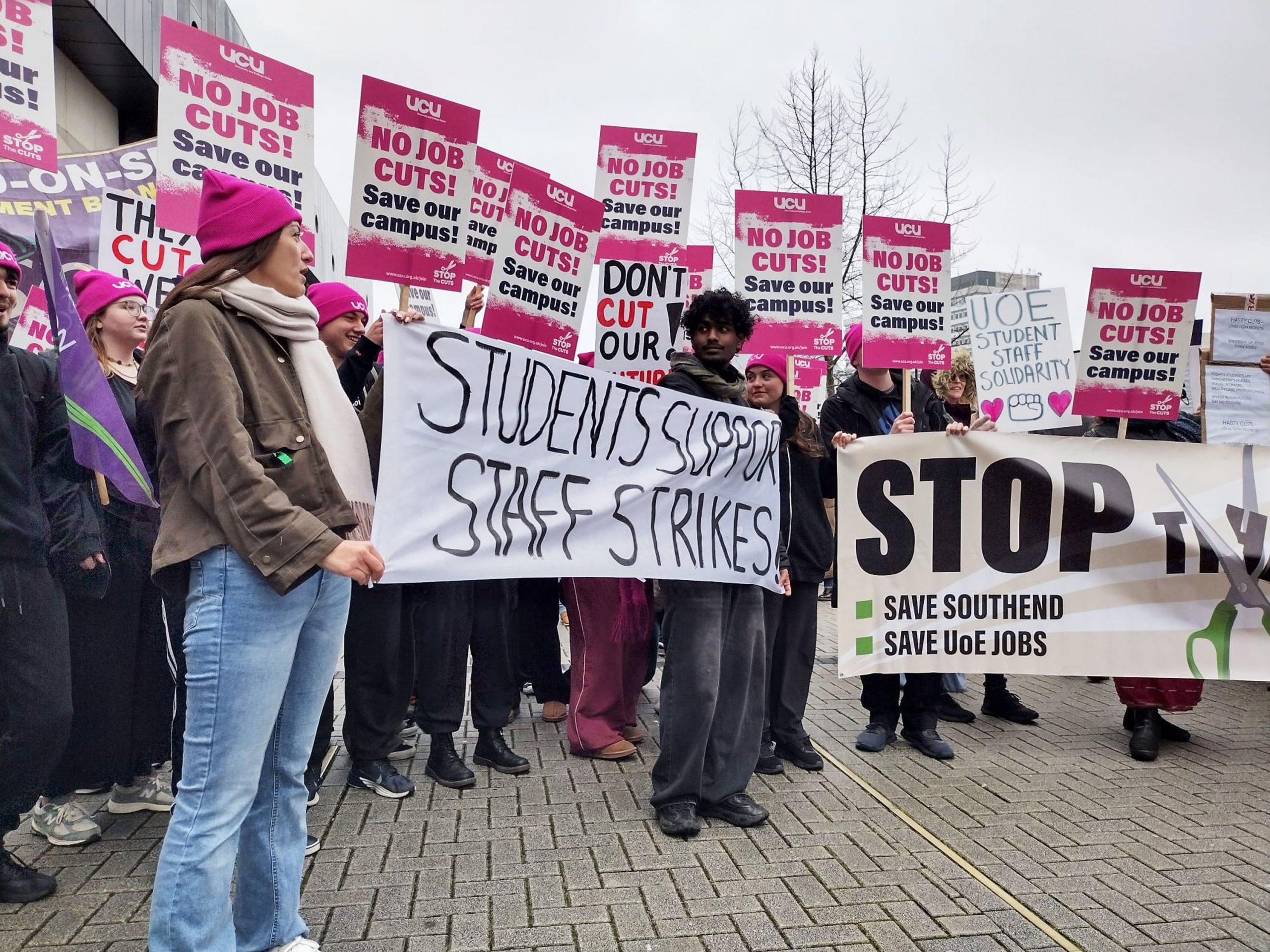
Tilde Resare, UCU member, University of Sheffield
The University and College Union (UCU) represents academics and support staff at higher education (HE) and further education (FE) institutions. It numbers over 120,000 workers.
The Socialist’s report from 2026 UCU Congress states: “24 universities are now at risk of insolvency: an unprecedented situation and a direct consequence of the failed marketised fees model in higher education. Labour’s only response has been to increase fees.”
The current funding model of HE is a product of the ‘neoliberalism’ Andy Burnham claimed he wants to reverse in his new role as Prime Minister. However, so far it looks like he has more loyalty to the ‘bond markets’ than to the working class, as currently no steps are being taken to meaningfully increase spending in education.
Following a motion being passed in 23 UCU branches calling for it, a special HE sector conference (SHESC) has been called for 14 October, with the stated purpose of debating launching a dispute with the Secretary of State of Education.
Push the leadership
It has been necessary to campaign for this SHESC because at UCU’s HE conference in May, members voted overwhelmingly for national action against job cuts, in the face of huge efforts from the leadership to prevent this. This is a clear display of will from the workers to stand up for the sector.
Members again showed their willingness to fight in the consultative pay ballot in the summer. Of those who voted, 69% rejected the 2% pay offer and 60% were willing to participate in industrial action. The UCU Higher Education Committee (HEC) is meeting to determine the next steps. They should agree to ballot for pay and funding.
But the HEC, the body in charge of implementing the policy the members have decided on, has so far refused to call national action. “Following legal advice” the dispute over the funding model has been stalled. This follows a similar motion passed in 2025, which the UCU leadership has failed to act on.
HEC has instead endorsed a three-year strategy as a solution (the ‘Education. It’s ours’ campaign), delaying any national industrial action.
This stalling is an overreach of the powers by the unelected UCU officials, who are backed by the elected leadership group around the general secretary, Jo Grady. It is important to note that the legal advice cited does not state that launching such a dispute would be impossible.
The main problem is supposedly that a dispute over the current broken HE funding model in general would be deemed ‘political’ rather than ‘industrial’ and therefore not legal under current legislation. This argument sidesteps the issue that the current funding model poses an existential threat to the whole HE sector – if pay, jobs, terms and conditions are to be maintained and improved, it requires more funding. Members have been and continue to be engaged in huge battles at many universities across the country – my own included. But the funding crisis cannot be resolved by individual universities alone.
If workers across the HE sector were led by the UCU to take decisive strike action this would be an undeniable show of force. There is wide support for this across the sector. The tango at the HEC is filibustering against the will of the workers. However, due to the actions of the UCU leadership, there is very limited trust in the current leadership of UCU.
This is the background against which the SHESC has been called. HE members should go into this Zoom conference taking confidence from the battle in FE, where there are also relentless efforts by the officials and Grady-supporters to prevent, delay and whittle down national action. But due to the daily battle of Socialist Party members and other lefts on the FEC, applying the pressure of the members, in FE there is due to be a national ballot this autumn.
A strike across the board would make both fights much stronger! To vote for national action, vote FOR Motions 1 and 3, and AGAINST Motion
