


Josh Asker, Editor of the Socialist
The results of the 7 May elections will be seismic. The Tories were smashed two years ago, punished for presiding over austerity and falling living standards. Now Keir Starmer’s Labour will get a taste too, for the same reasons.
Britain’s two-party system is crumbling. Most now expect their children to be worse off than they are. Meanwhile, the super-rich only get richer.
Millions will go to the polls on 7 May, in elections to the Scottish and Welsh parliaments and in thousands of council seats in England, with a desire to show their disgust with the status quo. Many will do so by voting for Nigel Farage’s right-populist Reform UK. Those wanting to vote ‘left’ will be most likely to vote for the Greens, now led by Zack Polanski who correctly speaks about the unequal rigged system. Socialist Party branches are hosting public meetings in dozens of towns and cities, bringing together all those who want to fight for an alternative asking: ‘What kind of party do we need?’
Councillors have power, if they choose to use it
In England, elections are taking place to over 100 local authorities. Despite the brutal cuts to central government funding for councils over the last decade and a half, council spending still makes up over 20% of public spending.
Rent controls and council house building, funding for schools and SEND education services, subsidies to introduce free public transport, reopened youth services, emergency cost-of-living relief… Councils can introduce all of these measures, with access to huge financial reserves and the ability to borrow money.
Of course, Starmer’s Labour government will say it can’t be afforded. At the same time as ratcheting up military spending to try to appease Donald Trump, and while big energy bosses rake in mega-profits as our bills keep going up.
But recent history shows that they can be forced to U-turn, and to cough up. Working-class anger at the cut to pensioners’ universal winter fuel payments made them change course, so too on the decision to keep the cruel two-child benefit cap. And even the Tories had to give pay rises more than they were willing faced by workers taking collective strike action during the 2022-23 strike wave.
Working-class fightback
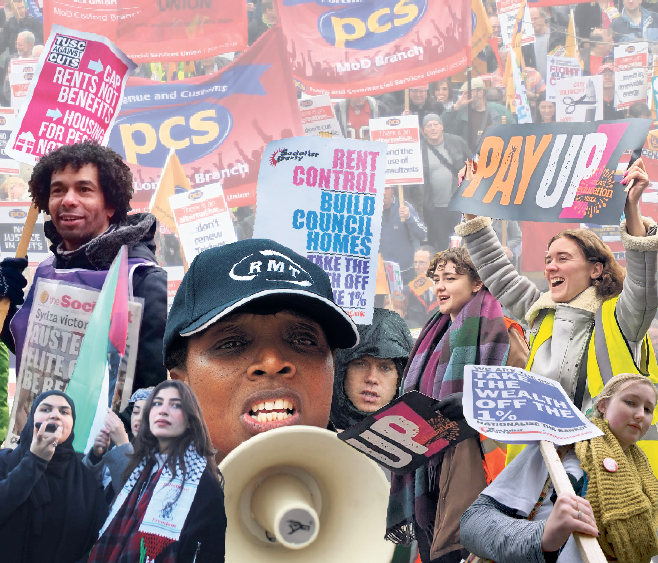
Faced with working-class anger, especially as it gets organised to fight back, what was once ‘unaffordable’ becomes possible. But the working class does not have a party of its own to act as an organiser and a political voice. That’s why we call for the trade unions – with over 6 million members organised in tens of thousands of workplaces – to take the lead by forming a new mass party, one that represents the interests of our class against those of the capitalist bosses.
The Socialist Party’s stand in these elections, as part of the Trade Unionist and Socialist Coalition (TUSC), is part of raising the banner for what kind of stand is needed. At the same time, our members are fighting hard in the democratic structures of the trade unions, arguing that to continue to (or be seen to) back Starmer’s Labour is counterproductive. And that instead the unions should form their own party, starting by standing candidates of their own.
Socialist change
A mass party of the working class would be a huge draw for all those fed up with the ‘rigged system’ and angry with the establishment politicians. Its existence would cut across support for Reform UK too.
But to be able to improve the lives of the working class, it would have to present an alternative to the ‘rigged system’. So far, for example, Green-led councils – or the 40-odd in which they take part in coalitions or agreements with others – have continued to increase council taxes, rents and charges, and cut funding for services. They have followed the logic of the ‘rigged system’ and what it says is ‘affordable’. It’s why the Socialist Party has backed the call from some leading trade unionists for Polanski to use his position to force them to change course.
We need a party that helps to organise mass working-class struggle for what is needed to transform our lives. And to be successful it has to fight for socialist change. That means transforming the way society is organised so that instead of energy, water, telecoms, supermarkets, banks… being owned by super-rich capitalists and run for profit, they are nationalised under the democratic control and management of the working-class majority.
On that basis, what is ‘affordable’ isn’t determined by what crumbs the capitalist bosses are prepared to leave behind for our public services. Instead, the full fruits of all the wealth, resources and technology that exist can be put to use as part of a plan to meet the needs of all, while protecting the environment.
