


NEU to ballot teachers on pay and funding
Socialist Party opposed narrow National Executive decision not to ballot support staff
- Build a united fight of all NEU members together to win the funding we need
- 2027 Executive elections a chance to stand candidates who want a fighting, democratic union
Dan Warrington, Sheila Caffrey and Louise Cuffaro, NEU National Executive members, personal capacity
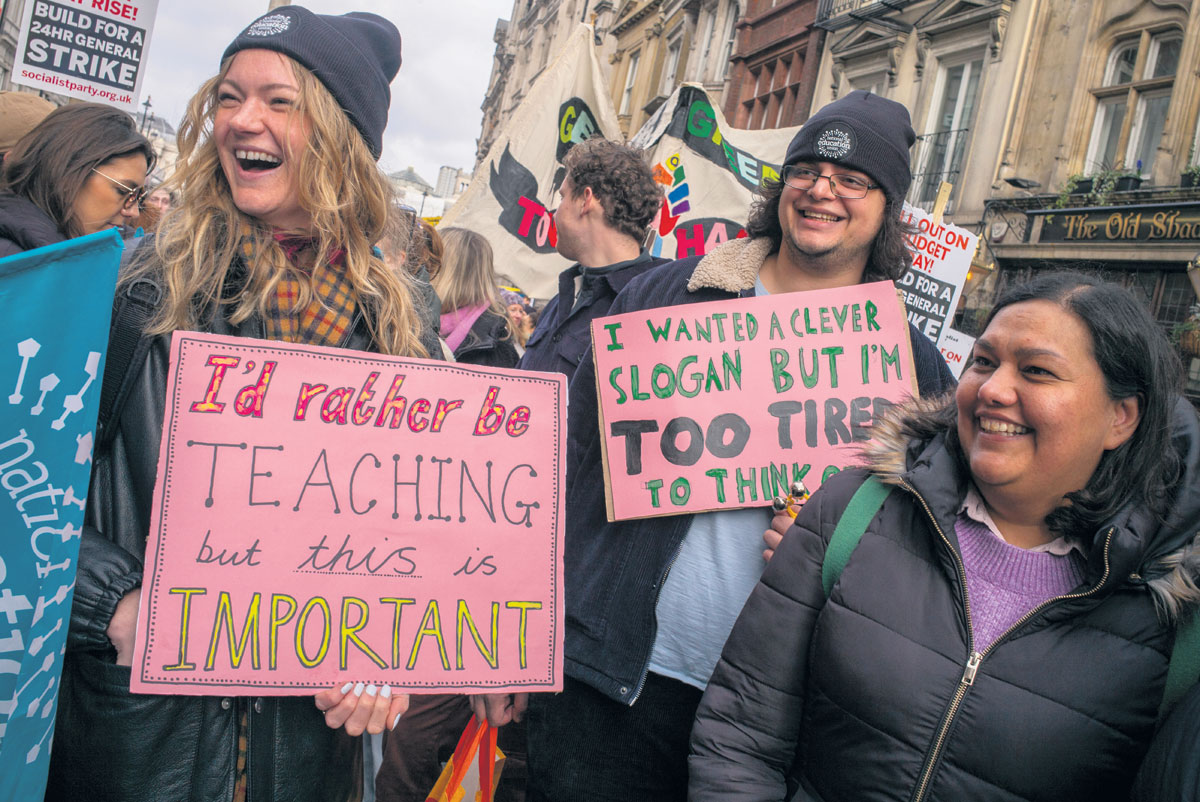
On 3 October, the National Education Union (NEU) will open an England-wide ballot of teachers. The National Executive agreed in July that this will be to fight towards teacher pay restoration, following years of real-terms pay cuts, and for enough funding not just to cover the pay rise but to prevent redundancies.
But on 8 September, the Exec very narrowly voted not to ballot support staff over funding.
Support staff in schools are predominantly un-unionised and are at the sharp end of current attacks on school funding and increasing redundancies. Over the last few years, the NEU has increased to nearly 70,000 support staff members – the second largest support staff membership out of four unions, including Unison, Unite and the GMB.
When the NEU was first formed in 2017 through the merger of the NUT and ATL, its then-leaders signed an agreement not to recruit support staff. However, since then, thousands have joined the NEU because they saw it as a fighting union, and expect their leaders to fight for them. This had led to complaints from the other unions, which in our view only damages the chance for a real fightback for the workers involved.
Socialist Party members have consistently, over several years, argued that the NEU should fight seriously for its support staff members, calling for maximum unity between the unions rather than complaints and sanctions. We’ve argued that disagreements between the unions should be resolved through democratic discussion between the elected lay leaderships of the unions. Over the summer we launched a statement for maximum unity from national executive members in the NEU, Unison and Unite; hundreds of NEU members and 22 NEU exec members signed it. We wrote to the NEU general secretary Daniel Kebede to urgently request he initiated discussions with other union leaderships to back this call.
Over the summer, Unison and Unite balloted local government workers, including support staff, but while members overwhelmingly voted for action, the turnouts did not reach the Tory 50% threshold, disgracefully kept in place by the Labour government under Starmer and now Burnham.
A Special meeting of the NEU Executive was held on Tuesday 8 September on Zoom to hear a report back from the Daniel Kebede on the progress of talks with the other (NJC) unions. The executive was to make a decision on whether to continue with ballots of both support staff and teachers, and to confirm whether or not to include teacher pay in the teachers’ ballot. He reported on threats that voting to ballot support staff would result in sanctions from the TUC General Council and risked talks with the NJC unions breaking down.
There were four amendments moved by executive members, though only two were heard.
Socialist Party members on the executive have consistently voted for a ballot of support staff alongside teachers, because we know that workers have greater power when united than they do fragmented. Many support staff are on term-time only contracts, which puts them below minimum wage. Support staff need fighting unions to lead a fightback against budget cuts and advocate for improved pay.
The first amendment heard by the executive attempted to ditch all national ballots and instead focus on lobbying government for increased funding – it was voted down by a clear margin. This was by a group who have consistently spoken against national action, and we, with others, strongly opposed this amendment.
The second amendment, which we also spoke and voted against, called for the cancelling of balloting and recruitment of support staff, and instead just to proceed with a ballot for teachers.
The crucial vote was not conducted in the professional manner one might expect from an organisation representing 500,000 members. Instead, Zoom votes were counted three times, going from 28 against and 26 for, to 30 for and 27 against. This included exec members who weren’t present joining the meeting for the later votes.
This shows how unwilling a section of the NEU leadership is to lead a fightback against Burnham’s Labour, leaving members at the mercy of funding cuts, redundancies and school closures. But the vote was extremely close. This shows the pressure from the membership, and with National Executive elections coming up this Spring, this pressure will be being felt even more acutely.
A successful national ballot of teachers, coinciding with a ballot of civil service workers in the PCS union and further education members of the UCU, could lead to an important renewal of public sector industrial struggle. It would send a strong message to the Burnham government that we will not wait for action on education funding. But wouldn’t this be stronger with the whole of the school workforce coming out in opposition to cuts and instead fighting for what schools, our communities and education workers need?
We mustn’t accept this as the end.
We will build the ballot of teachers to be as successful as possible. But including support staff is still essential. Could local and regional ballots of support staff for action on issues affecting members run alongside, ensuring as great a unity as possible? We encourage all areas to host meetings of support staff to look at how action across unions can be built. We will circulate legal advice, such as previously has been produced by Bristol NEU, on the right for any worker to refuse to cross a picket line, and look at how this can be organised in local districts to ensure hardship funds are available for all support staff to be able to enact this right, and call on the national union to do the same.
This splitting of the leadership and the majority grouping, the NEU Left, which includes members of the SWP, is significant. Socialist Party members already work with a larger group on the Executive, but hope this can be taken further. Those who are willing to build a fighting union are people we want to work with. With the Executive elections next Spring, we put a call out to all those who are willing to strive to build a fighting union that can win the funding, pay and conditions that are desperately needed for education workers, to work with us.