


What’s behind the West Bank settler sanctions?
Judy Beishon, Socialist Party Executive Committee
British foreign secretary Ed Miliband proclaimed “the beginning of a new approach” on Israel-Palestine, in a speech on 8 September. “An approach that not only calls out injustice and suffering but acts”. He used terms that went into new territory for the UK government, calling aggression by Israeli settlers in the West Bank “settler terrorism” and “ethnic cleansing”, and officially designating the Israeli occupation as unlawful.
He plans an import ban on goods from settlements and action against “specific companies and individuals who provide services such as construction, infrastructure, financing, or real estate for settlement expansion”.
Before Andy Burnham became Labour leader, the government under Keir Starmer initiated some sanctions. Bending to mass pressure, Starmer authorised sanctions on 33 violent settlers and suspended around 30 licences for UK arms exports to Israel. Burnham’s government is increasing the sanctions but it is particularly the above language that signalled its new approach.
This repositioning is the result of the continuing anger of millions of people, as Miliband acknowledged in his September Labour Party conference speech – mass anger that became a major electoral liability for Labour. Starmer was widely condemned by ordinary people for being far too tolerant of the ultra-right Israeli government’s brutal war on Gaza, which has destroyed most of the Gaza Strip, killing over 75,000 Palestinians, injuring over 170,000 and leaving 1.4 million without adequate shelter.
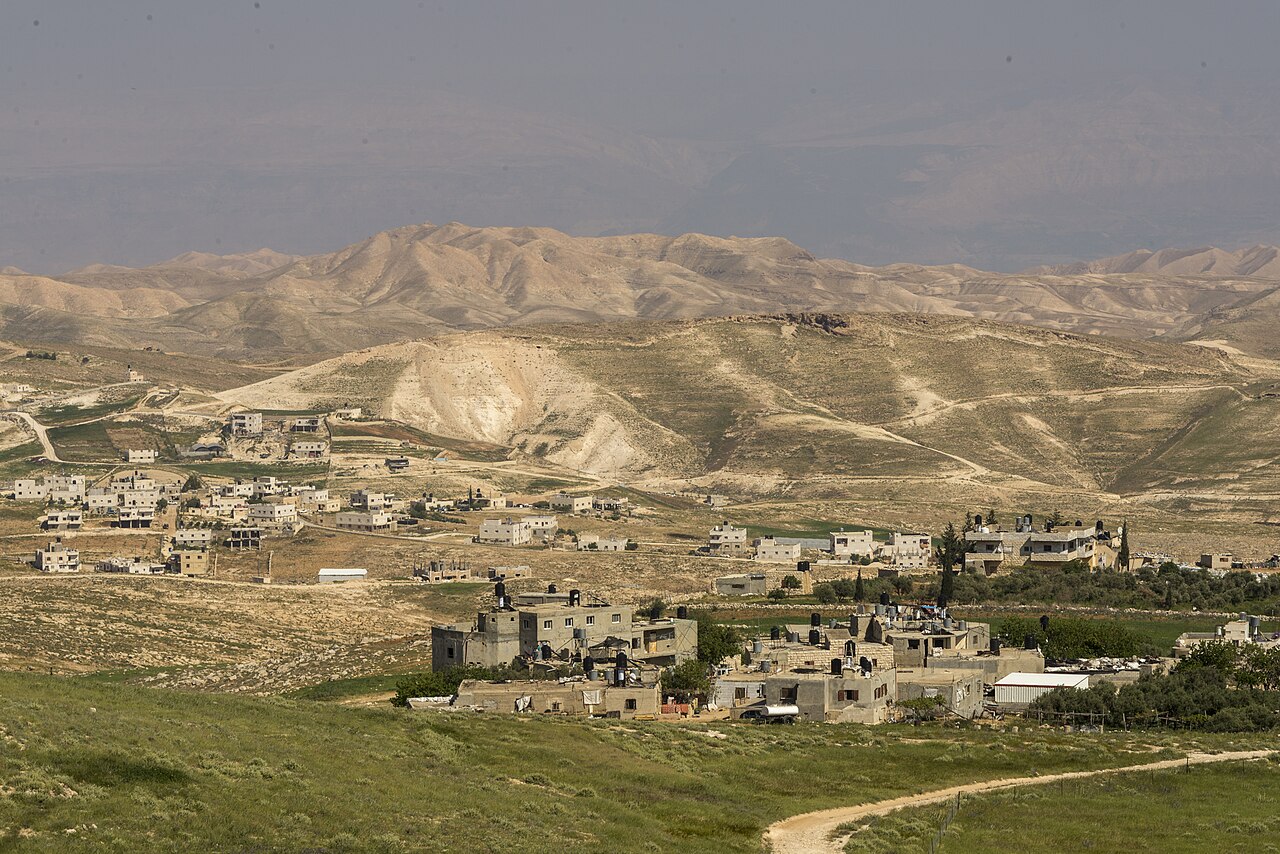
He undertook only token-level measures against that war and the onslaughts in the West Bank. During the five decades since the West Bank and East Jerusalem were seized by Israel in the 1967 war, Israeli Jewish settlements have increasingly colonised it, but there has been a marked acceleration in the last three years. Following the bloody Hamas-led attack on Israel in October 2023, as well as Israel’s Netanyahu government relentlessly bombarding Gaza, it gave a green light to ultra-right nationalist settlers to attack Palestinians across the West Bank with the aim of driving them from their properties and land.
There have been more than 1,600 such attacks this year according to a UN agency, the worst rate recorded since it started monitoring them 20 years ago. As summarised by Yuli Novak, director of human rights organisation B’Tselem: “For almost three years, day after day, we had documented homes being burned and demolished, communities being expelled, children being shot and killed, roads being blocked and humiliating assertions of Jewish supremacy by settlers and by the Israeli government alike. Forms of violence once relatively rare in the West Bank, including aerial bombardment, large-scale destruction of residential areas and mass displacement, had become routine” (New York Times 14.9.26).
Netanyahu’s current government has authorised more than 100 new settlements, almost doubling the previous number; and land controlled by settler farms has been allowed to increase more than four-fold. Meanwhile, over 1,100 West Bank Palestinians have been killed and around 40,000 forced from their homes by military onslaughts or settler aggression.
These genocidal events have included what Miliband called “the crossing of a long-standing red line”, the enlargement of the E1 settlement project near Jerusalem with the intention of further dividing and isolating Palestinian areas.
Occupation aims
Israel’s Zionist leaders have moved away from the language of subterfuge to instead starkly express their aims. Bezalel Smotrich, the far-right minister overseeing the settlement project, makes clear that the goal is complete Israeli sovereignty of the West Bank, the removal of the Palestinians and to “bury the idea of a Palestinian state”. Mainstream right-wing Israeli politicians are also pushing that agenda; for example defence minister Israel Katz, in Netanyahu’s Likud party, has praised the creation of new outposts by settlers and announced plans for three new military-agricultural outposts in the north of the Gaza Strip.
Faced with mass outrage worldwide at these developments, it has become untenable for capitalist politicians internationally to try to portray the Netanyahu government’s acts as ‘legitimate defence’ following the October 2023 Hamas attack, as many initially contended. Even Trump’s US administration, by far the largest provider of arms and political support for the Israeli regime, is having to take into account a historic change domestically in attitudes towards Israel, with a Pew survey in July reporting 62% of Americans having an unfavourable opinion of the Israeli government, up from 43% in 2022. Trump therefore felt compelled to say last year that he wouldn’t ‘allow’ Israel to annex the West Bank, and in June he expressed annoyance at Netanyahu’s pace of aggression when he erupted at him: “Everybody hates you now… Everybody hates Israel”.
Trump’s rhetoric is also due to pressure from Arab regimes in the Middle East that want him to hold Netanyahu back. But despite this, and despite a large number of Democrats and some Republicans in the US Congress reflecting the increased support for the Palestinians in the US, for the time being the fundamental support of US imperialism for the State of Israel remains very much intact. Last month, a delivery of 40,000 one-ton bombs and 20,000 Penetrator warheads was promised to add to the previous billions of dollars of US-produced arms supplies.
UK sanctions – motives and limits
Burnham and Miliband, on the other hand, as well as pledging to sanction trade with settlements and companies involved in the settlement project, “will now also refuse all licence applications for arms and other exports that materially contribute to the occupation”, in the words of Miliband. This is welcome news for the anti-war movement even though small in effect, as UK imports from the settlements are less than 1% of UK imports from Israel, and Israel receives less than 1% of its arms imports from the UK. However, there is a groundswell of similar planned or already implemented moves from other governments, including France, Canada, Norway, Netherlands, Denmark, Finland, Iceland, Poland, Portugal, Sweden, Australia, Ireland, Spain and Belgium, which collectively causes disquiet within Israel’s ruling class.
At the same time, that disquiet is limited, because western governments are not inflicting sanctions on Israeli big business as a whole – just identifiable aspects of the occupation. In reality though, it isn’t possible to separate Israeli capitalism from the occupation and ethnic cleansing. The Israeli state is based on the entire Israeli economy and the government of that state is providing the resources and political drive for the settlement expansion and the brutal repression, displacement and confinement of Palestinians.
The Israeli state and military (IDF) have encouraged armed settlers to organise in so-called Regional Defence Units and turn a blind eye to the overwhelming majority of settler attacks on Palestinians. Also, IDF assaults have regularly been inflicted on Palestinians, often in tandem with those of unofficial or official settler mobs.
Despite all this, western sanctions are being carefully limited to measures that can try to head off accusations from below of ‘doing nothing’, while at the same time not breaking with western capitalism’s fundamental support for the State of Israel or damaging trade between western companies and Israel. Miliband stressed continued support for “important and valued trade with green line Israel” – ie, Israel within the 1949 Armistice line that was originally drawn on a map in green ink.
This means deliberately avoiding more effective sanctions that governments could inflict, as even two Financial Times journalists noted about the UK sanctions when they wrote: “The most powerful such tool would be sanctions targeting banks and insurers that do business with settlements”. They went on to quote the words of an Israeli economic planner, who said that such action “would be a bigger issue… You have a credit system in which large British banks could be members of a consortium financing projects… London is one of the top three financial centres in the world. So this could carry serious results” (FT 21.9.26).
However, Miliband stressed that he opposes BDS (boycott, divestment, and sanctions) against Israel, with one of his two justifications being that blame should be placed on Israel’s government rather than its people. Referring to ‘people’ without distinguishing between the classes in society is a way of Miliband defending Israeli capitalism. He overcame his qualms about sanctions impacting ‘people’ when in the past he praised the anti-apartheid movement in Britain regarding South Africa, and by today supporting sanctions on the Russian state.
His other reason for opposing BDS is “precisely because we support the two-state solution, including security and prosperity for Israel”. To accentuate this smokescreen he said: “Securing the two-state solution in its fullest form is the North Star of this government’s policy, and indeed of successive British governments over decades.” Yet it has become clear over those decades that not just the present Israeli government but its predecessors – and Israel’s ruling class above them – won’t contemplate the existence of a genuine Palestinian state. So as the Socialist Party has consistently explained, any solution, including a two-state solution, can only be achieved on the basis of socialist movements developing in Israel-Palestine, led by working-class people, that can reach the point of challenging and removing capitalism.
Limited sanctions – forced on capitalist governments internationally by mass opinion and the anti-war movements – can help highlight the Palestinians’ plight and exert low-grade pressure on the Netanyahu government. But those governments can never be trusted to do what is needed to achieve Palestinian liberation. Although they want to see greater stability in the Middle East, it is completely against their interests to raise revolutionary aspirations in the Arab masses and the Israeli working class, which a serious strategy aimed at Palestinian liberation would entail.
Workers’ sanctions
The only sanctions that can be trusted by workers and socialists are those taken by independent workers’ organisations. Workers everywhere, including in the Middle East, share the same fundamental interests against capitalist exploitation, so can act in each other’s interests and against those of the capitalists of all countries. Regarding Israel, workers internationally can make it clear that their sanctions are aimed against the occupation and Israeli capitalists rather than against ordinary Israelis, helping to expose the class divide in Israel and encourage as many Israeli Jewish workers as possible to move in an anti-war and anti-capitalist direction.
Workers’ sanctions can also act most effectively against the Israeli war machine, as organised workers are potentially the most powerful force in society. Italian workers set an example when they took general strike action in 2025 against the Gaza genocide. Regarding the Ukraine war, in 2022 workers at Ellesmere Port in north west England refused to unload a ship carrying Russian oil and they pointed out that bosses were circumventing sanctions. On 30 October 2026, dockworkers in six countries, covering 40 ports, intend to take action aimed at blocking military equipment being transported to Israel. These types of protest action by organised workers can be precursors to more widespread and prolonged actions, which will be on the cards as workers’ movements come to gain in strength and confidence in all respects.
Such workers’ solidarity actions internationally are invaluable, while at the same time recognising that it is workers in Israel-Palestine who face the direct task of removing Israeli capitalism and also capitalist relations in Palestinian society.
The Palestinians have repeatedly shown their willingness to struggle, with a prime example being the first intifada in 1987-93, a mass uprising against the occupation. The 1993 Oslo Accords gave rise to the Fatah-led Palestinian Authority, a body that has echoed Israeli repression and held back workers’ struggle. Hamas, based on right-wing political Islam, has also suppressed workers’ struggle and presents no way forward for Palestinian liberation. Today, Palestinians across the West Bank are taking their own grassroots initiatives to organise defence of their towns and villages, which can help lay the basis for democratically run committees of workers and the poor to develop and link together.
Israel election looms
Currently, only a small minority of Israeli Jews are actively aiding Palestinian defence, but Israel is far from being a static society that will be devoid of class-based upheavals. Israeli academic Dan Ben-David, writing in the Economist, aptly commented: “Israel is a story of profound changes on massive scales at extraordinary speeds” (12.9.26).
A general election takes place on 27 October, with the Netanyahu government’s record in the spotlight. Recent additions to the debates taking place include government fury against the new film ‘Naza’, which contains IDF personnel exposing the extent of the deliberate killing of civilians in Gaza; and the attempted crashing of a Flydubai plane carrying around 170 Israelis.
There are many cracks at the top of society over how to manage the occupation, with a range of senior establishment figures speaking out against the worst of the settler terrorism, fearing it will provoke a major Palestinian uprising, seeing it as an undesirable challenge to the authority of the IDF, and viewing it as counterproductive to Israeli capitalist interests internationally and domestically. These include former Israeli Attorney General Michael Ben Yair, former prime minister Ehud Olmert, and a number of former IDF chiefs. But none of them, along with the pro-capitalist opposition political parties, have any solution to the national conflict. If those parties form the next government, management of the occupation would probably change in some ways but the oppression will continue.
Domestic reasons for those leaders to denounce settler violence include the fact that while a majority of Israeli Jews support repression of the Palestinians, not yet convinced of an alternative, most don’t support the untrammelled terror being inflicted by ultra-right settlers. While their government pursues de facto West Bank annexation, it isn’t a goal for most of the population and, contrary to international perception, a research body reported that more Israelis are leaving the settlements than moving to them (see: ‘How do we stop the settler attacks in the West Bank?’ at socialiststruggle.org).
Inequality is massive and rising in Israel. The above mentioned Economist article noted: “In 2024, 20% of Israel’s workforce paid 93% of the country’s income tax, up from 83% in 2000, while half the workforce was too poor to reach the income-tax threshold”. The interests of the ruling class are diametrically opposed to those of the working class and middle class, a dichotomy that will seep more and more into mass consciousness as further events unfold.
The building of mass workers’ organisations that can pose a socialist solution is as vital in the Middle East, as everywhere on the planet. In Israel-Palestine such organisations will be able to put forward a real alternative to oppression and insecurity, opening the way towards a socialist Palestinian state, alongside a socialist Israel in which the capitalist Zionist state apparatus will have been replaced by democratic workers’ ownership and control of the economy and essential resources. This will be in the context of socialist transformation across the entire region, ending war, poverty and deprivation for all.