

Editorial of the Socialist issue 1326
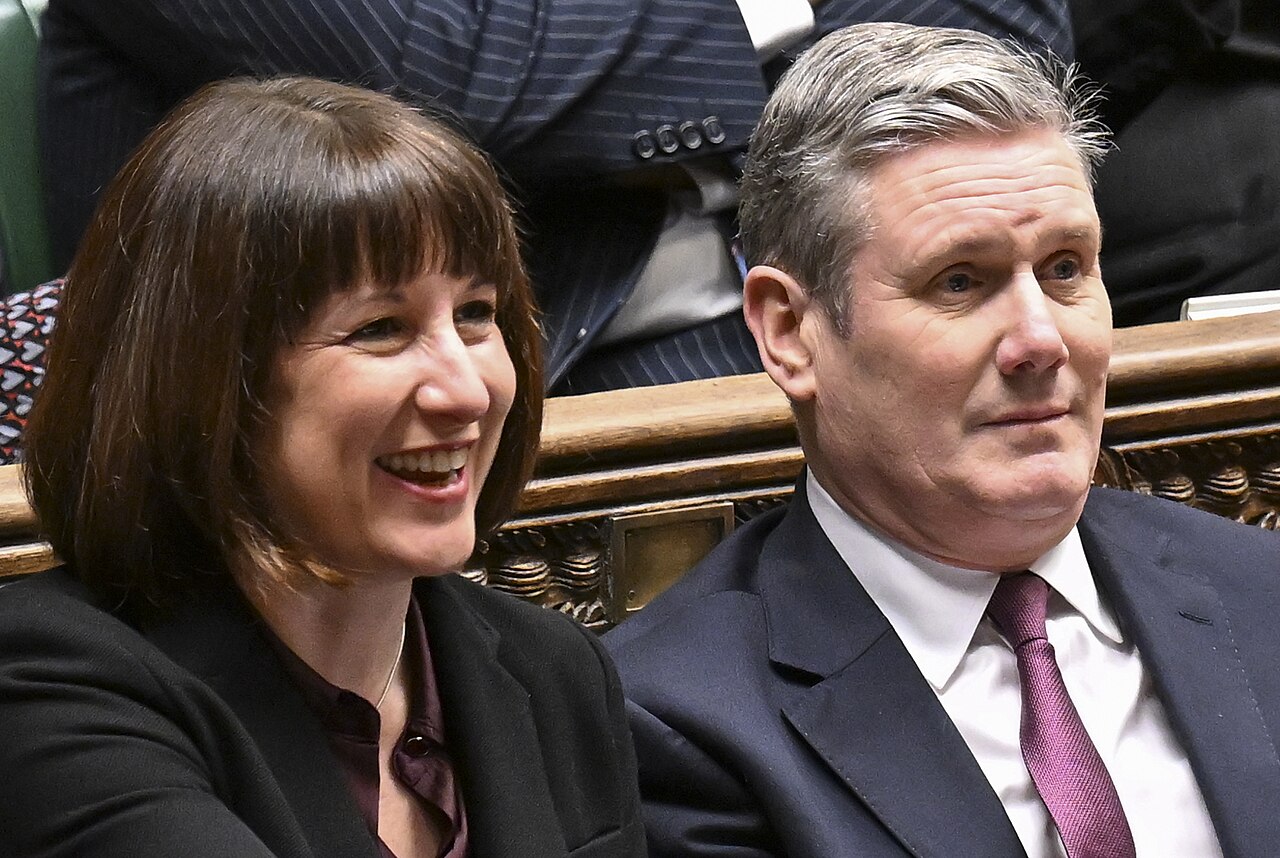
What should workers make of Labour’s 11 June Spending Review, this government’s third ‘fiscal event’ in its less than year-long life?
Well, it wasn’t exactly the same as what the Tories have been serving up since 2010, but it comes from the same cuts menu. As the right-wing capitalist thinktank the Institute for Fiscal Studies put it, on this occasion correctly, Rachel Reeves’s speech “Did not appear to be a serious effort to provide any useful information to anybody”. What speech in parliament by a capitalist politician is?
For workers everywhere, life under Starmer’s Labour will, like it has since Labour came into office, feel like austerity.
Governmental department spending is set to grow slower in this parliament (2.3% in real terms from 2024-2030) than in the last one (3.6% from 2019-24), and those averages are skewed by Starmer’s splurge on military spending. Eight government departments will have seen their budgets cut by the end of this parliament.
Responding immediately to the budget, the GMB union put out a statement in which its National Secretary said: “As ever, the proof will be in the pudding as to whether this is enough money – and if it ends up in the right places”.
Smoke and mirrors
Unfortunately this, like statements from other union leaders in response, does not cut through Reeves’s smoke and mirrors. From workers’ perspective, it is not enough money and it will not end up in the right places (in our services and our pay packets). For the hundreds of thousands of workers in local government, the NHS and education, there will be further cuts, privatisation and redundancies.
According to the local government association, a cross-party organisation representing local councils: “All councils will remain under severe financial pressure. Many will continue to have to increase council tax bills to try and protect services but still need to make further cutbacks”. Future attacks like those made by Birmingham Labour council to slash bin workers’ pay by £8,000 a year are coming.
The Kings Fund, an independent think tank, said of Reeves’s “injection of funding to get the NHS back on its feet”, “It is hard to see how all the things she mentions – faster ambulance times, more GP appointments, adequate mental health services, and more – can be met by this settlement alone, particularly when large parts of this additional funding will be absorbed by rising costs, such as the higher cost of medicines which are currently being negotiated, and staff pay deals.”
The reality is that 3% for day-to-day NHS spending is well below the pre-2008 historical average of 4.3%, and comes attached to ‘reforms’ and productivity improvements – which in reality means further privatisation and attacks on workers’ terms and conditions. NHS England has also been scrapped.
In education, the government talks about a 1.1% rise in per-pupil funding in schools, but only on the basis that pupil numbers are falling. Once the cost of expanding free school meals to all those whose parents claim Universal Credit is factored in, it is a real-terms freeze, when costs for schools are rising higher than inflation. To top it off there is a £5 billion shortfall in funding for children with special educational needs and disabilities. There is nothing to address the huge financial crisis gripping universities where thousands already face redundancy.
To get a real assessment of in whose interests these Spending Review announcements were made, look at how the capitalists responded. Their main mouthpiece in the British press, the Financial Times (FT), was perfectly happy, so too were the capitalist markets.
Sick British capitalism
Government borrowing costs are on a par with where they were at the time of Liz Truss’s budget, and the debt-to-GDP ratio of over 100% is up and set to grow further, reflecting the sickness of capitalism globally and the particular weaknesses of Britain. But the ‘bond vigilantes’ who came for Truss are, for now, prepared to accept Reeves’s spending because of investors’ confidence that Labour is reliably governing in their interests and prepared to make the working class pay.
The FT welcomes “a much-needed package of over £100 billion in public investment” because of where that money is destined to end up.
For example, the government announced £39 billion investment in affordable housing over ten years. Does that mean hundreds of thousands of council homes to start to shrink the 1.3 million household-long council housing waiting lists? Absolutely not.
Inside Housing, a housing industry website, brought together over a dozen statements from big property developers, corporate housing associations and real estate bosses, all welcoming the money. Because that money will be given in grants to private developers to build, not genuinely affordable housing at ‘social rent’, but homes for rent at an unaffordable 80% of market rent as well as ‘shared-ownership’ schemes. And, the kicker for the bosses, social rent will rise 1% above inflation every year for a decade.
That £39 billion is not going to address the housing crisis, bring down house prices or sky-high rents, it’s going to the profiteering housing bosses.
The same model of ‘public-private partnership’ runs through all of Labour’s investment plans, which are also actually increasing at a slower rate than under the last Tory government. It’s the same model that has led to vast sums being spent on HS2, boosting the profits of private investors; likewise the spiralling costs of the Hinkley Point C nuclear power station now set to be repeated at Sizewell C in Suffolk.
Rachel Reeves says she is “Laser-focused on kickstarting economic growth”. But 24 hours after her statement in the House of Commons, it was revealed that the economy shrank by 0.3% in April; unemployment is rising too.
Reeves’s borrowing is predicated on projections for economic growth from the Office for Budget Responsibility. It has made 21 since 2010 that we know the outcome of, all but one were overly optimistic. The extremely modest growth predictions, by historical standards, are unlikely to be met, and that is without any economic shocks, which British capitalism is especially vulnerable to in an increasingly volatile world. For example, the effects of rising oil prices following an escalation of conflict in the Middle East between Israel and Iran.
Status quo spending
For the working class, this spending review is not good. But it is as good as it is going to get without a fight. Even with future crises set aside, this spending is frontloaded until April 2026 after which “things get tighter” (IFS). So, for example, there is no funding there in future years to begin to address the decades-long real terms cuts to the pay of workers in the health service and education.
Socialist Party members in the trade unions are fighting for Labour’s inadequate and largely unfunded pay offers to be rejected and for strike ballots on pay to be linked to the question of funding. Unquestionably, sections of the trade union leaders will want to use Labour’s spending headlines to try to avoid going into battle against the government. Equally, members know, especially in public services, what reality is. As well, unintentionally, Labour’s big-spender headlines, can spur workers to demand their share.
Britain was ravaged by Tory austerity for over a decade, during which public services were trashed and workers’ share of the wealth in society shrunk. As a consequence, the Tories were smashed. That status quo remains. As a consequence, Labour will face the same working-class anger.
Austerity or not, this Labour government is a capitalist one in a period of capitalist crisis, and so it is continuing to make the working class pay while a minority of super-rich capitalist bosses enrich themselves. Socialist change is needed, and a mass working-class political opposition to Starmer’s Labour as part of the fight for it.
