


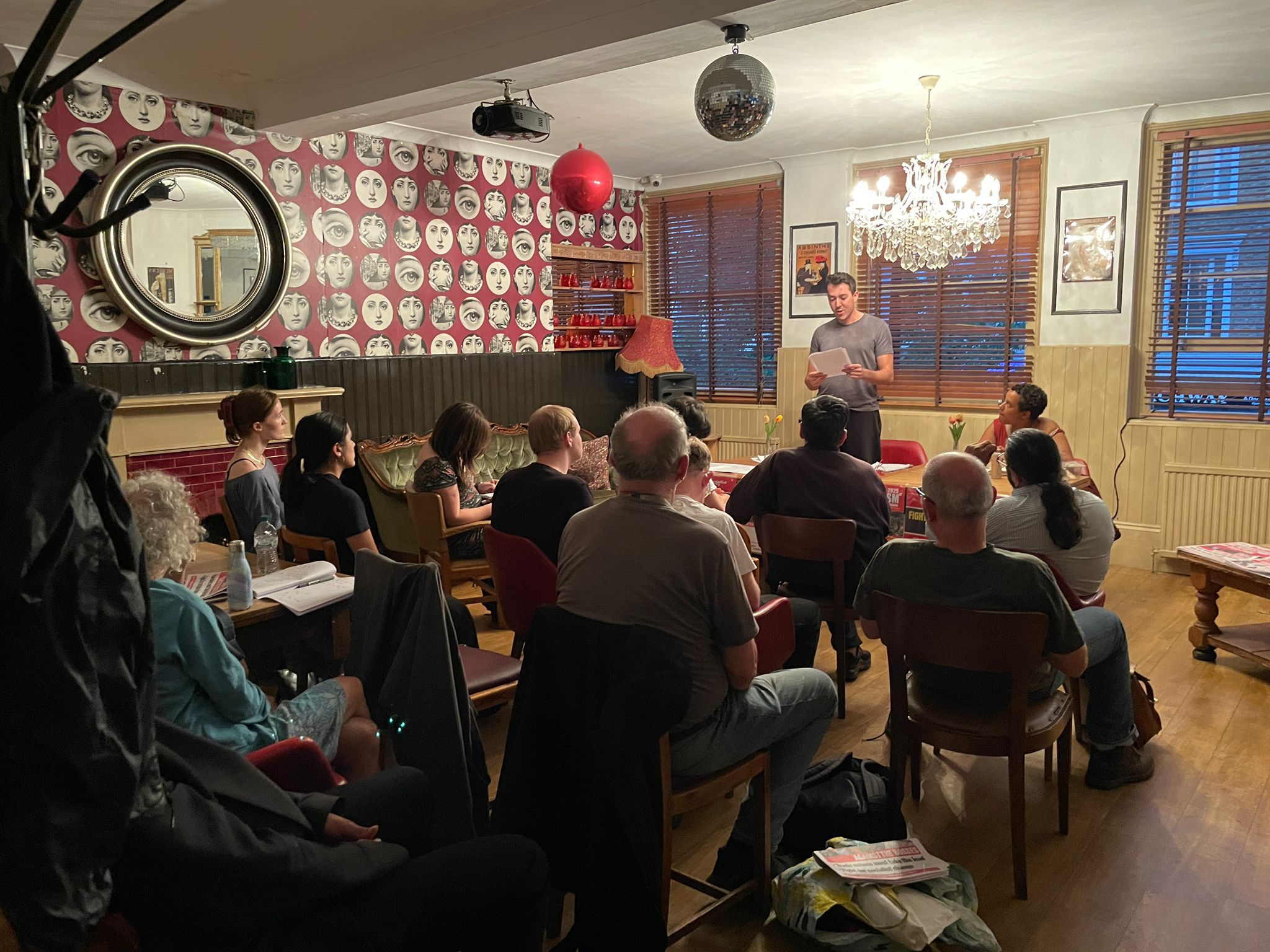
The Socialist Party has organised 50 public meeting across England and Wales. 30 are yet to take place.
All of them are to discuss and debate how the new party – that Jeremy Corbyn and Zarah Sultana have announced their intention to create – can be built into an organisation where workers can fight for our interests. These reports give a flavour of what’s being talked about.
All of the meetings have had people attending a Socialist Party meeting for the first time.
Come and discuss with the Socialist Party – visit socialistparty.org.uk/events to see a list of upcoming public meetings. Get in touch for more info about meetings in your area, or to discuss joining – socialistparty.org.uk/join or text 07958 032071.
Tyne and Wear – lessons from history
Everyone who came along joined in with the discussion, with an array of topics debated – including what democratic structure the new formation should have.
Almost half the people were not (yet) Socialist Party members. One person who found out about our meeting texted us: “I’m travelling in for the public meeting for socialists”, adding that he didn’t know any of us.
I texted back to assure him we were a friendly lot. He enjoyed the meeting and is definitely interested in joining the Socialist Party.
The role of Labour’s Liverpool City Council during the mid-1980s was raised by one of our young Socialist Party members, which shows the lessons of that battle against Thatcher’s Tories still resonates to a new generation.
Then, the District Labour Party played the key role – deciding the course of the struggle at each stage. It had more than 600 delegates from unions, local Labour parties and more – a kind of parliament of the workers’ movement, setting policy for councillors to implement, and organising massive protests to support their stand.
Their achievements included building thousands of council homes. A party like that would be a massive step forward.
We’re going to discuss this more fully at our Socialist Party branch meeting next week. We’re inviting those who attended our public meeting to come along.
After the meeting, we carried on with our discussions in a more informal manner – this definitely helped clarify points that had been raised in the meeting.
We raised £107 to fund the campaigns our party does, and hope to welcome some of those who attended into the Socialist Party.
Elaine Brunskill
Leeds – how can we stop Reform?
The discussion from the floor focused on two things – how a new party can tap into the anger of trade union members clashing with the Labour Party, such as in Birmingham and other councils, where workers’ jobs and conditions are under attack.
The other was how a new party could cut across the growth of Reform UK, as some polls showing significant support for a new party, especially among young people, also show Reform’s support holding up.
Reform now runs a number of councils. What are they prioritising? The housing crisis, jobs for young people, the crumbling state of local services? No.
In nearby Doncaster, the issue Reform chose was what flags were flown by the council – an attempt to distract people from the cost-of-living crisis, which would divide and weaken the working class.
Our speaker, Socialist Party National Committee member Alistair Tice, said that a new party fighting on those important issues, including in council chambers, would expose Reform’s lack of a genuine alternative to the capitalist establishment.
Iain Dalton
Gloucestershire – discussing democracy
One purpose of the Gloucestershire public meeting was to help clarify some questions members and supporters had. For example, on the trade union block vote and ‘one member one vote’.
It was good to see new faces, and some we’d not seen for a while.
We noted that, historically, the right wing always hated the union block vote, which Tony Blair scrapped in his transformation of Labour into an out-and-out capitalist party. Despite right-wing trade union leaders, the union block vote had the potential to push conference to the left. We argue for the union block vote to be under the democratic control of the union membership.
As to ‘online democracy’, the parallel was drawn with Tory anti-union legislation. Strike votes at mass meeting were replaced with postal ballots.
The move to postal ballots was designed to shift the balance away from the active membership – who are involved in the day-to-day struggle and life of the union – to inactive members, who are more susceptible to propaganda of the right-wing media, which reflect the interests of the bosses.
Sue Powell
Cardiff and Caerphilly – no cuts and elections
40 people participated across both meetings.
We discussed what to do about the Welsh Senedd elections next year. Some have said ‘Your Party’ should support Plaid Cymru or Greens to stop Reform.
In power in local councils, the Greens and Plaid have acted like Labour and the Conservatives, with cuts and privatisation. They have not fought alongside the working class and trade unions for the jobs, pay, and services we need.
In our meeting, a Green Party supporter raised doubts about whether our ‘radical’ policies would work. A new party should say ‘no cuts’, and fight for councils to set budgets that reflect what we need, fighting for the money from national government.
These capitalist parties won’t cut across the social conditions for the growth of Reform. We need a new workers’ party, offering a bold socialist alternative.
John Williams
Leicester – Corbyn #1 discussed
Some expressed concern that Jeremy Corbyn could be taken down again, like in the 2019 election. But there was also optimism at an alternative to the other parties.
Questions were asked about whether disability laws would change from their current ‘one size fits all’ approach and demonisation of disabled people, and whether the new party structure could allow other political groups to join.
Others asked – would the new party be able to draw in Conservative voters? Do people understand what ‘socialism’ actually means, as they felt Corbyn was undone by media spin of ‘socialist’ and ‘communist’.
But socialist ideas do gain widespread support when they are understood, as representing the interests of the working class. And these subjects are all discussed at Socialist Party meetings.
Richard Tilley
Brighton – what can youth do?
All the new attendees spoke in the discussion – raising the outlook and disenfranchisement of young people, the need to battle within the trade unions to make them more fighting and democratic, and how a new party could combat the ‘divide and rule’ of the current capitalist parties.
There was also agreement about the role of the Socialist Party, and the need for us to continue putting forward clear ideas about the programme and organisation needed by the working class, while at the same time fighting for this new party to be a success and taking part in its development.
We are now discussing holding another public meeting on the same topic later in the summer, to maximise the number of workers and young people that we can arm with our socialist ideas for the important debates taking place around the new party.
Callum Joyce
Southampton – ‘how can I join?’
There were several new faces, including young people who had come to discuss how a new party could represent them.
After the meeting, one young worker approached us, and asked to join the Socialist Party. Most of the new people bought the Socialist paper, and asked for more info. The fighting fund collection raised £147.
From the response we have received on our Socialist Party campaign stalls, this meeting was just the tip of the iceberg.
Tim Cutter
Bristol – what next?
35 people attended. We sold 30 Socialist papers, and raised £100 fighting fund.
Socialist Party member Sheila Caffrey is an elected member of the National Education Union (NEU) executive. Her introduction sparked discussions on the need for this new party to be rooted in the working class, and linked with trade unions.
Attendees wanted to be involved in the next steps, including more wide-reaching public meetings, ensuring the involvement of as much of the working class as possible. That way all of our voices are listened to, from young people – workers and those at school or uni – to pensioners.
Annabel Griffiths
Camden – postering works
There is a big appetite to discuss ‘what next in the fight for a new workers party’. Six people turned up to their first Socialist Party meeting after just seeing a poster.
Oscar Parry
Southwark trades union council debates new party
A Southwark Trade Union Council open meeting discussed state repression, a new party, and fighting the far right.
The importance of a federal structure as opposed to ‘one member one vote’ was discussed in depth, including contributions by multiple Socialist Party members. The accountability and increased representation of a federal structure – proven during the strike wave, when many ordinary union members were able to pressure their reluctant leaders into action – was discussed. Equally, a new party needs to be democratically led, with a clear presence in trade unions and communities, alongside cooperation with socialist parties and groups.
Many made the connection between the rise of the far right and the current crisis in our public services and housing, discussing the importance of the Socialist Party’s ‘Jobs, homes and services’ demands.
The steps that we can take to ensure a future party provides a substantial anti-austerity alternative for working-class people to cut across Reform was also discussed.
Sammy Maktari, South East London Socialist Party