


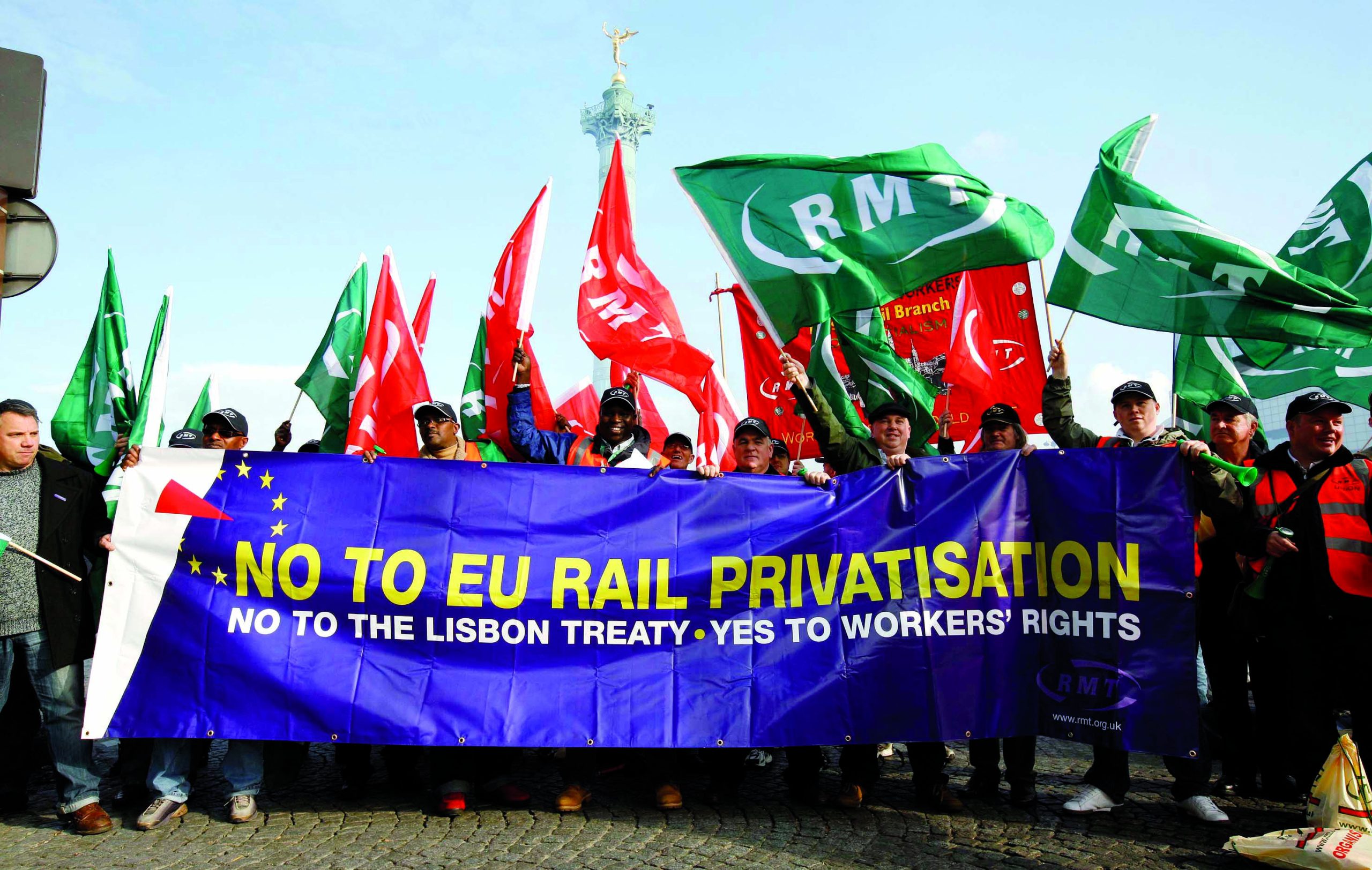
EU’s true nature
Helen Pattison’s article, Would workers be better off had Britain stayed in the EU?, was excellent. During the Brexit referendum campaign, most trade unions recommended their members to vote Remain, which is ridiculous given the true nature of the EU in relation to workers’ rights.
Key to this is the European Court of Justice (ECJ), with an appalling record of attacks on workers’ rights, as demonstrated by legal rulings like Viking, where the Viking Line shipping company wanted to register a Finnish ship under an Estonian flag in order to employ a cheaper crew. The International Transport Workers Federation planned strike action in opposition to this move, but the ECJ ruled that the strike action would restrict the employer’s right to establishment, and was therefore illegal.
Similarly with the Laval case, the ECJ ruled that a Swedish trade union’s blockade against a Latvian subcontractor, paying its workers below the Swedish trade union’s negotiated rates, was illegal.
During the UK’s period of EU membership, the Alemo-Herron v Parkwood Leisure Ltd was referred to the ECJ by the Supreme Court, and it was ruled that national governments could not interpret previous ECJ rulings more generously than the original ruling, resulting in this case by limiting pay of workers who transfer from one employer to another to the actual pay on transfer, ignoring any annual rises that may be provide for in the Contract of Employment.
In general, the EU-based trade unions have been strongly pro-EU, but the European Federation of Public Service Unions (EPSU) got its fingers burned when an agreement made between EPSU and the EU Commission on information and consultation rights for civil servants could not become an EU Directive following an ECJ ruling.
These rulings are not widely known about, but are clear evidence of the true nature of the EU, not a liberal-minded upholder of workers’ rights, but a vicious attacker of them, particularly in respect of trade union-organised labour.
Roger Bannister, Liverpool
Wiki editor worker solidarity
British workers for the Wikimedia Foundation (WMF), the educational charity which hosts Wikipedia among other internet projects, have formally requested union recognition through the Communication Workers Union (CWU). Since May, the WMF’s disbandment of its Community Tech team and termination of MediaWiki developer Brooke Vibber has drawn the ire of editors, who subsequently formed the union Wiki Workers United. Their Wikipedia petition has rallied over 1,200 editors to support the union, “up to and including staging an editorial strike” if necessary.
Wikipedia is the largest reference work in history. It is a non-commercial project sustained by donations which has been met with recent attacks from oligarchs in the tech industry seeking to dominate the Internet. Notoriously, Elon Musk has called for the website’s defunding and has formed his own AI-generated encyclopaedia, which has engaged in Holocaust denial and HIV/AIDS denialism, amongst other controversies.
Amidst polarisation and disinformation on social media, Wikipedia serves as a refuge for factual information, free not only at the point of need for all users, but also aiming to be free from corporate meddling.
I have been a volunteer editor since 2020. The work is indeed painstaking and cumulative, meaning editors warrant all the resources needed to keep improving articles and expanding the project for readers. WMF’s union-busting tactics defies this need, and must be opposed by all editors.
Antagonising the workers who volunteer their services is biting the hands that feed them, which is why unionisation matters for every workplace. Solidarity against encroaching casualisation and far-right attacks is more important than ever. Unionising Wikipedia workers and uniting them against bureaucracy and layoffs can help keep the free encyclopaedia free for all.
James Gretton, Southampton