


‘Fascinating details but no real lessons’ on turning point in Stalinism’s collapse
Clare Doyle
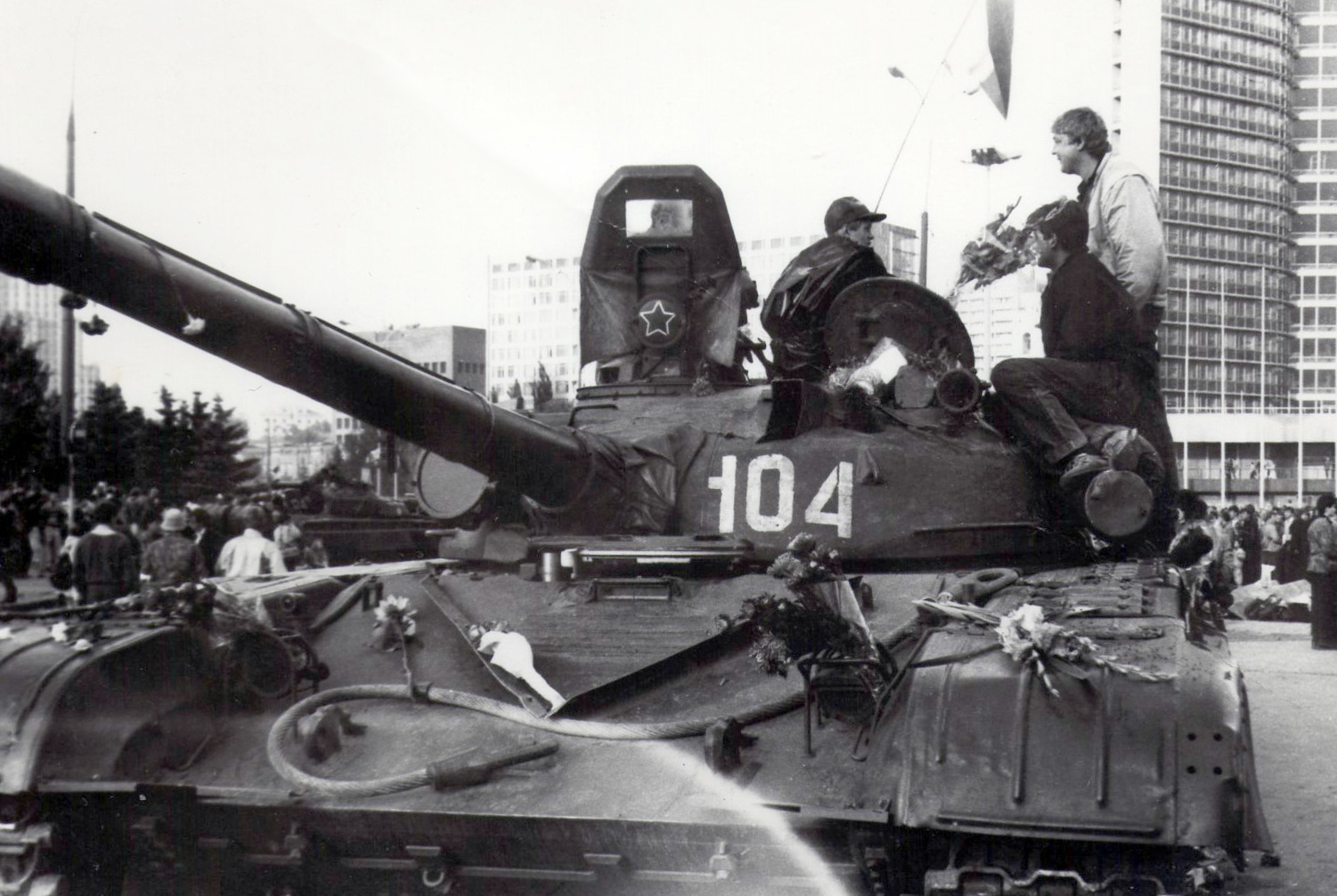
A new book by the capitalist academic Robert Service covers the dramatic events in the Summer of 1991. The ‘August Coup’ of the title was a total farce but it marked a turning point in the historic break-up of the USSR and the headlong dive into untrammelled capitalism.
Service has been a long-time opponent of the Socialist Party and its forerunner, Militant. When he published a 600-page book on co-leader of the Russian Revolution Leon Trotsky in 2009, Peter Taaffe – Militant’s leader and theoretician for many years – memorably wrote: “This book is very thick, but is very thin when it comes to an honest political examination and analysis of the ideas of Leon Trotsky”.
Another Trotsky biographer, Allan Todd, reports Service as saying he hoped his ‘Trotsky: a biography’ would “Finish off Trotsky… A job the ice-axe had failed to do in 1940”!
Service’s ‘The August Coup’ comes out a whole 35 years after the dramatic events in the USSR that presaged the total collapse of Stalinism. He has laboured again, producing just 300 pages of narrative but 57 pages of footnotes, a 22-page index and a 9-page bibliography.
The result? An extraordinarily detailed account of a few days in August 1991 and a gargantuan struggle between the last President of the USSR, Mikhail Gorbachev, and the first president of the Russian Federation, Boris Yeltsin. Before the end of that year – in fact on Christmas Day 1991 – the ‘Soviet Union’ was dissolved and Gorbachev was leaving the Kremlin.
A Confederation of Independent States was already being formed to replace the USSR after a clandestine meeting in Belovezhskaya in early December. Service the historian gives no indication for new generations of readers of how the USSR was founded in 1922 on the initiative of Lenin and Trotsky – a federation of nascent socialist states to replace Czarist Russia’s vast ‘prison house of nations’.
Much later, in exile in 1936, Trotsky predicted that a crisis in the Soviet Union could lead either to a political revolution with workers striving to take control of the publicly owned economy or a social counterrevolution and the establishment of capitalism.
Following the collapse of the 1991 coup there was indeed an unfettered rush to ‘the market’, headed by factory managers and ‘Communist’ Party ‘bosses’ alike – the oligarchs of today! This was just the process of social counter-revolution that Leon Trotsky described in his book ‘Revolution Betrayed’.
Service – the historian and anti-socialist – conflates the historic Bolshevik revolution of October 1917 with the extremely bloody political counter-revolution that Stalin carried through after Lenin’s death (in 1924) and his wholesale slaughter of millions.
Stalinism
Service well knows that Stalin’s successors maintained their corrupt and bureaucratic rule long after Khruschev’s 1956 revelations of Stalin’s heinous crimes.
President of the USSR in 1991, Gorbachev appears to have been a privileged but earnest communist. He was no doubt affected by developments elsewhere in Eastern Europe and in China – the vast nation he visited in June 1991 at the height of the Tiananmen Square protests.
Service’s book is full of fascinating detail but does not draw out any lessons for serious students of today who have no experience of the so-called ‘Cold War’ between two mutually exclusive class systems.
The author confirms that Gorbachev was earnest if incompetent in pursuing his aim of establishing a ‘communist’ society through his ‘Glasnost’ and ‘Perestroika’. By contrast, the vodka-swilling Yeltsin is portrayed as totally unpredictable – unhindered, it seems, by any principles spelled out on the Communist Party card he still carried.
Working at the time for the CWI in Russia’s ‘Northern Capital’, Leningrad, I was able to witness the mood – on the barricades at the City Soviet and at the huge rally called by the City Mayor, Anatoly Sobchak, in Winter Palace Square. In those days we were battling against the stream arguing the case for workers’ democracy as the alternative to both Stalinism and capitalism. (One place I did not go near was my flat in Petrogradskaya, staked out by police from the morning of 19 August!)
At ‘safe’ houses of friends, I watched for news but nothing was being shown except Tchaikovsky’s ballet ‘Swan Lake’ – over and over again! This was a decades-long tradition in times of trouble in the USSR. The press conference eventually shown of the putsch leaders was truly comical. The aged ‘Siloviki’ group of senior officials, which supposedly controlled the main branches of state power, was led by Yanayev clasping his hands together to stop them from shaking!
It was clear their almost comic attempt would not last long. Within days, one had committed suicide, and others became seriously unwell. After brief periods of imprisonment, the survivors renewed their activity in the Communist Party… presumably to try and make the Soviet Union great again, taking the Chinese road to the market!
It was also clear that the plotters had no idea of how to retain the state-owned planned economy that had been the source of their very considerable privileges – even if they had wanted to.
Those few days marked an historic turning point in the transition to capitalism in the USSR. There would be no going back. Yeltsin was supported by troops outside Moscow’s White House and buses had been turned on their sides to block the tanks’ route to the Kremlin. There were some lightning strikes in the mining areas for example, but not really mass enthusiasm amongst workers. Service says there were few of them supporting Yeltsin at the White House (less than 6% of the crowd).
The failed coup and the undignified ferrying back from Crimea to Moscow of the plotters and Gorbachev and his family was a turning point. But the collapse of Stalinism and the disintegration of the vast, state-owned economy of the USSR, was already under way. Service’s book is loaded with detail of how this process developed – the deadly street battles between gangster would-be capitalists, the factory managers becoming capitalists or oligarchs.
The blow-by-blow accounts of how political opponents dealt with each other are amusing. There are numerous stories that reveal the rottenness of the ‘Soviet’ state’s vast bureaucracy – the heavy-drinking ‘People’s Ministers’, with their lackeys, their expensive policy blunders and endless political manoeuvring.
Service’s book begins and ends in Crimea, at the vast holiday villa of Gorbachev. In between is fascinating detail but little explanation of what had gone wrong with the Soviet Union. Read much more on that from the Committee for a Workers’ International – socialistworld.net.
