


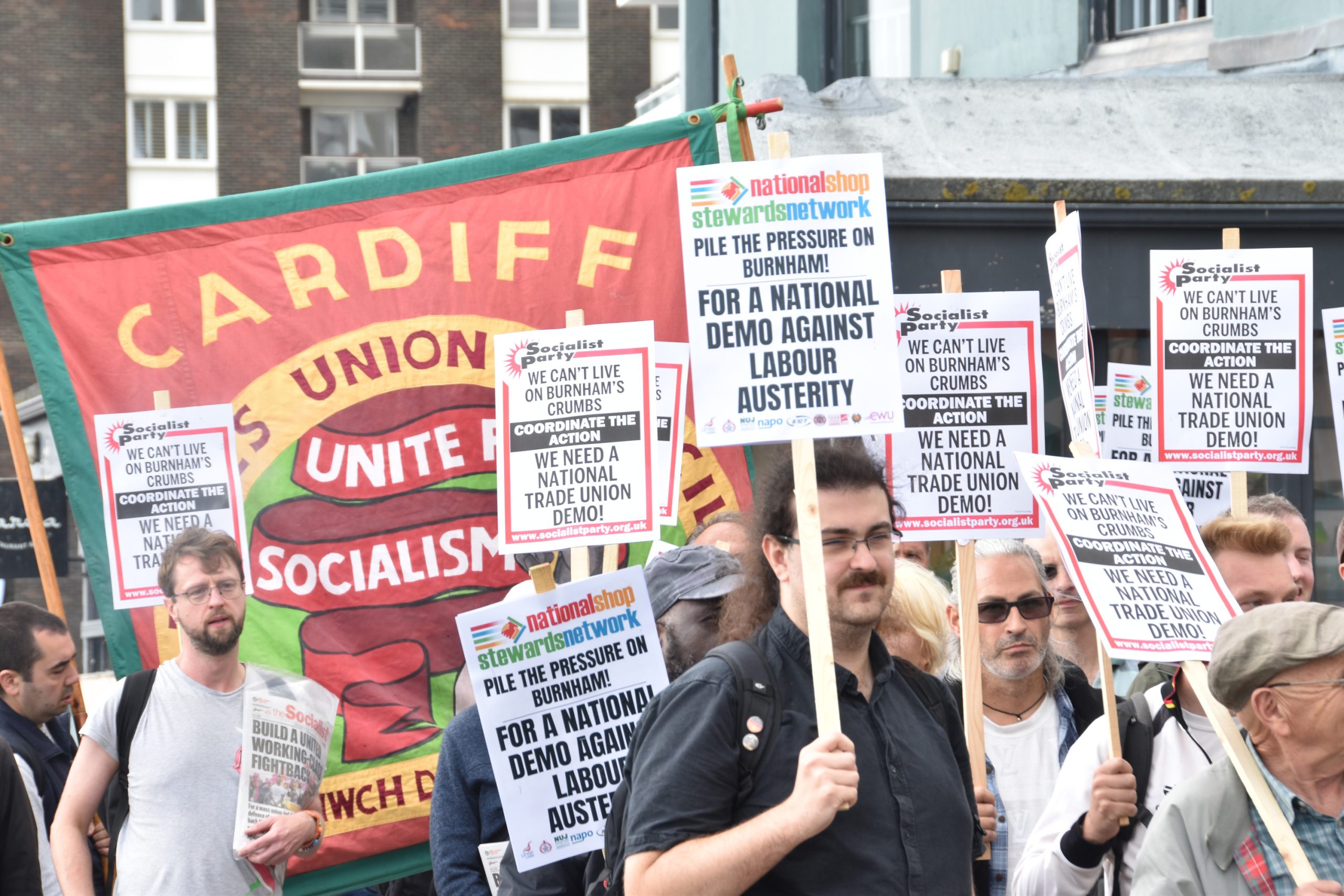
This winter, over half a million public sector workers could be taking national strike action against Andy Burnham’s Labour government.
The 2026 Congress of the TUC (Trade Union Congress) met at the start of an autumn in which there will be national ballots for action in three unions: the civil service union PCS, teachers in the National Education Union (NEU), and further education lecturers in the University and College Union (UCU).
The following pages report on the debates and decisions taken in the last week by the leaderships of those unions, and on the lobby at the start of TUC organised by the National Shop Stewards Network (NSSN) on 13 September.
The NSSN in particular was lobbying in support of the PCS motion 34, to “urgently call a national Saturday demonstration this autumn for investment in public services, against austerity and for pro-worker policies” and urging “all public sector unions to join a united campaign on pay, and, if needed, to plan for coordinated industrial action”.
Stop Press: PCS motion 34 passed at TUC
Motion 34 from the PCS, to “urgently call a national Saturday demonstration this autumn for investment in public services, against austerity and for pro-worker policies” and urging “all public sector unions to join a united campaign on pay, and, if needed, to plan for coordinated industrial action”, has been agreed at TUC.
Paul Nowak, general secretary of the TUC, gave a statement from the General Council supporting the motion, but qualifying this by saying that it is up to individual unions to decide on action and coordination. TUC delegates report that, on the question of the demonstration, Nowak said that the General Council will have to decide on whether that can go ahead.
Given the refusal of the General Council to implement last year’s motion to call a demonstration, there is a real concern that they will do the same again. Therefore, as was said at the NSSN rally, the NSSN and the trade unions should keep up the pressure on the TUC for this demonstration to be called.
NSSN rally and lobby
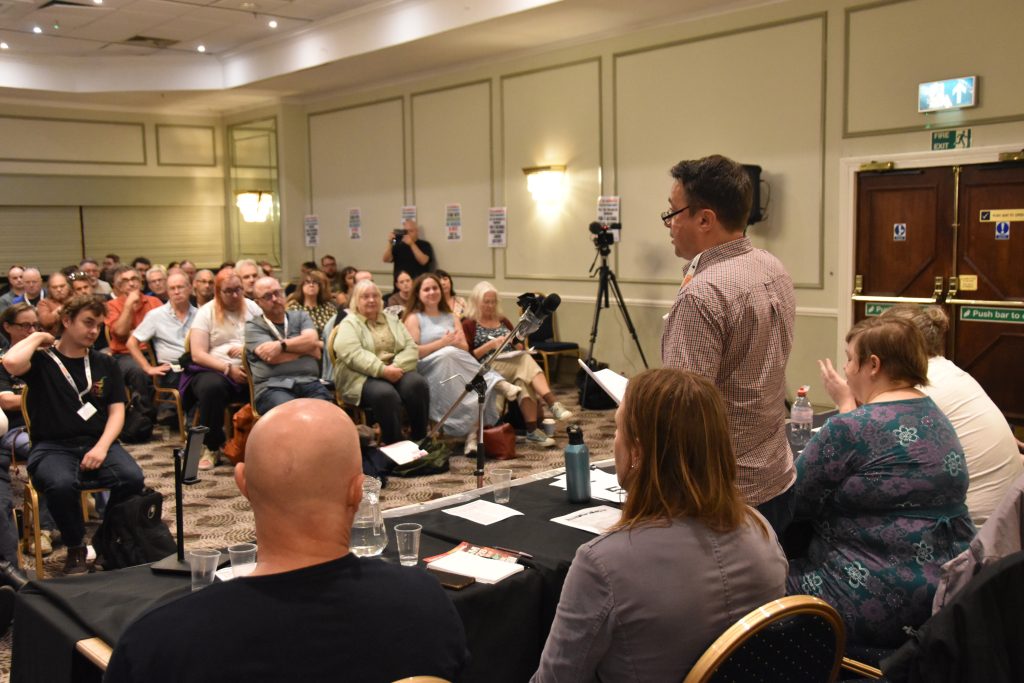
The room was overflowing for the “best fringe meeting of the TUC” – as NSSN secretary Katrine Williams, National Executive Committee (NEC) member of the PCS, described the NSSN rally and lobby.
Birmingham bin workers, teachers and support staff, PCS members, Barts Health Trust workers, SPS Technology strikers, local government and transport workers and many others crowded in – delegates to the Congress and other workers and young people who had travelled to Brighton to hear the speakers and to put forward their own demands.
Don’t just ‘wait’ – put pressure on Burnham
NSSN chair Rob Williams said: “It is 50 years since the long hot summer of 1976, when the then Labour government moved to a programme of austerity, that led directly to a whole period of workers’ action against cuts and pay restraint, including the ‘Winter of Discontent’.
“The lesson of the demise of Starmer – thrown out by the anger and frustration of working-class people, like the other five prime ministers we have had in the last decade – is that if you represent the interests of big business and the capitalist establishment, despite how much people hope against hope, yours will be a government of crisis.”
He argued that while it is “totally understandable” that workers are desperate for change, “the biggest mistake that the TUC can make is wishful thinking.”
Burnham’s first Budget is on 28 October. “It’s essential that the union movement doesn’t just ‘wait for Burnham’ but sets out a real emergency programme to counter the wish-list of big business.”
As part of this programme, Rob explained, “We’ve got to keep demanding that Labour delivers on its promise to scrap the Tory undemocratic 50% strike ballot thresholds.”
Rob argued for the TUC to support the PCS motion, but with a word of warning: “We successfully lobbied Congress last year to support the motion to call a national demo but shamefully it was never carried out. So we hope that this motion will pass this week, but the NSSN will keep the pressure on for this to be implemented.”
PCS
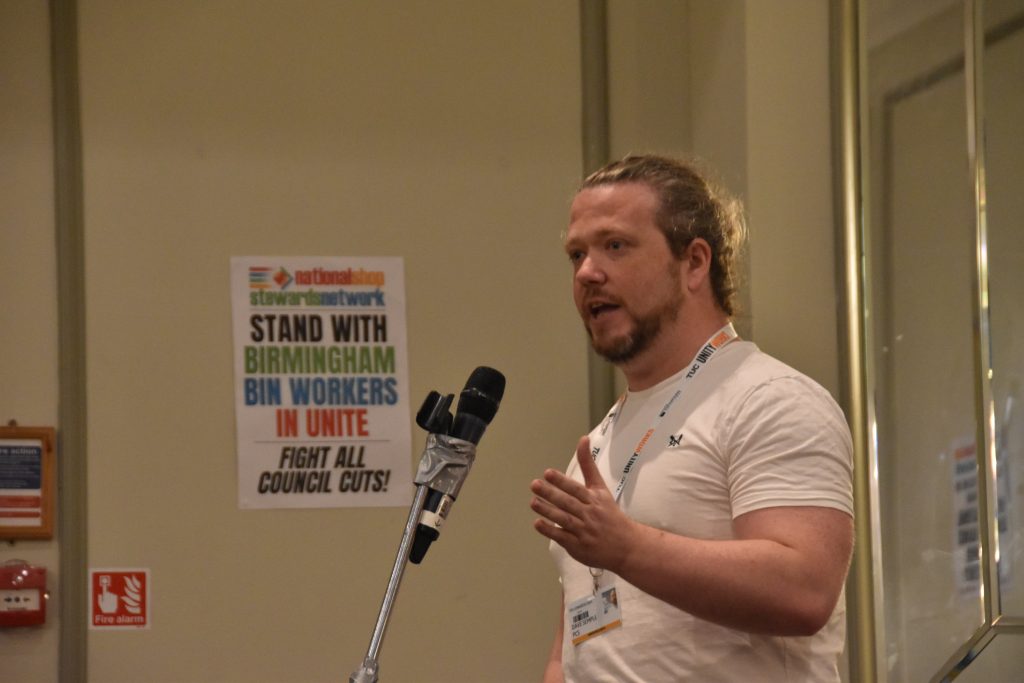
PCS deputy president Dave Semple, a Socialist Party member, reminded the rally of the 2011 NSSN lobby of the TUC at the start of the Tory-LibDem austerity programme.
Then, PCS played a leading role in building resistance to those brutal cuts, from the massive 750,000-strong demo in March, to the joint strike by PCS and three education unions in June. “We said we need mass strikes, we need a coalition of people willing to take action, and in consequence of that pressure, on 30 November 2011, 29 unions and 2 million public sector workers took strike action. That’s what we need today.”
PCS will be balloting for national strike action on 20 October (see page 8). “We urge every union to ballot, because we are all in exactly the same position.”
The PCS TUC motion, as in 2011, seeks to bring together as many unions as possible in a joint fight. Dave said that the General Council (of the TUC) will put forward a statement that says they support the motion “but it will be on the basis that we’re not actually going to carry it out – that’s a scandal! We must all get up and support the demand for coordinated action, support the demand for a national demonstration.”
NEU
Daniel Kebede, general secretary of the NEU, announcing the launch of the NEU’s ballot of teachers on pay and funding, said “Andy Burnham’s first pledge for schools should have been to end austerity in education.” He said: “We don’t need to see a grotesque increase in military spending, we need it spent on services and schools … I understand there are difficult choices, but our kids should not pay for it”.
This point had been taken up by Rob Williams earlier: “The workers’ movement has no common interests with the bosses. They want to make us pay the price at home for capitalist crisis, why should we have any trust in their foreign policy, which will always put the interests of big business first?” But, he argued, “the dismal character of British capitalism in 2026, after 50 years of neo-liberalism, means that you can’t tinker around the edges.” He argued it needs “fundamental change – in my opinion, socialist change.”
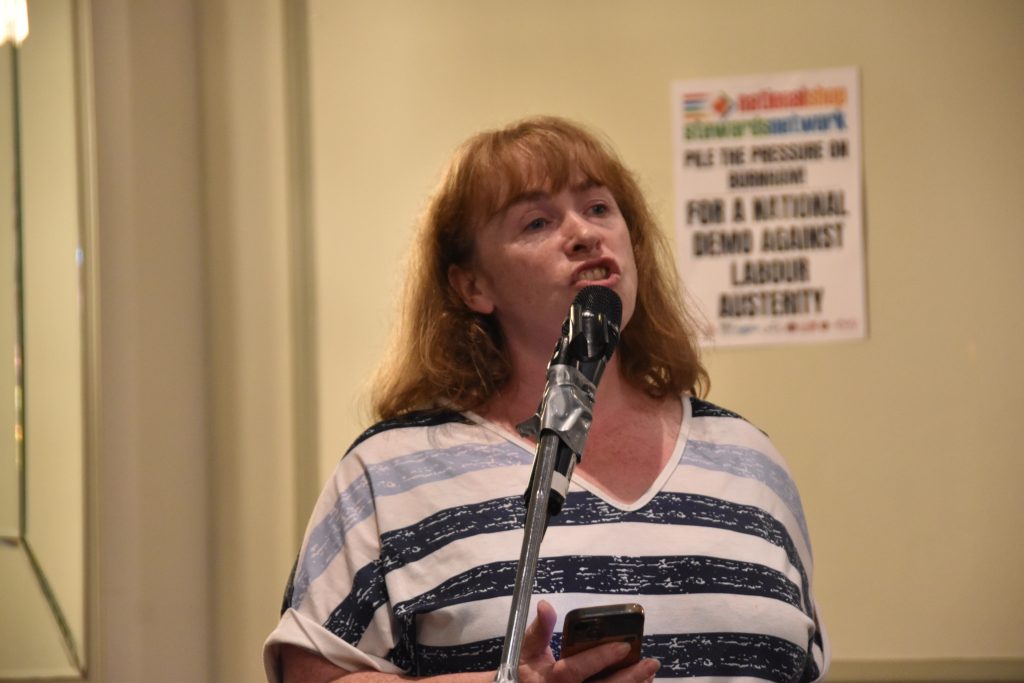
NEU Executive member Sheila Caffrey, while emphasising the importance of the national ballot of teachers, reported that “Shamefully, there is no ballot of support staff”, despite those workers being low paid and at risk of losing their jobs, due to “squabbles” between four unions that organise support staff.
Surrey NEU member Lucy Hatch said that the decision of the NEU executive not to ballot support staff was disappointing but she was proud that Socialist Party members on the exec had fought for it. “Now we must all work together in every union”.
Sheila explained how support staff across unions could still be fully involved in backing the action. In Bristol, NEU members are discussing the potential for a Bristol-wide strike of support staff and re-sharing advice on not crossing picket lines.
UCU
David Kaplan, a UCU member and teacher at an adult education college in London, explained that in FE, “each individual college group behaves like a business and negotiates its own pay for its staff. In January this year, there was national action by UCU members, but the action petered out as different colleges settled with their colleges for different pay rises.
Following this, against the advice of national officers of UCU, FE members voted for national aggregate action on the issue of national pay bargaining rights at this year’s UCU Congress in May. And now, after a meeting of the FE Committee of the union, there are reports that this will actually happen (see page 9). This will be the first time that UCU members in FE will have taken aggregate action.”
Other public sector workers may not be far behind. General secretary of probation union Napo, Ian Lawrence, reported that in an indicative ballot, 90% of members were in favour of strike action.
But we need our own political voice
The rally gave a standing ovation to Birmingham binworker and Unite convenor Matt Reid, 18 months into all-out strike action against a Labour council, after a £8,000 pay cut. Thanking the NSSN and trade union movement for its backing, Matt detailed the lengths the Labour council had gone to try to break the dispute, including agency workers and court injunctions, to try to enforce fire and rehire on the workforce.
Matt said, “It looks like the Labour government have given councils the mechanism in which to fire and rehire their staff still. He’s sort of saying we can’t give you more money, but we’ll give you the mechanisms to take it from your own staff.” Unison member Mia Hollsing, speaking at the lobby outside the TUC, demanded that councils – Labour and Green – refuse to make cuts and instead campaign for the funding needed.
Rob Williams argued that it is “essential that the trade union movement takes the lead – both industrially and politically. The likes of crypto-billionaire-backed Reform, Restore and the far-right are looking to fill the political vacuum left by this New Labour Mark II”. In his reply to the debate, he said: “Yes, it is absolutely essential that we mobilise against them” but to confront them, the trade union movement needs “an alternative” – “in my opinion, with a socialist programme, that can appeal broadly to the working class of all backgrounds.”
Fire Brigades Union general secretary Steve Wright told the rally: “When we said we’d back Andy Burnham, we met with him and told him we need investment in the fire service and public services, and public ownership. We’re not willing to give our backing and our money if our members don’t feel the benefit”.
On the lobby, Unite Executive Council member and Socialist Party member Len Hockey reported on the historic decision taken at Unite conference last year to debate the union’s relationship with Labour.
The necessity of fighting cuts and privatisation illustrates the need for workers to have their own political party. He said that as a Unite EC member, he will be working to ensure that debate happens, so that trade unionists can discuss how to achieve a political voice.
This followed Dave Semple reporting that the PCS conference had agreed motion A111, meaning that “if there is no end to austerity, the unions must get together and have a conference on the future of political representation. This vacuum cannot be allowed to continue.”
- Some speakers were in a personal capacity
Trade unions – back the youth walkouts
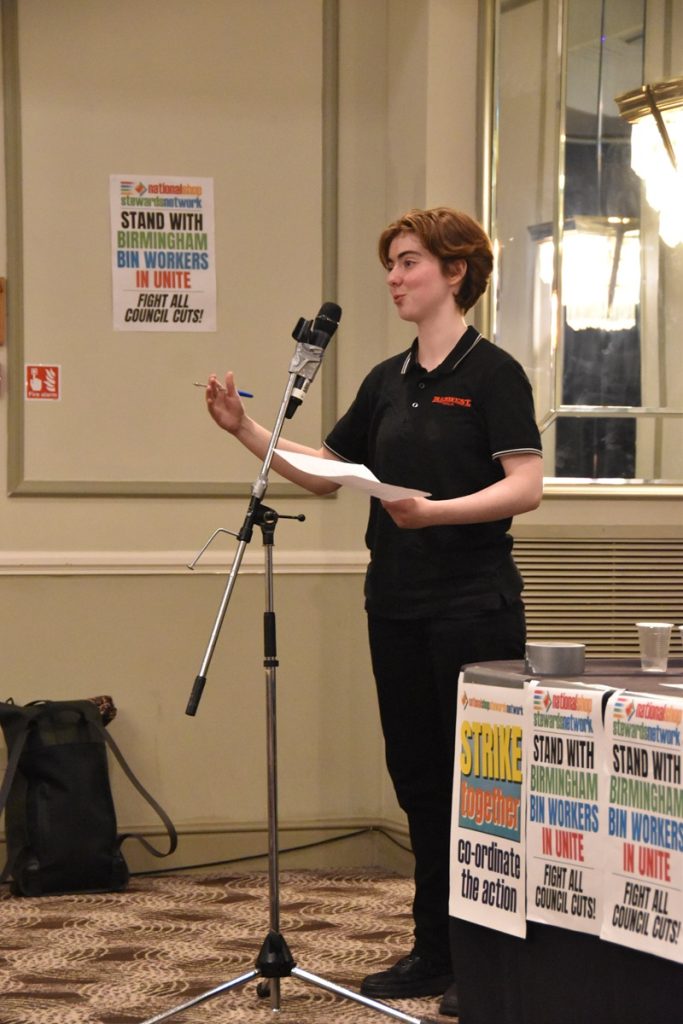
Liverpool Socialist Students member Hannah Ponting called for youth minimum wage rates to be scrapped, along with Burnham’s ‘apprenticeships’ by which “you don’t get a job at the end and you don’t get paid while you’re doing it”.
She called for trade union support for the international youth walkouts on 20 November – ‘Fight for our futures, not their wars’.
Socialist Students distributed a model motion for trade union bodies – below:
Support the November 20 International Youth Strike: ‘Fight for our future, not their wars’
This union branch/trades council notes:
1. The increasing outbreak of war and armed conflict is adding to the instability facing young people and workers globally. The world political establishment, representing the interests of big business and the billionaires, is using the spectre of war in an attempt to justify further attacks on living standards and democratic rights.
2. Tens of thousands of school, college and university students across Europe are expected to take part in an International Youth Strike on Friday 20 November, walking out of class and protesting under the slogan, ‘fight for our future, not their wars’.
3. By taking action on November 20, young people will be building on a growing international fightback to war, such as the ongoing 50,000-strong school strikes against conscription in Germany, as well as last year’s general strike in Italy in solidarity with the Palestinian people.
4. More than 25 youth and student organisations across 12 European countries have so far pledged to build the International Youth Strike. In Britain and Ireland this includes Socialist Students, Young Greens (England and Wales), and the Stop the War Coalition.
This union branch/trades council resolves:
5. We stand in full solidarity with students walking out and protesting on November 20. We agree to donate £25 to Socialist Students to assist in producing leaflets, posters and other International Youth Strike campaign materials.
6. We agree to invite a representative from Socialist Students to speak about the International Youth Strike campaign at an upcoming meeting of [this union branch/trades council].
7. We also agree to provide a representative from [this union branch/trades council] to speak in solidarity with the International Youth Strike at a local protest on November 20, as well as offering stewarding and organisational support.
8. We oppose any reprisals against students taking action to fight against war and for a decent future, such as detentions, exclusions, or arrests. The rights to strike and protest are fundamental democratic rights for students and workers alike. We call on schools in particular not to take action against students. We pledge to support any student defence campaigns as necessary.
- See socialiststudents.org.uk for details and more info