Home Blog

Somers Forge workers continue pay strike

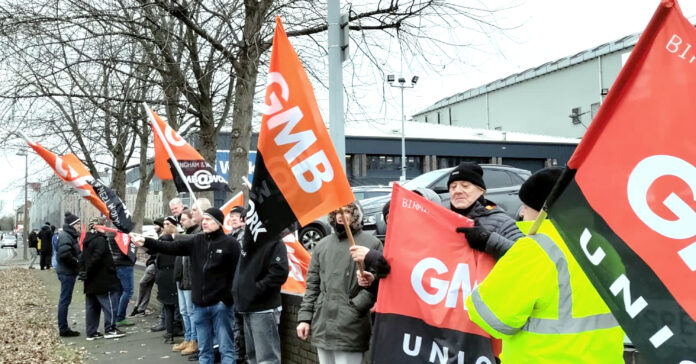
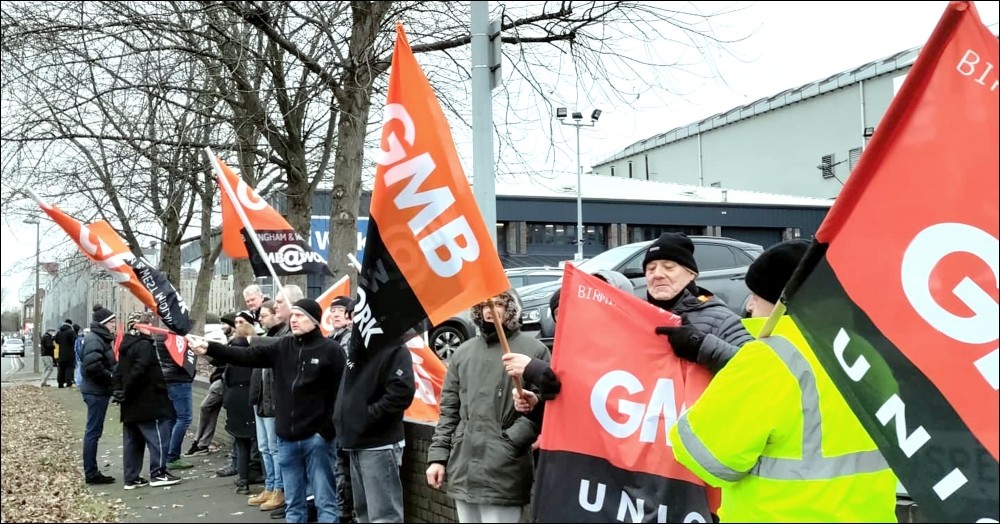
Somers Forge strikers. Photo: Wolverhampton and black country socialist party (uploaded 19/01/2022)
Somers Forge strikers. Photo: Wolverhampton and black country socialist party

Somers Forge strikers. Photo: Wolverhampton and black country socialist party   (Click to enlarge: opens in new window)

Nick Hart, West Midlands Socialist Party

Workers at Somers Forge in Halesowen took their fourth day of strike action in their current dispute for a living pay increase – and also the fourth ever in the company’s 155-year history!

Strikers told us about the Victorian working conditions at this Victorian company. It’s not uncommon to see pools of water, with squirrels and ducks nesting in the workshop, which produces large metalwork for military and other specialist applications.

On top of this is a bullying culture from management that has seen over 50 staff come and go in one section in the space of three years. Far from the company taking necessary measures to minimise Covid during the pandemic, workers were not only being trooped into the plant, but reportedly threatened with the sack for not taking overtime!

GMB union members there have a further two days of strike action planned for late January, as part of their campaign to win a pay rise in line with inflation and backdated to last April’s pay anniversary. Yet another group of workers not taking the cost of living crisis lying down!

Henry Nowak murder: anger erupts over police conduct

Metropolitan Police officers lining up in formation ready to arrest protesters, I oppose genocide, I support Palestine Action, Defend our Juries protest opposing proscription of Palestine Action, Trafalgar Square, London

Fight for democratic working-class control of police

For a united working-class fightback, reject racist division

Editorial of the Socialist issue 1371

The footage of Southampton student Henry Nowakโ€™s last minutes in which, with a fatal stab wound, he is dragged by police across the floor from behind a car to be handcuffed, is harrowing. The arresting officer responds to Henry saying he has been stabbed with: โ€œI donโ€™t think you have mateโ€. Henry, the victim, was initially treated as a suspect. The man who stabbed him – Vickยญrum Digwa, a Sikh man who has now been sentenced for murder – had lied to police to accuse Henry of racist abuse.

The video, released on 1 June, provoked anger and disgust across society. In response, Reform UK leader Nigel Farage cynically released his own video on the morning of 2 June calling for “cold, hard rageโ€ in response.

Two tiers

In his video, Farage made claims of โ€˜two-tier policingโ€™. The reality is that the police, courts and the law – the whole justice system – do treat different people differently.  We do not experience crime in the same way. So, while working-class victims of crime have little hope of a quick response from police, the rich are paying for their own private security firms made up of retired police officers to patrol their streets. A couple of hundred pounds a month will buy you access to โ€˜My Local Bobbyโ€™ in Londonโ€™s most exclusive streets. Completely unaffordable for most of us, but peanuts to billionaire residents. Nor do we have the same experience of the justice system. The cost to taxpayers of security provided for the Royal Family is never made public, but is estimated at ยฃ150 million a year. Meanwhile, for decades the crimes of the now former prince Andrew were passed over.

At the same time, the police and the courts are increasingly being used to suppress protests and workers organising. For example, the use of court injunctions used against pickets through the Birmingham bin dispute, and police using huge resources and increased powers to disperse pickets preventing scab lorries from leaving depots.

While for many a phone call to police is the first step when a victim of crime, ultimately the police force and justice system are not โ€˜neutralโ€™ but exist to serve the interests of the capitalist class. That is reflected in their make up. Over 60% of senior judges went to public school, for example, compared to 6% of the population. Because of the justice systemโ€™s role in defending the status quo in society, reactionary attitudes and ideas that the capitalist system uses to divide the working class and justify exploitation – including racism, sexism and homophobia – are baked into its institutions.

Racist division

Of course Nigel Farage, whose party has had a record level of donations from crypto billionaires did not talk about the class character of policing. Instead he whipped up division when he said that different groups are treated differently by police, claiming that the โ€œrights and privileges of white people are treated differently from those of ethnic minoritiesโ€.

Later that day, a protest of several hundred assembled at Southampton central police station. It was addressed by several prominent far-right activists, including Tommy Robinson, spreading racist division. The protest proceeded to march through the city to near the site of Henryโ€™s murder where there was a violent confrontation with police.

The far-right protest has further provoked fear, especially among Asian and Black communities in the city and beyond, of an increased threat of racist attacks. Steps towards organised community self-defense, for example of places of worship or other facilities serving the community, should be offered support from the workersโ€™ movement. Like, for example, the role Southampton trades union council played organising stewarding to defend a 2025 march against the Israeli stateโ€™s assault on Gaza threatened by the far right.

The events surrounding Henryโ€™s murder will strike another blow to public confidence and trust in the police which, according to a 2024 government report, โ€œhas declined in recent yearsโ€ฆ YouGov reported that 54% of adults in Great Britain thought the police were doing a good job, down from 72% in October 2019โ€.

The report highlights incidents such Sarah Everardโ€™s rape and murder by a serving police officer, and other findings of police vetting failings, as contributing factors. As well as โ€œongoing concerns about institutional racism and the policeโ€™s relationship with some ethnic minority communitiesโ€.

Figures from Hampshire Police, which the Southampton officers serve under, show Black men eight times more likely to be stopped and searched than white men, for example. The 2023 Casey Review into Sarah Everardโ€™s murder found the London Metropolitan Police to be institutionally racist, sexist and homophobic.

Writing in the Daily Mail, Tory leader Kemi Badenoch called for the Southampton case to do the same for institutional change as the 1992 racist murder of Steven Lawrence. What she didnโ€™t say is that it took years of struggle – including mass protests, winning support through the trade unions and determined campaigning from Stevenโ€™s family – before the government carried out the Macpherson Inquiry, and 18 years before just two of the gang involved in Stevenโ€™s murder were convicted.

Policing for who?

The so-called โ€˜Independentโ€™ Office for Police Conduct (IOPC) is investigating officersโ€™ conduct in the Henry Nowak case. The IOPC website lists the directors and their backgrounds, all have long histories throughout the policing institutions and as senior civil servants.

Instead, it should be a body democratically elected from the local community and the trade unions which investigates. The Socialist Party fights for working-class democratic control of the police, including determining operational priorities, as well as with responsibility for vetting, and firing and hiring of officers.

The call for policing to be under the democratic control of the local community was a key demand of Socialist Party member Nadia Ditta standing in the inner-city Southampton ward of Bevois in Mayโ€™s local elections, responding to concerns over crime and community safety. Nadia came a close second to Labour, standing as part of the Trade Unionist and Socialist Coalition, and fighting for a socialist political alternative and a united working-class fightback against austerity.

Working-class organisation, including for a socialist political alternative, is what is required to cut across attempts by the populist and far right to sow racist division.

Energy price rip-off: Bring down our bills -Nationalise!

James Collett, South West Socialist Party

Energy costs are about to rise by 13%. The new cap for a typical household will rise to ยฃ1,862 annually.

Due to the economic hit of Trumpโ€™s war on Iran, the governmentโ€™s
regulator Ofgem is raising the energy price cap next month.

Already we are feeling the pain of inflation at the petrol pumps and the supermarkets โ€“ and this hike will make all that worse.

Can we afford it? No. The poorest fifth of the population earn ยฃ232 a week and spend ยฃ378 a week already – the shortfall covered mainly by credit cards. Two million people are already in debt to gas and electricity companies, a combined total of ยฃ4.5 billion. When was the last time your wages went up by anywhere near the prices of essentials?

Itโ€™s alright for some. Oil giant Shell reported a rise in first-quarter profits to $6.9 billion and TotalEnergiesโ€™ profits jumped by almost a third in the same period.

The big banks are also flourishing. The โ€˜Big Sixโ€™ US banks made nearly $50 billion of profit in the first three months of the year, while we worried about the devastation and knock-on effects of brutal wars.

Labourโ€™s energy secretary Ed Miliband commented: โ€œThe rise in the price cap because of a war we did not choose is deeply unwelcome for households across the countryโ€. Yeah, no shit! And what are you going to do about it?

Profits rising for the billionaires while bills go up for working-class people is not a coincidence: itโ€™s robbery on a systemic scale. While our wages stay the same, prices go up to protect the profits of a tiny few. And the Labour Party defends the interests of those big bosses. No wonder Keir Starmerโ€™s Labour is so hated.

This Labour government is limping along, a trade union-led fight could win concessions from the bosses and their government. We should demand price controls, hardship funds, free public transport and more – paid for by utilising the wealth hoarded by the big bosses.

We need our own party, a working-class party that takes the fight to the super-rich. We need to nationalise the energy companies, water companies and banks, with no compensation for the fat cats. Fight Starmerโ€™s government of the rich, fight for socialism!

Milburn Review prepares bossesโ€™ offensive on youth

Capitalism offers no future โ€“ join the fight for socialist change

Editorial of the Socialist โ€“ issue 1370

โ€˜Where have you lot been?โ€™ Thatโ€™s what many young people will be asking, watching on as a legion of establishment politicians, CEOs, journalists and thinktank execs seemingly woke up last week to the bleak prospects on offer to young adults in Britain today.

Horror stories of applying for hundreds of jobs without success or even a reply from a human; competing with as many as one thousand other applicants for a single job opening; being forced to rely on inadequate benefits while rent and bills continue to soar; suffering from anxiety and other mental health issues, as society convinces you there isnโ€™t a place for you. None of that will be much news for the almost one million 16 to 24-year-olds who are currently not in employment, education or training (NEET).

Still, the publication of an interim report on so-called โ€˜NEETsโ€™ by the former privatising health secretary under Blair, Alan Milburn, has opened the floodgates to a torrent of news items and policy documents outlining what various defenders of capitalism think should be done.

These voices have included prime minister Keir Starmer, who told the BBC that he has โ€œbeen really worried about young peopleโ€. But how โ€˜worriedโ€™ for young people was Starmer when his Labour government decided to raise university tuition fees last year – the first increase in a decade? Has he been worried about the devastating effects of local councils, many controlled by his party, continuing to make cuts to schools, libraries, youth clubs and all public services?

This is a Labour government that since 2024 has sought to rule in the interests of flatlining British capitalism, attempting to restore the capitalistsโ€™ ability to make profits by driving down the living standards of the working class and young people. For all the representatives of capitalism, inside or outside the Labour Party, any โ€˜solutionโ€™ to the NEET scandal will seek to make young people and the working class pay.

Swipe at young people

Milburnโ€™s report takes special aim at government spending on benefits, which above all he links to more young people either not working or studying as a result of health conditions. The Guardian newspaper has since reported that Milburn has โ€œurged Labour not to shy away from a fresh attemptโ€ at cutting benefits spending, referring to Labourโ€™s previously failed plans to cut ยฃ4.8 billion by introducing tighter regulations on Personal Independence Payments (PIP).

Starmer was ultimately forced into a humiliating partial U-turn on those plans to cut disability benefits, faced with a rebellion by over 120 of his own MPs, themselves under huge working-class anger from below.

As a result, the government was forced to postpone attacks on PIP eligibility until the completion of a review by disability minister Stephen Timms, due also to be published this autumn. Clearly both reviews will be used together to try and โ€˜finish the jobโ€™ on benefits cuts โ€“ with the job of the Milburn review being to make the โ€˜compassionate caseโ€™ for forcing young people off benefits in the name of โ€˜realising their potentialโ€™.

Work for free

The day after Milburnโ€™s interim report was published, the government announced plans for 300,000 new work experience and training placements, known as Sector-based Work Academy Programmes (SWAPs). These funnel young people on Universal Credit into work placements of up to six weeks while they still receive only benefits: free, publicly subsidised labour for the bosses, and poverty โ€˜wagesโ€™ for the young! Moreover, these schemes come with no guarantee of a job at the end, as less than half of SWAP participants move onto sustained employment within six months.

The bottom line is that providing long-term jobs, training and education for 1 million young people would require levels of immediate investment that neither big business nor the government is prepared to concede in an era of stagnating growth, rising inflation, and historically high levels of public and private debt.

In a bid to maximise short-term profits, some capitalists have argued that there would be jobs, if only young people were prepared to accept lower wages. Last week, Labour ministers all but unveiled plans to postpone the scrapping discriminatory pay rates for 18 to 20-year-olds until after the next general election.

What do we say?

The capitalistsโ€™ spokespeople have used Milburnโ€™s interim report to go on the offensive in setting out their solution to the crisis facing young people. Our side, the working class, has to do the same โ€“ pointing to the enormous wealth, resources and technology that exist in Britain and internationally, and fighting for that to be in our hands so that we could democratically develop a socialist plan to provide a decent future for all young people.

During the strike wave in 2022-23, workers in Britain took strike action through their trade unions at a level not seen for three decades, forcing money into workersโ€™ pockets that the Tories – and behind them, the capitalists – said was not there.

As rising inflation once again threatens to further erode the conditions of all workers, there is an urgent need for united trade union action that links the fight against the cost-of-living crisis to the fight for good jobs, apprenticeships and education for all.

As part of that struggle, the Socialist Party calls for mass trade union action for the immediate implementation of the TUC demand of a ยฃ15-an-hour minimum wage, as a step towards a real living wage, without exemptions. By also sharing out the work across the economy, with a maximum working week of 32 hours and no loss of pay, it would be possible to ensure decent jobs for all, alongside living benefits for all those who need it.

Our alternative

Together with a major programme of increased government investment in public services and socially useful jobs, this would help eliminate unemployment as well as underemployment. Part of that mass public investment should include the creation of high-quality training schemes and apprenticeships with trade union pay and conditions, and a guaranteed job at the end.

Clearly the capitalist bosses, who claim they canโ€™t even afford to pay the minimum wage, will not commit to such a transformative programme, although they could be forced to make some temporary concessions if a combative trade union-led movement was built. But the fight for lasting good jobs, education and training for all and a decent future for young people can only be guaranteed through a struggle for a socialist alternative, involving a democratic plan of production to meet the needs of all, not the short-term profit interests of the bosses.

Just like the Tories in the strike wave, this Labour government is crumbling in office. However, some of New Labourโ€™s cheerleaders hope that the governmentโ€™s youth strategy could transform the partyโ€™s fortunes.

Guardian columnist Polly Toynbee, for instance, has raised hopes that Milburnโ€™s report โ€œcould be the Beveridge report for our timeโ€, referring to the landmark 1942 report published by Liberal economist Sir William Beveridge, which helped lead to the founding of the National Health Service, among other far-reaching social reforms.

But capitalism is in a completely different era today, reflected in the vastly different content of the Milburn report which, far from expanding, wants to cut the welfare state even further.

What workers have won

Back then, working-class people, determined not to return to the chronic high unemployment and generalised precarity of the 1930s, queued around the block to buy a copy of the Beveridge report. Within two weeks of its publication, nine out of ten adults said they wanted its findings implemented. But that level of support is obviously not going to be found for the final Milburn report!

Infinitely more likely than queues around the block will be new youth movements and revolts in response to the recommendations of the final Milburn report.

Youth clubs, libraries and other โ€˜third spacesโ€™ for young people have been cut to the bone. The media and capitalist politicians have tried to pin blame for inevitable displays of youth frustration โ€“ like so-called โ€˜link-upsโ€™ seen recently over the school holidays โ€“ onto young people themselves.

As a direct result of one of those mass youth meet-ups in Clapham, south London, the Labour Mayor of London, Sadiq Khan, found ยฃ30 million to fund a late-night youth club in each London borough. Imagine what more could be won if young people got organised in a mass movement nationally to demand a real future

Pile on pressure

Councils could be pressured into re-opening youth services, restoring the Education Maintenance Allowance (EMA) weekly payments for college and sixth form students, or providing living bursaries for students attending university in the borough. They could use their reserves and borrowing powers to fund services, while building mass campaigns to demand the long-term funding needed from central government.

As well as fighting in the trade unions for the action needed to tackle the youth jobs and training crisis, the Socialist Party wants to unite the fightback in schools, colleges and university campuses with Socialist Students, a campaigning, student-led socialist organisation which our members help to build in over forty institutions across the UK.

As part of Socialist Students, Socialist Party members initiated the Youth Walkout Against Trump campaign in September 2025, with the aim of getting young people organised in the fight for a socialist future free of war, austerity, and the constant instability and uncertainty of capitalism. We have also helped to build the national Funding Not Fees campaign for fully funded, free education โ€“ not cuts, tuition fees and a lifetime of student debt.

If you are a young person looking for a socialist programme and organisation to fight for a real plan for our futures, from infancy to adulthood to old age, join us!

War rages in Lebanon as masses pay price for Israeli stateโ€™s onslaught

Photo: Megaphone10/CC

Oscar Parry, Hackney and Islington Socialist Party

Trump and Netanyahuโ€™s war on Iran has unleashed fresh horrors across the Middle East, particularly in Lebanon, to which the Israeli state has now turned its murderous attention. One in five people, over a million, have been driven from their homes.

The UNโ€™s World Food Programme warns of a โ€œdeepening humanitarian emergencyโ€: 1.24 million people, almost a quarter of the population, no longer have enough to eat. Over 80% of markets in southern Lebanon have stopped functioning. Bombed roads, ruined homes and children sheltering in schools โ€“ this is daily life for thousands of families. When the Israeli military issued evacuation orders, it told Christians they could stay and Muslims must flee, illustrating the sectarian poison of its war.

At the start of May, Israeli forces drove their deepest incursion into Lebanon in 26 years and threatened to bomb Beirutโ€™s southern suburbs, sending thousands fleeing in panic. Even Israelโ€™s imperialist backers are split. Trump reportedly raged at Netanyahu over the phone, branding him โ€œfucking crazyโ€ and ordering him to halt the assault on Beirut. But the row is not about Lebanese lives. It is about oil and profit: Iran refuses to reopen the Strait of Hormuz, a chokepoint for the worldโ€™s energy, without a Lebanon ceasefire, and markets panicked as crude prices spiked.

The hypocrisy is staggering. The same Western governments now wringing their hands over Lebanon have backed Netanyahuโ€™s Israeli regime through years of genocidal slaughter in Gaza. Their โ€˜concernโ€™ reaches only as far as their balance sheets.

No capitalist politician, in Washington, Tel Aviv, Tehran or Beirut, will end this nightmare. Only the working class can. Workers across Lebanon, Israel and the whole region must organise independently of every capitalist elite.

Working-class struggle for socialist change to meet the needs of all can be the basis of a future voluntary, equal federation of socialist states in the region that can end war, oppression and poverty.

Student loans: unfair and confusing

Socialist Students placards. Photo: Josh Asker

We need free education

Hamza Khan, West London Socialist Party

Over a decade since tuition fees were trebled and amongst mounting graduate anger, a parliamentary inquiry was launched to examine the impact of the student loan repayment system. The inquiry was conducted following controversy over Plan 2 loans, which were created by the Tory-Lib Dem coalition government in 2012. A Plan 2 loan means that if you earn over a minimum threshold, 9% of your income above that amount is deducted toward student loan repayments. In November last year, Rachel Reeves fixed the minimum repayment threshold to ยฃ29,385 from 2027 to 2030, while the loans themselves continue to rise by at least the RPI inflation rate.

Of the 49,357 respondents to the inquiry who had taken out student loans, 40,373 said the financial impact of repaying their student loan was worse than they expected. 28,275 said that they did not understand the terms and conditions of their student loans before they took them out, a statistic that is wholly unsurprising when you consider that the majority of people signing up for this loan are 17 or 18 years of age, signing on to a potentially 40-year-long commitment. 45,843 said that they think the repayment terms were not reasonable and 25,291 said they would not take their student loan out if they were given the choice again.

These numbers reflect the dire reality of a generation of graduates who were promised that a university degree would give them a reasonable route to gainful employment, only to be met by an incredibly harsh job market. A generation was told that student loan repayments were nothing more than a small graduate tax and more than worth the amount of extra money you would be earning from entering the working world with a degree. They have been met by graduate salaries that have been unable to keep up with years of inflation and an ongoing cost-of-living crisis that makes any deductions from your wages increasingly difficult to manage.

Free and fully funded university education would irrefutably benefit society. Yet scrapping tuition fees seems utopian for a government that is more than willing to waste billions of pounds on wars and protecting the wealth of the super-rich. Tony Blairโ€™s โ€˜New Labourโ€™ introduced tuition fees in the first place, then the Tories and the Lib Dems created even more of a mess, which Starmerโ€™s Labour has done nothing but preserve. Most of the graduates surveyed said they had no other choice but to take out student loans with hard to understand and unreasonable conditions. We need fully funded, free education with maintenance grants that students can actually live on, instead of loans. Student loan debt should be abolished, paid for by taking the wealth that the super-rich bosses make at all of our, including graduates, expense.

Support for working-class students on the chopping block

Socialist Students at the UCU demo. Photo: Adam Powell Davies

We need funding not fees

James Taylor, Birmingham Socialist Students

Student life has only become more expensive over the last decade, with tuition fees rising and the cost of living skyrocketing. During this same period, successive governments have chipped away at maintenance grants, replacing them with loans which burden students for life.

Now, university vice-chancellors are threatening to cut what few meagre bursaries are still available. A Universities UK poll found that hardship support for working-class students could be on the chopping block, with around one third of vice-chancellors saying they would cut grants and outreach programmes if the funding crisis isnโ€™t resolved.

Students are increasingly having to take part-time jobs to the detriment of their studies in order to afford food, rent and bills. It would be unforgivable for university management to cut support to these students who need it most, especially while the same vice-chancellors talking about the lack of money in universities continue to make upwards of ยฃ400,000 a year.

The impact of decades of cuts and tuition fees means higher education floats from one funding crisis to another, with its financial dependence on international students looking increasingly precarious.

This same survey found 90% of universities are looking at hiring freezes or voluntary redundancies. As many university employees discovered the hard way in the last few years, it is a slippery slope from hiring freezes to the closure of entire departments.

Socialist Students are fighting back against cuts to jobs and grants. In the short term, action by students in conjunction with industrial action by education unions can prevent cuts. But we also must provide a vision for what education could be if provided for the good of society. The wealth is there in society but it is sucked away as profits are hoarded by a few.

Tuition fees should be scrapped, grants reestablished, and staff jobs made secure. This change is achievable if we fight for it.

We need free, reliable and publicly owned public transport for all

Photo: Martin Arrand/CC

Yorkshire Youth Fight For Jobs (YFFJ) press release

The cost-of-living crisis continues to have devastating effects on workers, students, and families throughout West Yorkshire. The Labour government refuses to commit to fully funded, publicly owned, bus and transport services โ€“ YFFJ says it must.

Chancellor Rachel Reeves has announced children aged 15 and under will benefit from free bus travel in August. YFFJ welcomes this announcement but the Labour government must go further.

Bus travel should be free for everyone, starting immediately with under 25s. Funding cuts must be reversed, and routes should receive investment and expansion, not closure. Travelling by bus shouldnโ€™t be a chore, it should be safe, reliable, and affordable.

Both Rachel Reeves and West Yorkshire Mayor Tracy Brabin stood for election under Jeremy Corbynโ€™s manifesto in 2017 and 2019. It included a policy of free travel for under 25s, so why canโ€™t this be implemented now?

Private companies shouldnโ€™t run bus services for profit, with ever-increasing fares. Public ownership would put an end to this, and workers and service users would have a democratic say in how their public transport is run and delivered.

One YFFJ spokesperson said: โ€œBus services in West Yorkshire are being rapidly cut, yet private companies rake in profits from high fares โ€“ all while receiving public handouts. Infrequent buses and unreliable services make travelling by bus a dreaded task.

โ€œFamilies, students, workers, and vulnerable adults should not dread having to make a bus journey, or carve out extra hours in their day just in case the bus doesnโ€™t turn up. Taking the bus should be a cheap, comfortable, safe, and reliable way to commute around West Yorkshire.

โ€œThis is why Youth Fight For Jobs is calling for a reversal of bus service cuts, free travel for all, and a fully funded service that is publicly owned by workers and users.โ€

Another spokesperson said: โ€œI have used buses for around seven years, six of those as a full-time student and then after during my search for work. Buses are an important part of my daily life, but because I use them so frequently I notice the decline in quality and increase in prices. My annual student bus ticket went up by hundreds of pounds while buses became less frequent and more likely to be late. The increase in ticket prices is only making the cost-of-living crisis worse.

โ€œYFFJ campaigns to make buses free and publicly owned under the democratic control of workers and service users. We are met with a warm response from ordinary workers who, like us, want to fix the bus services. Buses should be run by the working class for the working class and not by corporations who hike up the prices. A fully funded bus service that reaches every corner of Britain is the first step to a truly public and effective transport system.โ€

New survey shows social housing unaffordability

Photo: Tim Green/CC
Photo: Tim Green/CC

Paul Kershaw, Chair Unite housing workers LE1111 branch

Nearly three-quarters of residents surveyed by the Scottish Housing Regulator over the past year said they were concerned they will not be able to pay their rent over the next few years. The Social Housing Regulator in England does not have a similar survey but it is clear that there are affordability concerns across the country.  In England, social landlords have successfully lobbied for a government commitment to above-inflation rent increases every year for the next decade. Unaffordable rents are a growing concern for many Unite members.

The research from Scotland shows that more than half of those polled cited rent rises as the reason for their worries. The English Housing Survey highlights that over a quarter (27%) of social renters find it difficult to pay their rent. The figure is significantly higher for young renters and for London tenants.

Unite Housing Workersโ€™ branch members who work in social landlords and homelessness agencies report that people are increasingly excluded from social housing because their incomes are too low. In a survey for the homelessness charity, Crisis, around a third of English housing associations said that pre-tenancy affordability checks often brought to light information which led to an offer of housing being deemed unsuitable for an applicant. Around a quarter of responding housing associations also said that households below a certain income threshold are sometimes excluded from the housing register from which they receive applications for social housing lettings.

The government hopes to counter long-term underinvestment in the housing stock and to achieve their housebuilding targets on the basis of attracting private investment.

The key justification for the decade-long commitment to inflation-busting rent increases is the โ€˜needโ€™ to offer the banks and investors a guaranteed long-term profit โ€“ at the expense of social tenants.

As a renewed cost-of-living crisis deepens in the autumn due to the impact of the Iran war and other causes; the crisis of housing affordability is set to deepen.  The model of privately funded social housing is broken; we need an end to austerity housing policy with public investment to retrofit and upgrade the existing housing stock and a mass building programme of actually affordable council houses. Local councils should set needs-based budgets and protect their tenants with rent freezes.

UCU Congress votes for nationwide strike action

strikers at London Met uni Photo: London SP

Delegates to UCU Congress report

University and College Union (UCU) Congress met at a time of escalating crisis for post-16 education.

24 universities are now at risk of insolvency: an unprecedented situation and a direct consequence of the failed marketised fees model in higher education. Labourโ€™s only response has been to increase fees.

Further Education Colleges face deep crisis too. The government has announced a funding increase of just 0.5% per student, at a time when costs are increasing at a much faster rate. In real terms, this amounts to a savage cut in funding. Adult and Community education is even worse off.

General Secretary Jo Grady spent her commencement address listing all these issues and more, spelling out the dire situation for our sector. She described the funding crisis engulfing higher and further education as catastrophic and called the university funding model โ€œtotally brokenโ€.

She did not mention that her leadership has sown illusions in Starmerโ€™s Labour, forestalling a national fight on the promise of more funding from Westminster that has now failed to materialise. Even now, she described Labourโ€™s leadership election as the โ€œlast chance saloonโ€.

Neither did Grady set out any serious strategy to fight now. Her proposals are for a โ€˜raising awarenessโ€™ campaign. Weโ€™re already aware! So are Starmer and all the other bossesโ€™ politicians, who are making a choice to cut funding for education and other vital services to preserve the profits of the super-rich.

Scott Hunter, Swindon College UCU, personal capacity


Sector conferences vote for nationwide strike action

The urgent need for post-16 education to fight back exploded into view on the second day when, in both sector conferences, delegates resolved to prepare for nationally coordinated strike action in 2026-27, without the delays and hesitations attempted by Gradyโ€™s supporters.

In the Higher Education sector conference, HE11 passed as amended by London Metropolitan University, one of many university branches currently on strike in local disputes against job cuts, in the case of London Met amounting to roughly a fifth of the entire workforce. The motion called for the union to unite the disparate local disputes already taking place, and move urgently towards national industrial action, to ensure that the fight against redundancies and job losses is taken up across the sector.

The conference rejected motion HE2 calling for disaggregated ballots by default. This motion was an attempt to ensure some coordinated action can take place since the failure of the national union to meet the ballot threshold in the aggregate ballot of HE branches last year. But that failure was due to a lack of clear strategy from the national union leadership to fight the jobs massacre in universities, not because of the unwillingness of members to fight.  

In the Further Education Sector Conference, delegates backed motions resolving for the UCU to move to an aggregate ballot of FE colleges in England, in pursuit of the core demands of the New Deal for FE; binding national agreements on pay and workload, and steps towards pay parity with school teachers.

I moved motion FE5 from South Devon College, it and FE7 from the Yorkshire and Humberside Regional Committee were the only motions calling for an aggregate strike ballot. This demand was the centre of the campaign to re-elect me to the NEC. The increase in my vote, as the only candidate arguing for a change of tactics in our industrial strategy to aggregated action, clearly reflected the views of members.

Various speakers, including two past presidents, spoke against, arguing it was too soon and we would not meet the 50% turnout threshold. Even SWP speakers vacillated on the question of an aggregate ballot. In my reply, I pointed to the opportunity of joint action with the NEU, and the record of the RespectFE campaign two years ago, which achieved an aggregate turnout of over 50% in an indicative ballot. With a serious campaign, we can repeat that level of turnout. We won the debate and conference carried the motion (50- 37).

Delegates rejected FE2 from Bolton College (52/41), which, if passed, wouldโ€™ve delayed any decision about whether to move to an aggregate ballot until a Special Sector Conference, to be held in 2027, meaning the earliest that aggregate action would take place would realistically be the following year. I spoke against, arguing that the cost-of-living crisis is not waiting, and that other education unions in schools are balloting now; we have to do the same.

The UCU is now committed to ballot for strike action across both sectors. Socialist Party members will argue for maximum coordination with our sister union Unison, which organises support staff in universities and colleges, currently running an indicative ballot of members in HE with a recommendation to reject employer association UCEAโ€™s pay offer of 2%, and with the National Education Union, which is launching a formal ballot of school teachers and support staff this autumn. The potential exists for an education-wide strike to force the Labour government to address the crisis in schools, colleges and universities.

This will not be an automatic process, however. Significantly, the motions and arguments calling for delay or retreat from national action in both sectors came from the incoming vice presidents of both further and higher education in the union. Both sector committees on the NEC are majority controlled by supporters of the current general secretary Jo Grady, who have consistently voted against escalating industrial action. Members will need to prepare to defend the important resolutions passed at the unionโ€™s supreme policy-making body, by organising to put maximum pressure on the leadership to implement Congress decisions.

Duncan Moore, NEC member


For a class-based fight against racism and division

There were a number of motions debated on the rise of Reform and the threat to further education. For example, Motion 2, moved by New City College in Hackney and South and City College in Birmingham, raised the threat that Reform-led councils pose to education and called on the UCU to campaign for ESOL to have protected funding and to produce campaign materials to combat the far-right in workplaces and elections.

I moved an amendment from my college which explained the role of the Labour government and the need for a programme calling for homes, jobs and services for all.

The ground for dangerous far-right thugs like Tommy Robinson, and for racist right-wing populists like Nigel Farage, has been prepared by years of austerity and a soaring cost of living. The pro-big business, anti-working class, austerity policies of Keir Starmerโ€™s Labour government have compounded that.

The trade union movement must be at the front and centre of the fight against racism. The Together Alliance has recognised that Reform and the far right โ€œseize on the very real economic problems people face, in order to scapegoat migrants, Muslims and refugees.โ€ But proposing โ€˜loveโ€™ and โ€˜unityโ€™ falls far short of what is needed. To stop the growth of the far right, the trade union movement needs to take a lead, linking the fight against racism to the fight for jobs, homes and services. In 2018, the TUC agreed to launch a campaign for โ€˜jobs and homes not racismโ€™. They did not follow through on their proposal – itโ€™s up to us to do that now.

The amendment also included for the union to โ€œCompile a list of UCU member volunteers in each region to steward antiracist demonstrations and counter demonstrations where the local trade union movement thinks it is necessary, and to encourage other unions to do the sameโ€.

Congress voted overwhelmingly in favour of the amendment and motion.

David Kaplan, Working Menโ€™s College UCU, personal capacity


Fighting for working-class political representation

The elephant in the Congress hall was the need for new political representation for UCU and the wider trade union movement, given that, as general secretary Jo Grady said, Labour โ€œis unable or unwilling to deliver real, material changeโ€. The logical conclusion to be drawn from that insight is surely that our policies need some sort of serious alternative representation to Labour in parliament.

If Grady had any thoughts on that, they were glaringly absent from her address. Though she did refer to her new cross-party parliamentary group, co-chaired by Labour MP Rachael Maskell and Labour peer Baroness Blower.

At a fringe meeting with Grady and Maskell herself, after a lot of Starmer disparagement by both, I asked: โ€œBesides raising the profile of our crisis in parliament, how is your group planning to win the full funding we need from this government? That surely requires not just begging Starmer to redirect a few crumbs from another equally needy public sector to our own but fighting for him to increase public spending generally and massively?โ€ My question was not answered.

My own collegeโ€™s motion 39, resolving that UCU support a cross-union conference to discuss political representation for the working class and trade unionists, disappointingly did not get heard for lack of time. Like West London Collegeโ€™s motion 63 last year, calling for UCU to start looking for an alternative political voice to Labour โ€“ which did get heard and carried overwhelmingly โ€“ this motion lay ready to explode that elephant into view, and resonate with delegates.

Iโ€™m convinced the motion would have carried. The membership is bolder than Grady at the moment, and its rage is groping for real solutions.

Undiscouraged, Socialist Party members in UCU will continue to promote motion 39โ€™s call with UCU members. Two immediate opportunities are at the Trade Unionists for a New Party meeting on 8 June and the NSSN conference on 27 June. Onwards!

Marco Tesei, NEC member

Potential for autumn of action as PCS sets course for battle

Socialist Party members in PCS

On 28 May, Unison, Unite and GMB unions wrote to the employerโ€™s body that coordinates local government pay negotiations to reject their final offer of a 3.3% pay rise for local government workers. Unison has already announced that it intends to ballot, beginning in June. This follows the decision to ballot by the teachersโ€™ union NEU on 9 May, in opposition to a 6.5% deal over three years.

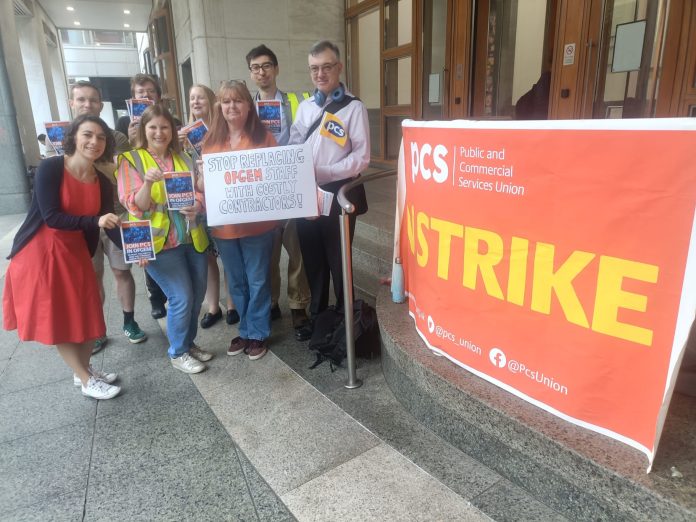
Action is also in preparation at the Public and Commercial Services (PCS) union, which represents civil servants, public sector workers at national public bodies and private sector staff on national government contracts. The unionโ€™s newly elected Left Coalition-led National Executive Committee (NEC) met for the first time on 29 May, and agreed initial steps to prepare for a wide-ranging battle on civil service pay, jobs, office closures and more.

PCS annual conference, 18-21 May in Brighton, voted for a serious fight on pay, and the newly elected NEC majority, including six Socialist Party members as part of a broad left coalition for change, intends to deliver this.

On the final day of PCS conference, the Cabinet Office published the UK civil serviceโ€™s pay remit for 2026-27. This remit is a cost control mechanism, set this year at 3.5%, which caps the overall increase to spending on pay by each civil service department, executive agency or other body. This headline figure is not fully funded either; up to a 2% increase is funded, the remainder will be made up via cuts to jobs and other โ€œsavingsโ€.

The reaction from PCS members has been negative; 3.5% will not be enough to address longstanding issues of low pay, of repeated below-inflation pay awards dating back years. Even using the governmentโ€™s Consumer Price Index (CPI) measure of inflation, which does not include housing and routinely underestimates real inflation, prices are set to rise by 3.5% by the end of 2026.

The NEU and Unison have shown the way โ€“ we need to demand more from the Cabinet Office and we need to prepare for a serious national campaign on pay and more besides.

Pay โ€˜flexibilityโ€™ in 2026-27: myth versus reality

This yearโ€™s pay remit also contains some additions โ€“ which are being touted as successes by the unionโ€™s General Secretary Fran Heathcote. In her eyes, this โ€˜flexibilityโ€™, and the 3.5% itself, are results of her off-the-record chats with the Cabinet Office. Socialist Party members are rightly wary of this approach. Concessions are not won by honeyed words; they are won by leverage and hard campaigning work. Where employers make concessions without a campaign, it is the surest bet in the world that they would have given up a lot more if a campaign had been deployed.

Neither do we describe either the 3.5% itself, or much of the โ€˜flexibilitiesโ€™ being touted in this yearโ€™s pay remit, as major โ€˜concessionsโ€™. This yearโ€™s pay remit is accompanied by a โ€˜Pay Compression Frameworkโ€™. This framework โ€“ which is voluntary โ€“ permits government departments to develop plans to ensure a 5% pay gap between each of the bottom three grades AA, AO and EO. Whilst this can be funded on top of the 3.5%, the latter is not fully funded and departments will need to find the money from existing budgets, likely leading to job cuts.

Under the governmentโ€™s plans, the intention of HM Treasury is to hold the lowest AA grades down to the National Living Wage (NLW) forever. Future pay awards for AAs would be non-consolidated, i.e. not pensionable pay, but a one-off pro-rata payment. Departments are also expected to create an AA to AO โ€˜pathwayโ€™. This may be welcomed by some members at the AA grade. It is intended to lead to the abolition of the AA grade as HMRC have already done. But, if this goes ahead on this basis it will not mean โ€˜levelling upโ€™, instead in time it will be the AO grade held down to the NLW.

Those areas seeking to introduce the 5% gap would also be forced to demonstrate โ€˜ambitious plansโ€™ to move from contracts of 42 hours per week to 37 hours per week, but this includes removing paid lunchbreaks. This is a key issue in DWP and some other smaller departments. If adopted, future calculations of NLW increases would be based on 37 hours per week so the absolute floor for pay would be reduced.

For some AO grades, in areas with 42-hour contracts, who earn less than ยฃ29,147 per year (i.e. 5% above the NLW), there may be some benefit to this extra flexibility. This is true in DWP, for AO grades outside of London. For AO grades on 37-hour contracts on the other hand, the magic figure would be earning less ยฃ25,676. All AO grades in key areas like HMRC are already over this figure. In addition, some departments have already indicated in discussions with negotiators that they donโ€™t want to make use of the new Pay Compression Framework, and they intend to live within the 3.5%.

The picture for EO grades is even more mixed across the civil service. In DWP, the largest government department, even if AO grades were given an uplift to create a 5% differential with AA (i.e. AO pay raised to ยฃ29,147), most EO grades (ยฃ32,137) would still be well over 5% away from the new AO grade pay point. It is far from clear, therefore, that this Pay Compression Framework will yield serious improvements to pay.

Restoration of national pay bargaining, which was abolished in the early 1990s, has been a feature of PCS campaigning since the union was formed in 1998. Far from being a means to provide harmonisation of pay, in a manner favourable to half a million civil servants, the pay compression framework seems designed to ensure the permanency of low pay by tying the lowest grade to the national living wage.

Nor does the pay remit contain anything for higher grades โ€“ they will have to fit under the 3.5% cap. These workers have loyally stuck with the union despite below-inflation pay rises and no PCS campaign to remedy that.

Despite the inadequate 3.5% civil service pay remit, which cannot provide a basis for meeting any of our key demands, the PCS General Secretary attended the unionโ€™s NEC to propose that we move immediately to delegated, i.e. employer by employer pay talks, essentially foregoing a campaign.

The unionโ€™s NEC voted no to this. Instead, a short pause to delegated talks has been ordered while we seek to reopen talks at the Cabinet Office level, a task which has been made harder by Heathcoteโ€™s acceptance of โ€˜informalโ€™ chats rather than genuine negotiations with Cabinet Office officials overseeing the governmentโ€™s strategy on civil service pay. The entire union must be put on notice that we are readying for a fight.

A new national negotiating team has been appointed, including the unionโ€™s newly elected President, Bev Laidlaw, and newly elected Deputy President, Dave Semple, along with the General Secretary and John Moloney, the Assistant General Secretary. Training and information for delegated negotiators and for activists more generally is in preparation, and the Cabinet Office has been put on notice.

These are the first steps towards accomplishing the demand of three successive PCS annual delegate conferences: build a serious national campaign.